2. Microeconmics
Microeconomics focuses on the behavior, decisions, and interactions of economic agents at the level of individual firms, households, and markets. It examines how individuals and businesses make choices regarding the allocation of resources such as goods and services and how these decisions affect prices, supply and demand, and the overall functioning of specific markets. The type of work women has traditionally done varies by class and race. Poorer women have always worked for a wage and racial discrimination often prevented women of color from making free choices about the type of work they did and how they participated in markets. Gender discrimination affected all women’s market choices. Key concepts in microeconomics include the theory of supply and demand, the role of competition, consumer behavior, production costs, market structures (such as perfect competition, monopoly, and oligopoly), and the determination of prices for goods and services.
How to cite this source?
Remedial Herstory Project Editors. "2. Microeconomics." The Remedial Herstory Project. November 1, 2025. www.remedialherstory.com.











History of Women at Work
Throughout history, women across the world have played an invaluable role in supplying businesses, services, and goods. Countries who empower women in their economies see greater economic growth and success in all sectors. Without women in the economy, global and regional economic realities would look very different.
Prior to the Industrial Revolution in the United States, the household was considered the center of production in society. Both men and women had important roles to play in keeping the household running successfully. However, as industrialization emerged in the US and men increasingly began to work outside the household, the work women did at home became more and decreasingly valued, despite the important role it played in keeping the economy afloat behind. Although the Industrial Revolution saw more women working in the manufacturing sector, the dominant ideology was that women should work in the home and domestic work was very time consuming.
Women's jobs varied considerably by race and class. Respectable work was really only available to educated middle class women, which included teaching, writing, and nursing. American women from working class families found gainful employment in factories, thanks to technological innovations that allowed for mass production, especially in the food and textile industries. Factory work sometimes offered higher wages than domestic work, so young women sought factory jobs. This wasn’t always the case though. Some factories paid women very little, so their entire family had to work to survive. Some cities offered better paid jobs as domestics compared to other southern cities, so women did the math and did domestic work. Women of color found limited opportunities for work in the factories; thus they primarily worked in domestic service or owned their own businesses. Although essential to the mills, women were paid less, worked long hours, and efforts to improve their condition were thwarted not only by their bosses and the male dominated government, but also by other male unions that worked to protect their wages at the expense of women workers. But women, of course, fought back.
One of the best ways women could earn a wage in the first half of the 19th century was as a teacher and writer, especially on topics of moral importance. Female teachers were held to strict moral standards and expected to maintain a respectable image. They were often subjected to moral scrutiny and faced societal pressures regarding their appearance, conduct, and personal relationships. Any behavior deemed inappropriate or deviating from expected norms could result in criticism or dismissal. Female teachers received significantly lower salaries compared to their male counterparts. They were often paid less for performing the same job, reflecting the prevalent gender-based wage discrimination of the time. This wage disparity persisted despite women's qualifications and experience. Men typically occupied administrative roles and held higher-paying positions, while women were predominantly employed as lower-paid teachers in primary schools (this remains true today).
Teaching was often viewed as a temporary occupation for unmarried women, seen to acquire some income or secure future marriage prospects. Female teachers were required to sign contracts that included "marriage clauses" which stipulated that they must resign if they got married. Such restrictions were intended to ensure that married women would prioritize their domestic duties and conform to societal expectations. Once married, it was expected that female teachers would leave the profession to focus on their roles as wives and mothers. This perception reinforced the notion that teaching was not a long-term career path for women and justified their lower pay. As a result, their authority was sometimes questioned or undermined due to societal beliefs about women's perceived weaknesses and inability to exert control over students, particularly older boys.
Educated women also wrote poetry, children’s stories, advice, columns, for other women, and novels. Sarah Josepha Hale became the editor of Godey's Lady's Book after her husband died in order to provide for her children. She was famous for authoring "Mary had a Little Lamb," and writing an advice column to women, in which she ironically told them not to have ambition and to keep to the home. Of course, she herself wrote widely, and had a very public life. In fact, many of these women who became published, are noted for their enthusiasm for promoting a proper woman’s place.
Women also became journalists and reported on everything from society to war. One of the most famous American journalists of the period was Margaret Fuller. Fuller wrote about abolition and was a war correspondent. Fuller sought to challenge traditional gender roles and expand opportunities for women. She emphasized the importance of women's education and their active participation in society. In her influential book, Woman in the Nineteenth Century, published in 1845, Fuller examined the social, political, and cultural constraints placed on women and called for their liberation and equality. Tragically, Margaret Fuller's life was cut short when she, along with her husband and young child, died in a shipwreck in 1850. However, her contributions to literature, feminism, and social reform left a lasting impact. Fuller's writings and ideas continue to be studied and celebrated, highlighting her significance as a pioneering feminist and intellectual of her time.
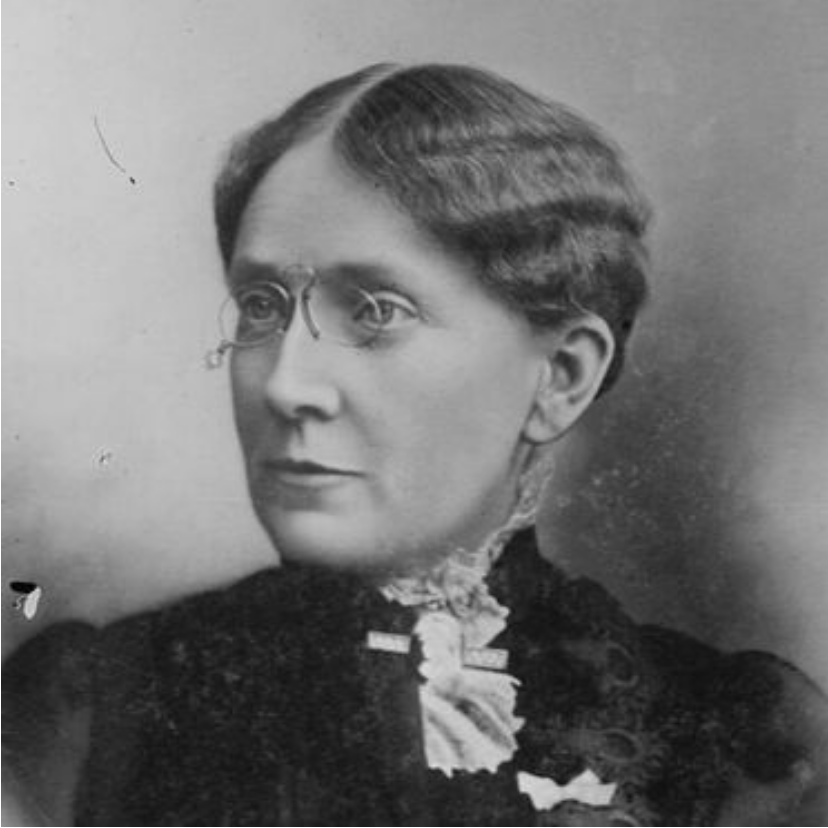
The world of business was rapidly changing in the 19th century, and many entrepreneurs found ways to get ahead using unscrupulous methods. Ida Tarbell became the first investigative journalist, well known for her exposé of John D. Rockefeller’s Standard Oil Company. Published in a number of installments for McClure’s Magazine, this meticulously researched piece revealed the brutal policies that Standard Oil used to force rivals out of business, including her father. Tarbell later compiled those pieces into a two-volume book in 1904. As a result of her investigative reporting, the federal government brought a case against Standard Oil for violating the Sherman Antitrust Act which prevented the formation of monopolies and the Supreme Court ordered the break-up of the oil company into 34 separate companies. Rockefeller hated Tarbell whom he dismissed as an angry lady, but she won and protected the US from being overrun by monopolies.
But of course, most of these women were white and middle class. And the bulk of the industrial revolution was built on the back of lower-class women. Most people point to the Lowell Mills as a major turning point both for labor in general, and for women. Millwork popped up along rivers all throughout New England. The mills attracted women from poor farms in the region. As industrialization led to mechanized farm equipment, it freed up the labor of daughters on a farm. Thus, girls left home for a wage and to help support their families. In this time, departing from the protection and oversight of their families to live and work at the mills, as well as doing less respectable work for wages, could hinder their reputations as “good” women. The promise of a wage was persuasive however and the mills worked to counter the negative narratives about the reputations of their women workers.
The danger of mill work was readily known to the girls, they saw it. One girl who worked at the Lowell Mills wrote home, “Last Thursday one girl fell down and broke her neck which caused instant death. She was going in or coming out of the mill and slipped down it being very icy. The same day a man was killed by the [railroad] cars... Last Tuesday we were paid. In all I had six dollars and sixty cents paid $4.68 for board. With the rest I got me a pair of rubbers and a pair of 50.cts shoes…”[4] In the end, she had earned about a dollar and a half, which she would send home to her family.
In their first attempt at strike, the bosses emerged victorious. The management possessed enough power and financial resources to quash the strike. Within a week, the mills were operating almost at full capacity. Things seemed to calm until they cut wages again in 1836. The second strike was better organized and caused more disruption to mill operations. Nonetheless, the bosses maintained control.
Although these were significant setbacks, the mill girls refused to surrender. In the 1840s, they adopted a different strategy—political action. They established the Lowell Female Labor Reform Association to advocate for a shorter workday of ten hours. Despite women's inability to vote in Massachusetts or anywhere else in the country, the mill girls persisted. They conducted extensive petition campaigns, gathering over 2,000 signatures on a petition in 1845, and more than double that number the following year, urging the Massachusetts state legislature to pass a law limiting the workday in mills to ten hours.
Their efforts did not cease. They established chapters in other mill towns in Massachusetts and New Hampshire, published "Factory Tracts" to expose the deplorable conditions in the mills, and provided testimony before a state legislative committee. Furthermore, they actively campaigned against a state representative who staunchly opposed their cause and soundly defeated him. In 1847, New Hampshire became the first state to pass a law mandating a ten-hour workday, but its enforcement was not effective.
The Muller v. Oregon (1908) case firmly established the legal precedent for protective legislation. In 1903, the state of Oregon passed a law that made it illegal for employers to keep female factory and laundry workers on the job for more than ten hours a day. Laundry owner Curt Muller, convicted of violating the Oregon law, challenged its constitutionality and claimed that it violated his right to freedom of contract under the Due Process clause of the Fourteenth Amendment. The Supreme Court heard the case in January 1908. Louis Brandeis, representing the state of Oregon, prepared a lengthy brief, arguing that the state could curb the freedom of contract to protect the health and welfare of its citizens. The Brandeis Brief used “facts” to demonstrate that women had “special physical organization” (anatomical and physiological differences) and were “fundamentally weaker” than men (according to physicians at that time). According to Brandeis, long hours were not only dangerous to the physical health of women, who could suffer from “pelvic disorders” that would jeopardize their ability to give birth, but they might also succumb to lax moral behavior as well. The argument ends with the reasonableness of the ten-hour day for working women as good for the welfare of the country. Six weeks later, the Supreme Court upheld the Oregon law, making women wards of the state. Many states already had some protective laws on the books and more would do so after the Muller decision. By 1914, twenty-seven states regulated some aspect of women’s work, from hours, to night work, limits on carrying weights, and working in dangerous or morally hazardous places (bars/saloons, meter readers for the gas and electric companies, streetcar conductors, and elevator operators for instance).
By 1920, fifteen states passed minimum wage laws to protect the moral health of working women. Most male union officials supported protective legislation for women because it limited women's competitiveness in the labor market. Importantly, the Muller decision reflected the long efforts of women reformers like Florence Kelley to improve the lives of working women. Limiting the grueling hours for women, these reformers believed, was a first step toward ensuring a broader social agenda for working people. Despite trying, they were never able to get the Court to protect limited hours for all workers. But as you can see, getting legal limitations on how long women could be forced to work came at a terrible cost, enshrining gender inequality into law. But for working women, perhaps that cost of this legal principle was one they were willing to bear if it meant their rights to worker protections were recognized by the Supreme Court.
One of the unintended consequences of the protective laws became clear in the garment strikes in Lawrence, MA in 1912. Massachusetts legislators, in response to reformers and the AFL, successfully lobbied for the maximum work week to be reduced from 56 to 54 hours for women and children. When the law went into effect on January 1, 1912, thousands of workers at the American Woolen Company, many of whom were women, walked off the job in protest of losing money from their paychecks.
Wage-earners at American Woolen could not afford to lose any of their pay, since they lived in dire circumstances in the company town controlled by the company’s president, William Wood. Workers lived in crowded dingy company tenements and their workplace conditions proved not to be any better. Workers had to pay for drinking water, and were docked pay for being a minute late to work. Infant mortality rates were high in the company tenements and the accident rate on the job was high as well. The work pace increased and in spite of a $3 million profit margin in 1911, Wood refused to raise workers’ wages for two fewer hours of work. While the difference in the pay amount seemed small, thirty to forty cents, for the workers that was the equivalent of four loaves of bread, which was significant to these workers who lived paycheck to paycheck.
Pearl McGill, Circa
Like the earlier shirtwaist strikes, the strike in Lawrence received a lot of attention due to the cooperation of the Polish, Italian, German, Lithuanian, and Syrian workers, and the presence and support from the IWW. Many IWW activists were present in the town during the strike. "It was the spirit of the workers that was dangerous," wrote labor reporter Mary Heaton Vorse. "They are always marching and singing. The crowds flowing perpetually into the mills had waked and opened their months to sing."
Publicity came when the striking workers sent their children to sympathetic families in New York City and Vermont, when the strike conditions worsened. American Woolen used their own security force and relied on the local police to battle with the workers.
The first group of children to leave on the “children’s exodus” paraded in the streets of NYC with pro-strike banners. When the next group of children and mothers arrived at the train station on Feb. 24th, many of them were beaten and taken into custody. Police tore children from their parents, threw women and children into a patrol wagon, and detained 30. One woman testified: "The children, two by two in an orderly procession with the parents near, were about to make their way to the train when the police...closed in on us with their clubs, beating with no thought of the children who were in desperate danger of being trampled to death. The mothers and the children were thus hurled in a mass and bodily dragged to a military truck and even then clubbed, irrespective of the cries of the mothers and children."
Pearl McGill, went to Lawrence after the strike began, through her position as a speaker for the WTUL. McGill first gained recognition for her activism in the button workers strike in Muscatine, Iowa in 1911. Congress investigated the strike because of the publicity received in early March 1912. Faced with negative publicity, the American Woolen Company negotiated a settlement with the strikers. Employees received a pay increase between 5 to 25 percent depending on the job. Those who participated in the strike faced no reprisals from the company. The strike lasted nine weeks.
In the roaring twenties, inside the white, middle-class home, married women had access to new conveniences such as vacuum cleaners and washing machines that allegedly made housework easier. As the distance between home and men’s work increased, suburbs that served as bedroom communities for nearby cities thrived. Women’s work was homework, and the greater ease of housework was facilitated by electricity in the home. Women learned of the new labor-saving devices through advertising. Many companies targeted women in advertisements in popular magazines and on the radio. Ads sold household gadgets and processed food products that were intended to make running a household less of a chore and tied consumption to acceptance, success, and social status. Even rural women far from the newest department store could fulfill their basic needs through the Sears Roebuck and Montgomery Ward catalogs that promised the latest styles in fashion and new-fangled inventions for the home.
Madame C. J. Walker, America’s first self-made female millionaire, whose beauty products company gave Black women the ability to control their image. The Walker Manufacturing Company’s line of hair care products was designed specifically for Black women, and Madame Walker used her considerable fortune to fund scholarships and promote the cause of African American self-help and entrepreneurship. While many women had been millionaires before Walker, almost all had achieved that status through inheritance.
The world wars, and especially World War II transformed women’s role in the workforce as women kept the economy producing through the war. The labor, goods, and services that women supplied to both the domestic and global economy were imperative in maintaining the war effort. Poor women moved into better paying jobs as men left to fight abroad. Middle class women entered the workforce for the first time. In both cases, when the men returned, it proved hard to get women to leave their posts. One persistent myth about the 1950s is that women returned to the home, when in reality, they continued pursuing degrees and used those degrees in greater numbers than before. The post war world was changed; women had experienced economic freedom and opportunity and had proven the economy ran well on their labor.
[1] Lewis Wickes Hine, Globe Cotton Mill, Augusta, Ga (1909) Woman was “with child.” According to reports, women work until the day of childbirth, Photograph, Public Domain, https://commons.wikimedia.org/wiki/File:Globe_Cotton_Mill,_Augusta,_Ga._Woman_was_with_child._01639v.jpg.
[2] C. Upham, “Educational Progress in Virginia,” Virginia Museum of History and Culture, Wikimedia Commons, July 21, 1883, https://commons.wikimedia.org/wiki/File:Educational_Progress_in_Virginia%E2%80%94The_Schools_for_Colored_Children_in_Richmond.jpg.
[3] Ida Tarbell, Circa 1904, Photograph, Public Domain, https://www.loc.gov/pictures/item/97509168/.
[4] “Mary Paul Letters.” Vermont Historical Society. Montpelier, Vermont. Retrieved from https://www.albany.edu/history/history316/MaryPaulLetters.html.
[5] 2 Young Women (Tintype) Lowell mill girls photographed with a tintype, Circa 1870, Photograph, Public Domain, https://commons.wikimedia.org/wiki/File:2_Young_Women.jpg.
[6] Three African American women in Harlem during the Harlem Renaissance, Circa 1925, Photograph, Public Domain, https://commons.wikimedia.org/wiki/File:Three_Harlem_Women,_ca._1925.png.
Microeconomics (n.), the study of behavior, decisions, and interactions of economic agents at the level of individual firms, households, and markets.
Respectable work (n.), work considered acceptable for a woman of class to do based on cultural gender norms.

Educational Progress in Virginia[2]

Ida Tarbell[3]

Lowell Mill Girls[5]
Minimum Wage (n.), a government mandated limit to how little employers can pay an employee per hour. The federal minimum is below what some states require, but minimum wage varies by state.
Muller v. Oregon (n.), a 1908 Supreme Court case that granted workplace protections to women by declaring them weaker than men.

Three women in Harlem during the Harlem Renaissance[6]
Join the Club
Join our email list and help us make herstory!
Women as Consumers in the Economy Today
Women make more purchasing decisions for families than men do. In fact, women represent 85% of global consumer spending, or $31 trillion of spending annually.[1] Women have long been seen as a highly specific demographic for companies to market their products and services to, but women actually make up an incredible majority of consumers and, in this way, have greater purchasing power than men.
Despite this significant consumer power, women face the phenomenon of the “Pink Tax” while shopping for goods that are specifically tailored to them. Traditionally, the “Pink Tax” referred to the extra taxes on essential menstrual care products. However, it has since expanded to explain the incredible price difference between items that are of the same quality but marketed to men and women separately. Generally, in the United States, products for women cost about 7% more than products for men, costing women thousands of extra dollars across their lifetimes.[2] Sometimes, the “Pink Tax” is seen in conjunction with smaller-sized items, so, not only are women paying more for the same quality, but they are also paying more for less.
This economic pattern isn’t just seen with health care and beauty products; it also often applies to toys marketed toward girls versus boys, or even toys of the same make and model that are simply pink instead of blue or red. In this regard, the “Pink Tax” has resounding economic effects on both women individually as well as on their families.
[1] Sandy Carter, “Who runs the World? Women Control 85% of Purchases,” Forbes, March 7, 2024, https://www.forbes.com/sites/digital-assets/2024/03/07/who-runs-the-world-women-control-85-of-purchases-29-of-stem-roles/.
[2] Julia Meyer, “The Pink Tax: The Cost of Being a Woman,” NOW, August 8, 2024, https://now.org/blog/the-pink-tax-the-cost-of-being-a-woman/.
Consumer spending (n.), money exchanged by a person for goods and services for personal or family use.
Consumer power (n.), the ability to influence business practices and behavior by choosing where to spend money.
Pink Tax (n.), the difference in price (usually more) for the same item marketed differently to men and women. For example, a razor that is marketed to women is often “pink” and costs a little bit more than a “blue” razor marketed to men.
Goods and Services Women Supply in Economies Today
Today, there is a significant increase in the way women work and what they supply to the economy. If, collectively, all women workers in the US took just a single day off, the country would lose $21 billion in terms of GDP.[1] This number points to both the necessity of women in the labor market in keeping the United States’ economy afloat and the progress women have made in securing economic and labor gains.
The dominant sector for women workers in the US is Healthcare, Education, Administration, and Literacy (HEAL jobs), where 74% of workers are women.[2] Women also outnumber men in the Retail and Leisure & Hospitality sectors. Women tend to have lower participation in sectors such as Manufacturing, Transportation & Utilities, and Agriculture. These HEAL jobs became “respectable women’s work” during and after the Industrial Revolution because they were seen as extensions of women’s natural caregiving responsibilities. Because male union leaders worked to protect male wages at the expense of women’s, almost all jobs traditionally done by women have been undervalued. Childcare workers, almost all women, earn the equivalent of a cashier or food service worker on average. When traditional women’s work is underpaid across industries, it’s not the difficulty of the job, the risk involved, or the training required to do it—it’s about the gender of the people who traditionally do it.
Teachers are a prime example of underpaid women workers. Employment advertisements in the 19th century stated publicly that female teachers were paid one-third the salary of male teachers! Schools were filled with brilliant and highly educated women whose other respectable alternatives were factory work or domestic servitude. Despite being paid less than men, female teachers into the mid-1990s benefitted from a wage “premium” compared to women in other fields. But in the 1990s, women were welcomed into other higher-paying fields in greater numbers, which changed their circumstances. As more fields opened to women, many left teaching, but they remained the primary labor behind education—women still constitute still three quarters of the profession today. Men, meanwhile, took a major hit in their salaries by becoming teachers. Today, that penalty remains high at 35%.[3] The expectation that teachers’ salaries remain low persists in both public and private schools. In 1960, female teachers had a 14.7% wage premium; by 2021, they had a 17.1% wage penalty.[4] In those six decades, there was a huge negative shift for women teachers, and in 2021, teacher salaries reached an all-time low since the Economic Policy Institute began tracking their data at the turn of the century. Factoring in the vast benefits public employees tend to receive, the EPI found that teachers earn about 20% less nationally than those with similar degrees in other fields, although it varies considerably by state. Nowhere in the US do teachers earn more than their counterparts in other fields.
The pay gap, as it is often called, is the gap between what men earn on average and what women earn on average and is most obvious when researchers get out of fields traditionally done by women and instead look at comparable “male” and “female” fields. The Institute for Women’s Policy Research compared elementary school teachers, the most common female occupation, to software developers, the most common male occupation.[5] Both jobs require similar degrees, risks, and burdens. Elementary school teachers average $982 in income per week, while software developers made $1,894 per week. The study further showed that female software developers made $200 less per week than their male peers on average!
[1] Monique Woodard, "Unlocking the trillion-dollar female economy," World Economic Forum, last modified May 31, 2023, https://www.weforum.org/agenda/2023/05/unlocking-trillion-dollar-female-economy/.
[2] Reeves, Of Boys and Men, 153.
[3] Sylvia Allegretto, “The teacher pay penalty has hit a new high: Trends in teacher wages and compensation through 2021,” August 16, 2022, https://www.epi.org/publication/teacher-pay-penalty-2022/.
[4] Allegretto, “The teacher pay penalty has hit a new high.”
[5] Ariane Hegewisch and Adiam Tesfaselassie. “The Gender Wage Gap by Occupation 2018,” The Institute for Women’s Policy Research, April 2, 2019, https://iwpr.org/publications/gender-wage-gap-occupation-2018/.

Occupations with the Smallest Gender Earnings Gap, US Department of Labor
The Pay Gap
Economists break the gap down to how much money, on average, men make per hour compared to women. The question is not whether there is a pay gap, but what should be done about it and why does it exist? While the pay gap is fueled by discrimination in how society values the types of work women tend to do compared to the type of work men tend to do, it is also notably and flagrantly biased within fields. Many people, blame the challenges women face in workplace advancement on women and their choices. They believe women are choosing to make less— in essence, women to blame for the pay penalty. As an extension, the answer to the question is that nothing should be done about the pay gap because it’s women’s fault that they make less. These people point out that women often give up their high wages when they marry wealthy men. Studies have shown that women, before they have kids, are able to advance in their careers using the same strategies as men and that women are giving up wages for children because of systemic failures that make childcare less accessible and workplaces less flexible for mothers of young children. Many of these elite women return to their careers once their children enter school only to find that the game has changed, their skills are lacking, and their male colleagues have put in many hours in their absence to earn higher hourly salaries: catching up after a hiatus is unlikely. These examples show that parenthood, more than women’s choices change family work dynamics.
Another commonly argued position against the pay gap’s significance is to challenge the math. In his scathing article about the pay gap, a man from the Foundation for Economic Education, a free-market advocacy group, claimed that arguments about the pay gap between men and women are flawed because it averages male and female salaries. He said that looking at the data this way does not account for choices women make, asserting that women on average work 7 hours a day to the 8 hours the average male worker puts in.[1] He said that anyone who works less than someone else should expect to earn less. This ignores the fact that women work more hours a day than men, it’s just that the other hours are in unpaid domestic work. The question then is why would women and their families make choices that lead to women working and therefore earning less? The “why” explains everything and helps find solutions to the pay gap.
In her work which won her the Nobel Prize for Economics, Dr. Claudia Goldin found that while in the past, gaps in wages could be explained by men earning more degrees or working in fields that were paid better, those excuses are no longer valid. Dr. Goldin showed that, “most of the earnings difference is now between men and women in the same jobs… [and occurs] after the birth of a woman’s first child.”[2] This concept is what economists call the “Motherhood Penalty.” Men who have children by contrast receive a pay bump! Women do make choices that contribute to their own invisibility and lower income, but the notion that this is a free choice rather than a constrained and economic one is simply not true. When one adds layers like race, these choices are even more difficult. If all things were equal, why would women earn less? The answer is that the circumstances are not equal.
Harvard researchers, for example, examined data collected from the highly unionized and regulated Massachusetts Bay Transportation Authority (MBTA), where wage differences between men and women were virtually unthinkable. The union contract was written in a way to bar a sexist boss from favoring male employees. Workers had access to the same choices that could advance their careers. The study found that male train operators and bus drivers worked about 83% more overtime than their female colleagues and were twice as likely to accept an overtime shift—which pays time-and-a-half—on short notice and that around twice as many women as men never took overtime. The male workers took 48% fewer unpaid hours off under the Family Medical Leave Act each year.[3] Female workers were more likely to take fewer desirable routes if it meant working fewer nights, weekends, and holidays. Parenthood turns out to be an important factor. Fathers were more likely than childless men to want the extra cash from overtime, and mothers were more likely to want time off than childless women.[4]
His conclusion is actually very similar to those of the Institute for Women’s Policy Research (IWPR), but their analysis of the implications is different: that women’s perceived “choices” are not freely made choices. Families at the peak of their professional careers are also often raising children, and this family choice has a disproportionate impact on the woman’s career: a pay penalty. The Center for American Progress explained:
“Today, many families with young children must make a choice between spending a significant portion of their income on childcare, finding a cheaper, but potentially lower-quality care option, or leaving the workforce altogether to assume full-time childcare duties. Whether due to high cost, limited availability, or inconvenient program hours, childcare challenges are driving parents out of the workforce at an alarming rate. In fact, in 2016 alone, an estimated two million parents made career sacrifices due to problems with childcare.”[5]
Childcare challenges have become a barrier to work, especially for mothers, who disproportionately take on unpaid caregiving responsibilities when their family cannot find or afford childcare. In a 2018 survey conducted by the Center for American Progress, mothers were 40 percent more likely than fathers to report that they had personally felt the negative impact of childcare issues on their careers.[6] Why is it difficult for young families to find childcare? Answer: there is a long history of expecting women’s work to be free and thus underfunding the people who do this vital work.
The IWPR concluded in their expansive study and research into the data of more than 125 occupations that “women’s median earnings are lower than men’s in nearly all occupations, whether they work in occupations predominantly done by women, occupations predominantly done by men, or occupations with a more even mix of men and women.”[7] This was true between men and women of the same race as well. Perhaps the most famous example is that of the US national soccer teams, where women earn substantially less than men. The argument is that the women’s game generates less revenue than the men’s– but this is increasingly not standing up to evidence. The US women’s team earns a higher percentage of revenue than the men’s team does, but the women argue that the commitment and labor are equivalent and should garner equal pay. The argument is about value: how does society value the people who work in it? When people put in equal effort, risk, and time, shouldn’t they be paid similarly?
The wage gap is closing in part because women are earning more and male wages are stagnating—this is not how anyone wants the gap to close. In 1979, only 13% of women earned more than the median man.[8] Today, it’s 40% which is not perfect equality, but it is an incredible change in such a short amount of time. Men by contrast have seen wages stagnate, and with fewer going to college and getting the skills necessary to compete in an automating world, their career prospects are limited. Since 1980, median earnings for men with only a high school diploma have decreased by 28 percent! As Senior Analyst Richard Reeves puts it, “male jobs have been hit by a one-two punch of automation and free trade” not feminism.[9]
One persistent fallacy, or falsehood, is that “women don’t ask” for promotions. But women do ask, and are sadly denied at higher rates than men.[10] This myth that women don’t ask is used to essentially blame women for their own misfortune of earning less for the same work.
Instead of lamenting the pay gap, there are shining examples of careers in industries where motherhood has less of an impact on women’s wages: Pharmacy. In her book Career and Family: Women’s Century-Long Journey toward Equity, Harvard Professor and Nobel Prize Winner, Dr. Claudia Goldin examined how women across generations addressed the challenge of balancing career and family. In her research, pharmacy emerged as an egalitarian occupation with considerable financial rewards. Female pharmacists, ranking fifth in median earnings among almost five hundred occupations, make basically the same amount as their male counterparts when adjusted for working hours, as reported in the US census for full-time, full-year workers. This contrasts with the legal field, where gender inequality persists despite similar increases in female representation and specialized graduate schooling.
The key to understanding the pay gap is in understanding the difference between the two professions. Historically, both pharmacists and lawyers shared traits like long and irregular working hours, high self-employment, and associated risks. While these features continue to define the legal profession, modern pharmacists operate differently. In 1965, female pharmacists constituted less than 10 percent of pharmacists and earned 67 cents on the male pharmacist’s dollar because, most often, the male pharmacist was also the owner of the pharmacy. Pharmacists, particularly those working longer hours, earned more per hour, echoing similarities with today’s legal and financial sectors.
When pharmacies transitioned from private ownership to corporate entities, self-employed pharmacists all but disappeared which created greater gender equality. Consumers became accustomed to getting their medications from whichever pharmacist was on duty at the time they arrived, not “their” pharmacist. This same evolution has not happened in law, where consumers still demand “their” lawyer. The emphasis on personal contact perpetuates pay discrimination in the law profession.
[1] John Phelen, “Harvard Study: ‘Gender Wage Gap’ Explained Entirely by Work Choices of Men and Women: The ‘gender wage gap” is as real as unicorns and has been killed more times than Michael Myers,” Foundation for Economic Education, December 10, 2018, https://fee.org/articles/harvard-study-gender-pay-gap-explained-entirely-by-work-choices-of-men-and-women/?gclid=CjwKCAjw26H3BRB2EiwAy32zhZKsF45zDh2P22RHSXgHrfc-hthCcA1Xh1hyUhN3A9XFwvx9XP6u6hoCXokQAvD_BwE.
[2] Claudia Goldin, Career and Family: Women's Century-long Journey Toward Equity (Princeton, New Jersey, Princeton University Press, 2021).
[3] Phelan, “Harvard Study.”
[4] Phelan, “Harvard Study.”
[5] Hartmann, Hegewisch, Gault, Chirillo, Clark, “Five Ways to Win an Argument about the Gender Wage Gap.” The Institute for Women’s Policy Research. September 2019. https://iwpr.org/wp-content/uploads/2021/02/C447_GWG-Talking-Points_2019.pdf.
[6] Leila Schochet, “The Child Care Crisis Is Keeping Women Out of the Workforce,” Center for American Progress, last modified March 28, 2019, https://www.americanprogress.org/issues/early-childhood/reports/2019/03/28/467488/child-care-crisis-keeping-women-workforce/.
[7] Hegewisch, Ariane and Adiam Tesfaselassie, “The Gender Wage Gap by Occupation 2018,” The Institute for Women’s Policy Research. April 2, 2019. https://iwpr.org/publications/gender-wage-gap-occupation-2018/.
[8] Reeves, Of Boys and Men, 24.
[9] Reeves, Of Boys and Men, 21.
[10] Megan Leonhardt, “The surprising truth about asking for raises at work: Men are almost as unlikely to ask as women,” Fortune, April 5, 2023, https://fortune.com/2023/04/05/pay-gap-men-versus-women-asking-for-raises-pew/.
Pay Gap (n.), the difference in pay between men and women when total wages are averaged together by gender.
Motherhood Penalty (n.), an alternative to the pay gap which highlights the different impact parenthood has on mothers and fathers.
Family and Medical Leave Act (n.), a federal law that guarantees employment for full-time workers who take time off to recover after childbirth, to raise an infant, or to care for a sick or aging family member. There are limits to who is eligible for this type of guarantee and how long they can take leave.

Claudia Goldin Becomes First Woman to Win a Nobel Prize in Economics, US Embassy in Sweeden
Women and Business
In the United States, there are over 14 million women-owned small businesses. This number makes up 40% of all businesses in the US and generates $2.7 trillion annually. In the last couple of decades, the small business sector as seen an enormous increase in women-owned businesses. In fact, from 1997 to 2017, women-owned businesses have increased by 114%.[1] Women tend to have businesses centered in the Healthcare & Social Assistance sector as well as the Professional, Scientific, & Technical Assistance sector most often.[2] Although women-owned business trends are improving, it is also important to look at women representation in other aspects of business, such as executive boards. Companies who have the most gender diversity on their boards are 25% more likely to have above-average profits than comparable businesses.[3]
Globally, about one in three entrepreneurs who have their own up-and-running business are women, and women are also more likely than men to be starting a business by themselves rather than with a business partner. In lower-income countries, a higher percentage of women had plans to create their own business than in countries with a higher income. Moreover, start-up rates for women were also much higher in low-income areas. Across the world, women entrepreneurs are usually younger and more highly educated than men entrepreneurs. This illustrates the fact that women feel more pressure to start businesses before starting a family, since women are often expected to stay home and raise children.[4] Although statistics for men and women in the business and entrepreneurship world are not quite equal yet, women have made incredible strides at securing business opportunities throughout the world.
The goods, services, and labor that women provide economically look different when comparing different places in the world. For example, throughout the continent of Africa, women make up more than 70% of those who informally cross borders to trade goods such as food, crafts, manufactured items, and more. Because this trade happens in a highly informal setting, women who participate often face many violent barriers, including but not limited to harassment and imprisonment. However, in 2018, the African Continental Free Trade Area was established, which strengthens the way intrastate commerce and trading is conducted and provides better and more standard protections for traders. Additionally, it makes formal trading a more accessible space, allowing more informal traders to transition their commerce into the formal sphere.
The creation of the African Continental Free Trade Area was a win for the African continent as a whole that offered significant improvements for women working within the trade economy. This intrastate commerce and trading is crucial to the economic development of many countries, and women play an overwhelming role in keeping it alive and growing.[5] In Latin America and the Caribbean, women, throughout the 21st century, saw an increase in economic earnings, number of jobs, and overall power within the economy. For example, the number of women participating in the labor market in the area of Latin America and the Caribbean increased by 15% from 2000-2010, while male workers only saw an increase of 2%.[6] This increase in numbers can largely be connected to more accessible educational initiatives and practices. However, Latin America and the Caribbean is a large area, and the statistics do not hold true for each individual country.
Domestic work plays a unique role in both global and regional economies. This type of work is notoriously undervalued and underpaid, with workers facing increased violations as opposed to many other sectors. In Latin America, women make up 93% of domestic workers in the region, the type of work that accounts for 14.3% of all female employment. However, over 77.5% of domestic work occurs in the informal sector.[7] This number is alarming for the fact that the informal sector has fewer protections for workers. Yet, domestic work in both the formal and informal sectors also exists as a pathway to other types of work and remains an important steppingstone for many women in order to gain more financial and economic freedom.
[1] "Facts About Small Business: Women Ownership Statistics," US Small Business Administration Office of Advocacy, last modified March 21, 2023, https://advocacy.sba.gov/2023/03/21/facts-about-small-business-women-ownership-statistics/.
[2] "Diversity wins," McKinsey and Company, last modified May 2020, https://www.mckinsey.com/~/media/mckinsey/featured%20insights/diversity%20and%20inclusion/diversity%20wins%20how%20inclusion%20matters/diversity-wins-how-inclusion-matters-vf.pdf.
[3] "African Continental Free Trade Area," African Trade Policy Centre, https://au.int/sites/default/files/documents/36085-doc-qa_cfta_en_rev15march.pdf.
[4] "The Effect of Women's Economic Power in Latin America and the Caribbean," World Bank, last modified August 2012, https://www.bancomundial.org/content/dam/Worldbank/document/PLBSummer12latest.pdf.
[5] UN Women, "Domestic Workers in Latin America and the Caribbean during the COVID-19 Crisis," UN Women, last modified December 6, 2020, https://www.ilo.org/wcmsp5/groups/public/---americas/---ro-lima/documents/publication/wcms_751773.pdf.
[6] UN Women, "Domestic Workers in Latin America and the Caribbean during the COVID-19 Crisis."
[7] UN Women, "Domestic Workers in Latin America and the Caribbean during the COVID-19 Crisis."

Business Owner
Conclusion
Throughout history, women, just like men, have played a role in a variety of sectors of work and business, something normally influenced by politics, trade, and geopolitical relations. The goods, services, and business that women supply to the world, regional, and local economies is crucial to the survival and maintenance of modern economic systems. The COVID-19 pandemic exacerbated many longstanding inequities, but many parts of the world are also seeing gender gaps in economics begin to close.
Checking for Understanding
-
What important roles have women historically served in the US economy considering both paid and unpaid work?
-
How have women’s roles as consumers shaped the economy?
-
What goods and services do women supply in the economy today? Provide examples from the text.
-
What are the driving forces behind the persistent “pay gap”? Provide examples from the text.
-
How have women served the economy as business leaders? How might this vary internationally?
Extension Activities
-
Do a small study of your local economy to examine patterns in the work men and women do. If relevant, what does this gender gap reveal about your local economy’s limitations?
-
Go to the local grocery store and compare prices of items marketed to men and women.
-
Interview women consumers to examine the local impact of the “Pink Tax.”
-
Interview women business leaders about their path to starting a business and why they chose the industry they did.
-
Create a business plan for a business that could work in your local economy by identifying a good or service that is needed or could be improved.
Bibliography
"Facts About Small Business: Women Ownership Statistics." US Small Business Administration Office of Advocacy. Last modified March 21, 2023. https://advocacy.sba.gov/2023/03/21/facts-about-small-business-women-ownership-statistics/. "Women in the Labor Force: A Databook." US Bureau of Labor Statistics. Last modified April 2021. https://www.bls.gov/opub/reports/womens-databook/2020/home.htm#:~:text=By%20industry%2C%20women%20accounted%20for,and%20hospitality%20(51.2%20percent). African Trade Policy Centre. "African Continental Free Trade Area." African Trade Policy Centre. https://au.int/sites/default/files/documents/36085-doc-qa_cfta_en_rev15march.pdf. Allegretto, Sylvia. “The teacher pay penalty has hit a new high: Trends in teacher wages and compensation through 2021.” August 16, 2022. https://www.epi.org/publication/teacher-pay-penalty-2022/. American Express. "The 2017 State of Women-Owned Business Report." American Express. https://ventureneer.com/wp-content/uploads/2017/11/2017-AMEX-SWOB-FINAL.pdf. Bahn, Kate, and Annie McGrew. "A Day in the US Economy Without Women." The Center for American Progress. Last modified March 7, 2017. https://www.americanprogress.org/article/a-day-in-the-u-s-economy-without-women/#:~:text=They%20found%20that%20women%20provide,roughly%20proportional%20reduction%20in%20GDP. Bowles, Nellie. “Jordan Peterson, Custodian of the Patriarchy: He says there’s a crisis in masculinity. Why won’t women — all these wives and witches — just behave?” The New York Times. May 18, 2018. https://www.nytimes.com/2018/05/18/style/jordan-peterson-12-rules-for-life.html. Burclaff, Natalie. “Missing Women and Feminist Economics.” Library of Congress. March 22, 2021. https://blogs.loc.gov/inside_adams/2021/03/missing-women-and-feminist-economics/. Carter, Sandy. “Who runs the World? Women Control 85% of Purchases.” Forbes. March 7, 2024. https://www.forbes.com/sites/digital-assets/2024/03/07/who-runs-the-world-women-control-85-of-purchases-29-of-stem-roles/. Chowdhury, Jennifer. “Woman of Impact: Reshma Saujani.” In Style. November 1, 2023. https://www.instyle.com/reshma-saujani-moms-first-woman-of-impact-8385201. Das, Andrew. “U.S. Women's Players and U.S. Soccer Settle Equal Pay Lawsuit.” New York Times, May 22, 2022, https://www.nytimes.com/2022/02/22/sports/soccer/us-womens-soccer-equal-pay.html. Gajanan, Majita. “The USWNT Seeks Nearly $67 Million in Damages In Equal Pay Lawsuit Against U.S. Soccer. Here's What to Know About the Case.” Time Magazine. February 21, 2020. https://time.com/5653250/uswnt-equal-pay-lawsuit/. Global Entrepreneurship Monitor. "New GEM Women's Entrepreneurship Report Underscores Breaking Stereotypes and Seizing Opportunities." Global Entrepreneurship Monitor. https://www.gemconsortium.org/reports/womens-entrepreneurship#:~:text=Nearly%20one%20in%20every%20three,solopreneurs%20for%20every%201%20man). Goldin, Claudia. Career and Family: Women's Century-long Journey Toward Equity (Princeton, New Jersey, Princeton University Press, 2021). Gurcheik, Kathy.“Availability, Use of Paternity Leave Remains Rare in U.S.” SHRM: Better Workplaces Better World. August 16, 2019. https://www.shrm.org/resourcesandtools/hr-topics/behavioral-competencies/global-and-cultural-effectiveness/pages/availability-use-of-paternity-leave-remains-rare-in-us.aspx. Hartmann, Hegewisch, Gault, Chirillo, Clark, “Five Ways to Win an Argument about the Gender Wage Gap.” The Institute for Women’s Policy Research. September 2019. https://iwpr.org/wp-content/uploads/2021/02/C447_GWG-Talking-Points_2019.pdf. Hegewisch, Ariane and Adiam Tesfaselassie. “The Gender Wage Gap by Occupation 2018,” The Institute for Women’s Policy Research. April 2, 2019. https://iwpr.org/publications/gender-wage-gap-occupation-2018/. Leonhardt, Megan. “The surprising truth about asking for raises at work: Men are almost as unlikely to ask as women.” Fortune. April 5, 2023. https://fortune.com/2023/04/05/pay-gap-men-versus-women-asking-for-raises-pew/. Livingston, Gretchen. “Stay-at-home moms and dads account for about one-in-five U.S. parents,” PEW Research Center. September 24, 2018. https://www.pewresearch.org/fact-tank/2018/09/24/stay-at-home-moms-and-dads-account-for-about-one-in-five-u-s-parents/. Long, Brandon. “Is Jordan Peterson Right About Agreeable Women? (No).” Medium. February 14, 2019. https://medium.com/slightly-educated/is-jordan-peterson-right-about-agreeable-women-no-d30eb6f319e. McKinsey & Company "Diversity Wins." McKinsey & Company. Last modified May 2020. https://www.mckinsey.com/~/media/mckinsey/featured%20insights/diversity%20and%20inclusion/diversity%20wins%20how%20inclusion%20matters/diversity-wins-how-inclusion-matters-vf.pdf. Meyer, Julia. “The Pink Tax: The Cost of Being a Woman.” NOW. August 8, 2024. https://now.org/blog/the-pink-tax-the-cost-of-being-a-woman/. National Women’s History Museum. "AN ACT for the effectual protection of the property of married women." National Women's History Museum. https://www.womenshistory.org/resources/primary-source/act-effectual-protection-property-married-women. Phelen, John. “Harvard Study: ‘Gender Wage Gap’ Explained Entirely by Work Choices of Men and Women: The ‘gender wage gap” is as real as unicorns and has been killed more times than Michael Myers.” Foundation for Economic Education. December 10, 2018. https://fee.org/articles/harvard-study-gender-pay-gap-explained-entirely-by-work-choices-of-men-and-women/?gclid=CjwKCAjw26H3BRB2EiwAy32zhZKsF45zDh2P22RHSXgHrfc-hthCcA1Xh1hyUhN3A9XFwvx9XP6u6hoCXokQAvD_BwE. Schochet, Leila. “The Child Care Crisis Is Keeping Women Out of the Workforce.” Center for American Progress. March 28, 2019. https://www.americanprogress.org/issues/early-childhood/reports/2019/03/28/467488/child-care-crisis-keeping-women-workforce/. Steinem, Gloria. “The Importance of Work,” Outrageous Acts and Everyday Rebellions, 3rd Edition (New York, NY: Henry Holt and Company, 2019). Reeves, Richard V. Of Boys and Men: Why the Modern Male Is Struggling, Why It Matters, and What to Do About It. Washington, D.C.: Brookings Institution Press, 2022. Reeves, Richard V. & Isabel V. Sawhill, "Men's Lib." The New York Times. November 14, 2015. https://www.nytimes.com/2015/11/15/opinion/sunday/mens-lib.html?_r=0. UN Women. "Domestic Workers in Latin America and the Caribbean during the COVID-19 Crisis." UN Women. Last modified December 6, 2020. https://www.ilo.org/wcmsp5/groups/public/---americas/---ro-lima/documents/publication/wcms_751773.pdf. White, Gillian B. “Why Daycare Workers Are So Poor, Even Though Daycare Costs So Much: They can’t even afford child care for their own kids.” The Atlantic. November 5, 2015, https://www.theatlantic.com/business/archive/2015/11/childcare-workers-cant-afford-childcare/414496/. Woodard, Monique. "Unlocking the Trillion-Dollar Female Economy." World Economic Forum. Last modified May 31, 2023. https://www.weforum.org/agenda/2023/05/unlocking-trillion-dollar-female-economy/. World Bank. "The Effect of Women's Economic Power in Latin America and the Caribbean." World Bank. Last modified August 2012. https://www.bancomundial.org/content/dam/Worldbank/document/PLBSummer12latest.pdf. Yellen, Janet. "The History of Women's Work and Wages and How It Has Created Success for Us All." Brookings. Last modified May 2020. https://www.brookings.edu/articles/the-history-of-womens-work-and-wages-and-how-it-has-created-success-for-us-all/.