


1. Personal Finance
Personal finance refers to the earning, inheriting, and investing of one’s money. Numerous studies have established the prevalence of gender differences in approaches to parenting of girls and boys. Some of those differences even begin in the womb. When it comes to economics, girls and boys are raised to handle money differently, and this has a profound effect on their financial futures. In sum, girls are raised to protect money and save it, while boys are raised to go after money and invest what they have to accomplish that goal. This point is emphasized by the fact that only 26% of the people who work in finance are female.
How to cite this source?
Remedial Herstory Project Editors. "1. PERSONAL FINANCE." The Remedial Herstory Project. November 1, 2025. www.remedialherstory.com.









History of Women and Finances
Common law is a legal system that prevailed in Europe to this day and is essentially a body of law based largely on custom, practice, and folkways. Even when societies advanced, technology changed, or gender norms shifted, momentum was hard to build because the law was based on tradition. For women, traditional norms made economic progress difficult. Women had little right to own property or inherit money unless it was negotiated in advance of a marriage. Her dowry was her main security. A dowry is money that a woman takes with her in marriage. It functions as financial protection from her father or guardian if her husband is abusive or fails to provide. Dowries essentially disappeared from practice in the 19th century. In the absence of financial independence, jewelry has functioned as one of the few forms of property women could reliably own and control. Unable to invest in banks, women wore their wealth. Across many cultures, pieces such as gold ornaments or gemstone jewelry acted as a woman’s personal wealth, assets separate from her husband or family, and often passed from mother to daughter. As dowries, wedding gifts, or inheritances, jewelry provided women with a tangible resource they could draw upon in difficult times.
Still, around the world, women worked and earned money. At times and in some places, the work was gendered, while in other contexts, men and women worked together in the same fields. Many women became masters of their trade and were notable for their business acumen. Women’s labor is nominally represented in the Silk Roads, after all, it was women who made the silk traded. In the Middle Ages, there were few jobs that women were excluded from when the work needed to be done. Women and their families worked in unison for the success of the family, but women’s work was undercompensated, with records showing them earning around three-quarters of what men earned.
The majority lived in small rural farming societies. Peasant women had many domestic responsibilities, including caring for children, preparing food, and tending livestock. During the harvest, women worked in the fields too. Women labored in their communities, tending their children, their farms, their homes, and their family businesses. Working women were the fabric that held communities together, yet farm records only recorded the output of the farmer, ignoring the labor of his wife. Women also worked in vital cottage industries, brewing beer, baking, and weaving or manufacturing textiles.
Women were also active in urban professions like milling grain, midwifery, laundering, spinning, and prostitution. Estimates vary depending on the location, but between one third and almost half of merchants in European urban areas were female. Widows, in particular, continued their husband's businesses and used their wealth to support social projects, politics, and even wars. A “spinster” is a term used to describe an older, unmarried woman, but it was historically used to describe a woman who made a living, without a man, spinning, as spinning was a profitable business for women.
At the same time, women's guilds were disappearing and even brothels were run mainly by male owners. In places like England, regulations outlawed women’s participation in lucrative fields, thus keeping wealth in the hands of men. For example, weaving had long been an occupation of women, but as larger looms and mills powered by animals or water made production more efficient and provided thicker cloth, men took over these profitable businesses.
Women’s labor was often multifaceted, menial, and constant, while men’s work, by contrast, was deemed dangerous and exhausting. While men were singularly focused, women balanced many tasks. A traditional English couplet made this point plain, “For man’s work ends at setting sun, Yet woman’s work is never done.” Wherever they labored, and no matter how hard women worked, they were still paid less than men. For example, Cecelia Penifader, the subject of Judith Bennett’s A Medieval Life, was an unmarried English woman of the lower class at the turn of the 14th century whose family's prosperity allowed her to lead an independent life. Though independent, she earned one-third less than men doing unskilled labor.
In colonial New England, women’s economic power expanded when they assumed the role of “deputy husband,” or a surrogate for him in business outside the home. Dr. Laurel Thatcher Ulrich coined the term in her paper Good Wives: Image and Reality in the Lives of Women in Northern New England, 1650-1750. She found that women took on typically male responsibilities such as bending quills for the loom or planting. Women, as a surrogate for her husband drove hard bargains, ran businesses, or handled the farm. Women in the middle class often assisted their husbands in taverns, trades, or business ventures. Even though life expectancy was low, around 46-47 years old, becoming a widowed head of household did not grant women the right to vote.
Women were active participants in various cottage industries, such as textile production, pottery, candle making, and soap making. They often worked from home, utilizing their skills and creativity to produce goods that were essential for local consumption and trade. The operation and management of a household depended heavily on women’s work, and her work in the dairy, garden, kitchen, or spinning wheel was just as essential to the family’s wellbeing as what her husband or father did in the fields or on a shipyard. As the Industrial Revolution gained momentum, women continued to be crucial contributors to the expanding manufacturing sector. They worked in factories, mills, and textile industries, operating machinery and performing tasks such as spinning, weaving, and assembling products. Women's labor and expertise were pivotal in fueling the early stages of industrialization, shaping not only the economic landscape, but also paving the way for social and political advancements in the years to come. In fact, women and children were actually the most desirable workers in some of the first factories because they had fewer ties to the land and fewer obligations to agrarian farms. Plus, since women working out of the home – especially widows – were assumed to be in poverty and in economic desperation, they were a stable workforce whose labor could be purchased at a minimal cost.
Beginning in 1839, some states passed Married Women’s Property Acts, laws that chipped away at the restrictive system of coverture inherited from English common law. Under coverture, a married woman’s legal identity was absorbed into her husband’s, leaving her unable to own property, keep her wages, sign contracts, sue, or exercise control over her children or bodily autonomy. Only unmarried women enjoyed independent legal rights. The new laws sought to change the economic aspects of this system by granting married women increasing control over their own property and earnings.
In essence, the husband and wife are one person in law. When injured or wronged, women could not seek legal redress without her husband or father. Because husbands or fathers could be sued due to their wife or daughters’ behavior, they were allowed to give moderate correction. Violence was not acceptable, but women lacked the means to seek legal support if violence was used, so the loophole empowered abusers. Coverture, in its best light, was a protective system for women.
It is important to note that enslaved women were also “covered” like wives and children as part of the husband’s household but were absolutely not granted the gendered privileges of labor. Enslaved women, like enslaved men, worked in fields, did demanding physical labor, and were not protected. One job specific to enslaved women was wet nursing where enslaved women were forced to provide sustenance to the offspring of their enslavers. Wealthy Englishwomen were accustomed to the practice of hiring a poor woman to breastfeed her babies. In the colonies, both poor white mothers and enslaved Black mothers were used for this purpose. But for enslaved women, this was forced upon them. Often separated from their own children who were weaned from breast milk far too young, Black mothers were exploited for their milk.
The reform movement started slowly and unevenly. Mississippi passed the first statute in 1839 after a case involving a Chickasaw woman, Betsy Love Allen, established that the enslaved people she owned could not be seized to settle her husband’s debts. Other states followed with incremental reforms: Maine and Maryland granted rights in 1840, New Hampshire and Kentucky in the early 1840s, and Massachusetts expanded women’s independent economic rights soon after. These expansions were only in the case of abandonment to protect property from creditors. They were not really a recognition of women’s property rights but a protection of the husband’s property. Much like the concept of “deputy husbands” from the colonial era. The only real married women’s property rights were the 1839 case in Mississippi regarding the protections of enslaved people from unscrupulous husbands. New York’s 1848 Married Women’s Property Law became especially influential and served as a model for similar legislation across the country.
These changes were gradual and often motivated less by a belief in gender equality than by a desire to protect families from financial disaster. Courts and lawmakers remained wary of granting women too much independence, fearing it might undermine marriage itself. Over time, however, states advanced through three general stages of reform, first allowing married women to own property, then to retain their wages, and eventually to conduct business on their own. As with women’s suffrage, western states tended to adopt these reforms more quickly, marking a slow but significant shift in women’s legal and economic status.
Even after women earned the right to vote in 1920, the legal code was littered with discriminatory laws that kept women as second-class citizens. Women still faced gender bias in both law and bank policy in finance. In the 1960s, a bank could refuse to issue a credit card to an unmarried woman based on company policy. In cases where she was married, she was often required to have her husband cosign. Feminists of the midcentury changed this through legislation, empowering a generation of women to manage their own money. The Equal Credit Opportunity Act of 1974 made it illegal to deny credit based on gender. The struggle for women to be financially independent of their husbands extended well into the 20th century.
The women in leadership roles began pushing the government for action. In 1961, Esther Peterson, Assistant Secretary of Labor for Women's Affairs, suggested the creation of a President's Commission on the Status of Women. Established by President Kennedy by executive order, the bipartisan commission was chaired by Eleanor Roosevelt to examine discrimination against women and make recommendations on ways to eliminate it. The order stated, “prejudices and outmoded customs act as barriers to the full realization of women's basic rights which should be respected and fostered as part of our Nation's commitment to human dignity, freedom, and democracy.” The commission found that women faced barriers that limited their opportunities for employment and advancement. It recommended that women can compete for federal contracts, advocated changes to discriminatory state laws, and supported affordable daycare and equal access to education for women. The creation of the President's Women led to the establishment of similar commissions across the country. It helped to bring together women working for various women’s issues who had never met. Together, they created data that the women’s movement needed to challenge legislation at the federal and state level.
The early 1960s saw the passage of important federal legislation to help women. One direct result of the President's Commission on the Status of Women was the passage of the Equal Pay Act of 1963. It prohibits employers from paying unequal wages to men and women working jobs that require “equal skill, effort, and responsibility, and which are performed under similar working conditions.” This was one of the first pieces of federal legislation to address gender discrimination. It was followed by the Civil Rights Act of 1964. The legislation was a result of the hard work of the Civil Rights Movement and prohibited segregation in public places. It also banned employment discrimination based on race, color, religion, or national origin. Representative Howard Smith (VA) proposed an amendment to include sex as an employment discrimination category, a move that Smith hoped would kill the bill. Representative Martha Griffiths (MI) and the other female representatives lobbied in support of the provision, and it was included in the bill that passed the House. Senator Margaret Chase Smith (ME) championed the bill in the Senate, and it was signed into law by President Nixon in 1972. The law established the Equal Employment Opportunity Commission to help enforce the anti-discrimination provisions of the law.
Access to higher education and elite training is a gateway into most industries, but women were barred from Ivy League schools into the midcentury. While Cornell admitted women in the 1870s, Yale and Princeton did not accept female students until 1969. Harvard and Brown both had sister schools, but they did not merge with them until 1971 and 1977, respectively. Dartmouth and Columbia did not admit students until 1972 and 1981, respectively.
Congress member Patsy Mink was a strong advocate for gender equality and worked tirelessly to eliminate gender-based discrimination in education. Patsy Mink's personal experiences and her commitment to equal opportunity for women in education fueled her dedication to this cause. She advocated for the passage of an amendment to the education portion of the Civil Rights Act of 1964 that prevented gender discrimination in schools: Title IX. Title IX required schools treat boys and girls equally: sports teams needed to be funded equally. If the boys’ soccer team got X dollars, the girls’ team should get X dollars. This of course meant major changes in how schools budgeted for their sports teams and the mostly male coaches and administrators were not thrilled. Battles over Title IX erupted in schools and courts around the country. It is important to note that Title IX passed in 1972 preventing gender discrimination in schools, but private institutions were immune from some of the effects.
Title IX, in its early years, had the largest impact on girls and women’s sports in high school and college, which had often been viewed as an afterthought. Girls’ teams were often given the boys hand-me-down uniforms and equipment and received little, if any funding. In one case, a girls basketball game was canceled mid game so the boys’ team could practice. To add insult to injury, at the University of Michigan, dogs were allowed in the stadium, but not girls sports fans, so the notion that girls might one day be the featured athletic talent was a distant dream.
In 1976, 19 college athletes from Yale protested the unfair treatment of women in sports. The women's rowing team faced inequalities and lacked facilities, including locker rooms, bathrooms, and an equipment manager. The athletes stripped their uniforms to reveal "Title IX" written on their bodies, drawing attention to the landmark legislation. They wanted to address the violations of Title IX, as the university neglected their needs while providing better facilities for male athletes. The protest highlighted gender disparities and demanded equal treatment for women in sports.
Sports may seem irrelevant to personal finance, but it is actually quite significant. Playing sports, pushing oneself, playing with a team develops all sorts of life skills. It helps young people overcome adversity, develop social skills, and evolve as leaders. Today, the overwhelming majority of women in C-Suite executive roles grew up playing sports, and over half played in college.[1] Title IX was a turning point for women’s educational and career trajectories. Nearly 70 percent of women earning over $100,000 annually played competitive sports as an adolescent. Over three-quarters of women executives of Fortune 500 companies played sports.
Between 1970 and 2019, the percentage of women aged 25 to 64 in the workforce holding a college degree increased fourfold, whereas the percentage of men with a college degree only slightly more than doubled. Female enrollment in law, business, and medical schools met or exceeded the number of men who are preparing for these careers, and women were also among the generation of start-up entrepreneurs who have introduced new ideas and new technologies into our world.
Another major change in the early 21st century was the number of women in top positions of economic power. Many women were named to head major corporations. A few have become self-made billionaires, the first being Martha Stewart in 2000. In 2013, Mary Barra made history by becoming the first woman to lead one of the Big Three automakers as CEO of General Motors. This marked a major milestone in an industry traditionally dominated by men. Just two years later, Cathy Engelbert became the CEO of Deloitte, while KPMG followed suit in 2015 by appointing Lynne Doughtie to the same role. With these appointments, women led half of the Big Four accounting firms, a notable shift in the corporate landscape.
The rise of women in positions of power extends beyond the corporate world. In the realm of finance, President Obama’s nomination of Janet Yellen as chair of the Federal Reserve was confirmed by the Senate in 2014, making her the first woman to ever hold this top position in the US central bank’s century-long history. Yellen's appointment also broke new ground as she became the first Democrat to chair the Fed since Paul Volcker's tenure under President Jimmy Carter.
In the world of entrepreneurship, Oprah Winfrey's achievements stand out as an exemplary case of women's increasing wealth and influence. She became the first African American female billionaire, with a diverse media empire that includes the OWN cable network and a ten percent stake in Weight Watchers. Oprah’s success has made her America’s highest-paid female celebrity, with a fortune estimated at $3 billion, underscoring the growing economic influence of women in various industries. Together, these milestones demonstrate the growing role of women in shaping the global economy.
In the new century, it became more and more difficult for a family to maintain a middle-class lifestyle on only one salary, more women went to work to support their families. Although President Kennedy had signed the Equal Pay act into law in June of 1963, companies found ways to circumvent the intent of the law, which was to provide pay equity for women who do the same or equivalent jobs as men. The social norm of not openly discussing salaries was harmful to women, who accepted lower salaries without knowing their male peers made more. This happened to Lilly Ledbetter. Ledbetter, a former employee of Goodyear Tire & Rubber Company, who discovered after years of service that she was earning significantly less than her male colleagues doing the same job. Her lawsuit against the company went to the Supreme Court, which ruled against her, citing the statute of limitations. In 2009, the Obama Administration and Congress passed the Lilly Ledbetter Equal Pay Act. The act extends the time frame for filing pay discrimination claims. It resets the statute of limitations with each paycheck affected by the discriminatory action, allowing employees to bring forward a complaint within 180 days of receiving a discriminatory paycheck. Ledbetter was not personally helped by this law, but she was proud to have been its inspiration and advocate.
[1] South Carolina Women in Leadership, “Women who Played Sports are more likely to be Business Leaders,” N.D. https://scwomenlead.net/women-who-played-sports-are-more-likely-to-be-business-leaders/.
Common Law (n.), a body of law based largely on custom, practice, and folkways.
Dowry (n.), property or money brought by a bride to her husband on their marriage.
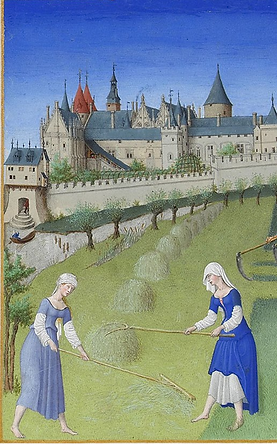
Laboring Serf Women
Guild (n.), a medieval association of craftsmen or merchants, often having considerable power.
Loom (n.), an apparatus for making fabric by weaving yarn or thread.
Mill (n.), a building fitted with machinery for a manufacturing process.
Deputy Husband (n.), a colonial woman who acted as a surrogate for her husband in business affairs.
Cottage Industry (n.), a business or manufacturing activity carried on in a person's home.

Enslaved Women at Work
Coverture (n.), the legal status of a married woman, considered to be under her husband's protection and authority.

American Association of University Women members with President John F. Kennedy as he signs the Equal Pay Act into law

Patsy Mink, Title IX

Lili Ledbetter
Join the Club
Join our email list and help us make herstory!
Personal Finances Today
Cultural norms are hard to eradicate and the long history of denying women control over their wealth has falsely imposed the idea that women are worse at money management. In reality, women are just as good. The symbols of wealth send messages of male dominance to girls. Wall Street is identified with a huge statue of a bull, snorting and grunting at passersby. Only recently was the statue of a small girl, staring him down, added as a counter message. Our national currency also has a “male” quality. American bills feature male figures from history such as a past president. The promise to put an image of Harriet Tubman on a $20 bill will not be fulfilled until 2030.
Women’s financial futures are distinctly different from those of men. 74 percent of women die single, because most women outlive their male partners and are less than fully prepared with savings of their own.[1] This demographic fact makes retirement planning crucial for women. Single women must pragmatically take control of their financial futures. Safe investing and saving are insufficient to provide for a comfortable retirement.
Women also must plan financially for the birth of their first child, which, studies show, has a significant financial impact on women, especially those who have no or inadequate medical insurance coverage or maternity leave. This gap in earning and contributing to a retirement plan is known as the motherhood penalty. Given that women are likely to lose money when they have their first child and given that they are likely to die later than their partners, they need to be particularly attentive to their personal financial well-being.
[1] “Women and Retirement: Not-So Golden Years,” American Association of University Women, https://www.aauw.org/issues/equity/retirement/.

Occupations with the Highest Median Earnings Among Women, US Department of Labor
Selecting the "Right" Career
Most children assume they will make enough money to support a reasonable lifestyle. Studies show that the gender pay gap follows women throughout their careers and into retirement. In some places, employers will ask prospective candidates about their salaries from prior jobs to determine how much to pay them at their new job rather than offering them the maximum of what the job pays, a practice that is now illegal in a few places, such as New York City, but is a common practice elsewhere. The effect is discrimination that follows women from job to job over the course of their lives and affects them even into retirement due to less earned income and fewer Social Security and pension benefits.
A tried-and-true strategy for women is to find career fields that offer flexibility around child rearing. Teaching positions generally provide a stable and consistent salary, offering financial security for mothers. Unlike some professions with irregular income patterns or commission-based structures, teachers can rely on a regular paycheck. This stability is particularly crucial for mothers who are often juggling various expenses associated with raising a family. The alignment of a teacher's schedule with that of their children is also a distinct advantage for women who have primary responsibility for childcare. This synchronization allows mothers to spend quality time with their kids during holidays and enjoy a more harmonious work-life balance.
Teachers often benefit from parental leave options as one aspect of their union contract. Teachers’ unions advocate for family-friendly policies, including maternity and paternity leave, allowing mothers to take time to care for their newborns without sacrificing job security or financial stability. This support is invaluable during the crucial early stages of a child's life. That said, teachers are notoriously underpaid because teaching has historically been a feminized occupation. Sexism and assumptions about what jobs constitute “women’s work” have long determined how women are paid. Women’s income through most of history was seen as secondary or supplementary to that of the male head of household.
While teaching offers unique advantages, other professions within the education sector such as administrative roles as well as health-related careers can provide similar benefits. Administrators in educational institutions and healthcare professionals may enjoy stable salaries and certain family-friendly policies. However, they might not align as closely with school calendars, missing the advantage of synchronized schedules with children.
But, as Gloria Steinem said, children have two parents, and the full pressure of having a flexible job for child rearing does not have to fall on the mother. In recent decades, significant strides have been made in breaking down gender stereotypes and regulations protecting female employees and mothers, particularly in traditionally male-dominated fields like science, medicine, engineering, law, and the military. The representation of women in law schools, for instance, increased substantially, with nearly as many women as men enrolled by 2020. Similarly, the STEM field has seen progress, with women now constituting 27% of jobs, up from 13% in 1980.[2] Despite challenges in the tech world, Claudia Goldin notes a decline in gender biases in most male-dominated professions.
Unlike the gender desegregation seen in male-dominated professions, the shift has been predominantly one-way, where women are increasingly taking on roles traditionally held by men. This positive trend has not extended to traditionally female occupations, particularly in HEAL fields (health, education, administration, and literacy). These roles remain "pink collar," with just 26% of HEAL jobs held by men, down from 35% in 1980.[4]
HEAL occupations, contrasting with STEM (science, technology, engineering, and mathematics), emphasize people-centric tasks and prioritize literacy over numeracy skills. The decline in the male share is notable in certain fields, such as psychology and social work. For instance, the proportion of men in psychology has dropped from 39% to 29% in the last decade, with a mere 5% among psychologists aged 30 or younger.[5] In teaching professions, the decline in male representation is evident, with only 24% of K-12 teachers being men, down from 33% in the early 1980s. The situation is more acute in early education, where men are nearly invisible, constituting only 3% of pre-K and kindergarten teachers, highlighting a continuing gender imbalance.
Increasingly, women are looking at higher paid roles. In 2023 women surpassed men in law school. Nearly 40 percent of practicing lawyers are now women, marking a notable increase from the 31 percent recorded in 2010. The presence of female federal judges has also seen a substantial rise since 1980 when there were only 46 women on the federal bench. Presently, approximately one-third of all federal judges are women, and this figure is on an upward trajectory. State Appels Courts exhibit a robust representation of women, constituting 41 percent of high-court justices.
Women's presence in US law schools has witnessed a remarkable surge. In 2000, only ten percent of law school deans were women, a figure which has grown to 43 percent. Women are almost half of law school faculty members, a significant jump from the 20 percent recorded in the 1980s.[6] Despite these advancements, a notable gap persists in leadership positions outside of academia, especially for women of color. Within law firms, women account for only 26.65 percent of partners and a mere 22.6 percent of equity partners, according to the National Association of Women Lawyers' recent diversity report on US law firms.[7] Another noteworthy trend is the substantial decline in male enrollment in law schools as women increasingly dominate classrooms. Over the past 13 years, the number of male enrollees has consistently decreased, dropping from 78,516 in 2010 to 50,097 in 2023.[8]
The legal profession is notoriously inflexible for parents and rewards people who build long-term relationships with clients. Clients want to know their lawyer personally, regardless of how skilled that person is. For some reason, the legal profession has not shifted into the 21st-century to allow skilled lawyers to put in less time. For MBA and JD earners, there is a substantial gender earnings gap that increases over time. Notably, women with MBAs and JDs tend to shift into lower-paying positions or leave the workforce for temporal flexibility, especially after having children. The finance and corporate sectors penalize lower hours, leading to a pronounced gender earnings gap.
By contrast, Nobel Prize winning economist, Claudia Goldin’s research showed that pharmacists earn comparable hourly income to lawyers, in fact, it’s one of the top paying jobs for women, but it has allowed parents, mostly women, to be more flexible on the job. When a customer shows up to a pharmacy, they do not really care who’s preparing the medication for them. This adaptation of the field has highly skilled women to have lucrative careers as pharmacists. Goldin used the O*NET database to identify characteristics related to flexibility in various occupations and found a negative association between these characteristics and the corrected ratio of female to male earnings.
What can we conclude from these data? Young people should be thinking about the jobs that will allow them to have the lifestyle they want. If that lifestyle includes children, they need to think about that and build it into their career planning, or they need to prepare to change the system and advocate for more family friendly policies.
[1] US Department of Labor, Women’s Bureau, “Occupations with the highest median earnings among women,” April 2025, https://www.dol.gov/agencies/wb/data/earnings/occupations-highest-median-earnings-women.
[2] Ian Pisarcik, “Women Outnumber Men in US Law School Classrooms, but Statistics Don’t Tell the Full Story,” Jurist, January 17, 2024, https://www.jurist.org/commentary/2024/01/women-outnumber-men-in-us-law-school-classrooms-but-statistics-dont-tell-the-full-story/#:~:text=According%20to%20the%20most%20recent,percent%20of%20all%20law%20students.
[3] US Department of Labor, Women’s Bureau, “Occupations with the lowest median earnings among women,” April 2025, https://www.dol.gov/agencies/wb/data/earnings/occupations-lowest-median-earnings-women.
[4] Richard V. Reeves, Of Boys and Men: Why the Modern Male Is Struggling, Why It Matters, and What to Do About It (Washington, D.C.: Brookings Institution Press, 2022).
[5] Reeves, Of Boys and Men.
[6] Pisarcik, “Women Outnumber Men in US Law School Classrooms.”
[7] Pisarcik, “Women Outnumber Men in US Law School Classrooms.”
[8] Pisarcik, “Women Outnumber Men in US Law School Classrooms.”

Occupations with the Smallest Gender Earnings Gap, US Department of Labor
Pink Collar (n.), jobs traditionally done by women due to law, policy, and culture.
HEAL jobs (n.), jobs in healthcare, education, administration, and literacy.
Firm (n.), a business with two or more partners or owners.

Business Meeting
Persistent Myths
Several persistent myths shape women’s experiences in the workplace and ultimately influence their personal finances. One myth is that women do not advance in their careers because they lack ambition, assertiveness, or the skills necessary for leadership. However, Marilyn Loden—who coined the term glass ceiling—argued that the real obstacles are cultural, not personal. Women are often passed over for promotions due to stereotypes, assumptions about motherhood, and the belief that men deserve higher-status jobs because they are “breadwinners.” These invisible biases limit women’s career mobility and reduce their lifetime earning potential.
Another common myth is that the glass ceiling itself does not exist and that women can rise as far as they want through hard work alone. Some argue the ceiling is a “myth,” but even these arguments acknowledge significant barriers: women shoulder disproportionate family responsibilities, face limited opportunities for advancement, experience gender-based discrimination, and often struggle with confidence due to workplace culture. Rather than disproving the glass ceiling, these points confirm that structural barriers continue to hinder women’s progress and financial stability.
A third myth is that hard work alone will be recognized and rewarded. As Linda Babcock shows in Women Don’t Ask, socialization teaches many women not to negotiate or advocate for themselves. Instead, they often wait to be noticed or invited to opportunities. This hesitation leads to lower pay, fewer promotions, and ultimately weaker long-term financial outcomes when compared to men, who more frequently negotiate for raises and advancement.
Another misconception is that there are simply too few qualified women for top leadership roles. Companies often claim that women lack the CEO experience typically required for advancement. However, research from the Harvard Business Review shows that women do reach CEO roles, just often through alternative pathways—particularly through service on corporate boards. The issue is not a lack of qualified women but the structural patterns that prevent women from entering the traditional leadership pipeline.
Finally, many believe that women’s limited advancement is the result of personal choices around family responsibilities. In reality, women continue to carry a disproportionate share of unpaid labor at home, which restricts their professional opportunities. These expectations are shaped by cultural norms, not individual preference, and they significantly influence women’s long-term financial security.

Claudia Goldin Becomes First Woman to Win a Nobel Prize in Economics, US Embassy in Sweeden
Retirement Planning
Throughout their lives, women experience an income disparity, with the most pronounced gap occurring in retirement. The gender pay gap, persisting throughout a woman's life, leads to substantial earnings losses, hindering savings accumulation. Women have smaller Social Security benefits, pensions, and savings. Consequently, their retirement income is only 70% of that earned by men. Elderly women are more prone to living below the poverty line compared to men. Notably, in 2018, 62% of Americans above 65 living in poverty were women.[1] Women, often engaged in part-time work or navigating in and out of the workforce. They frequently lack access to employer-sponsored retirement plans. Lower wages and intermittent employment result in reduced Social Security benefits. The data show 11% of women above 65 lived in poverty, while just 8% of men.[2] Even those not in poverty struggle with meager incomes. While white men aged over 65 average $44,200 annually, Black women have $21,900, Latinas $14,800, and white women $23,100.[3] The numbers speak for themselves.
Because women live longer, they face higher retirement costs, including daily living and healthcare expenses. Social Security is a crucial income source, constituting 47% of total income for unmarried women, including widows, compared to 34% for unmarried men.[4] Additionally, 46% of unmarried women over 65 rely on Social Security for almost all (90% or more) of their income. Ensuring a secure retirement for American women, regardless of their career paths, necessitates laws and policies fortifying retirement programs. This involves safeguarding Social Security, enhancing pension benefits, and advocating for fair pay throughout women's careers. Achieving gender equity is an enduring commitment.
[1] Krawcheck, “18 Truths About Women and Money.”
[2] Krawcheck, “18 Truths About Women and Money.”
[3] Krawcheck, “18 Truths About Women and Money.”
[4] Krawcheck, “18 Truths About Women and Money.”

Retirement Planning
Conclusion
It is a pivotal moment to reimagine personal finance with women in mind. It is crucial to dismantle gender differences in financial upbringing and their effect on women's financial futures. Women must take control of their financial futures, especially considering unique challenges like the motherhood penalty and the fact that 74% of women may end up single in retirement. Therefore, young women should carefully explore career choices, considering the gender pay gap and the importance of selecting fields with flexibility around child-rearing. In terms of investing, women are found to be more cautious but achieve superior returns. With the looming Great Wealth Transfer, women will have greater opportunities to influence investment patterns and philanthropy. Finally, it’s important to be aware of and advocate for policies that fortify retirement programs and promote gender equity.
Checking for Understanding
-
According to research, how are girls and boys raised differently when it comes to handling money, and what long-term effects might these differences have on their financial futures?
-
What is the “motherhood penalty,” and how does it connect to the gender pay gap and women’s long-term financial stability? Provide an example from the text.
-
Compare the trends in gender representation in STEM versus HEAL (Health, Education, Administration, and Literacy) fields. What do these trends reveal about gender norms and career flexibility?
-
Studies show that women tend to take fewer investment risks than men. How does this difference affect investment outcomes and what major shift might occur with the “Great Wealth Transfer”?
-
What factors contribute to women having lower retirement income than men, and what policy or societal changes could help address this inequality?
Extension Activities
-
Explore career choices and gender pay gaps in those careers.
-
Interview women mid-career about their work and experiences.
-
Imagine what you envision for yourself 10, 20, and 30 years from now.
-
Explore investment and retirement planning strategies.
-
Interview retired women about their financial planning for retirement.
-
Imagine yourself at retirement age and set goals to help you reach that vision.
Bibliography
Adam, Jamela. “When could women open a bank account?” Forbes. March 20, 2023. https://www.forbes.com/advisor/banking/when-could-women-open-a-bank-account/#:~:text=It%20wasn't%20until%201974,a%20signature%20from%20their%20husbands. Blackstone, William. Commentaries on the Laws of England, Book 1, Chapter 15. Avalon Project, Yale Law School. https://avalon.law.yale.edu/18th_century/blackstone_bk1ch15.asp. Bloom, Dan. “They must have been mad men: The horrendously sexist vintage ads you won't believe were ever made.” Daily Mail. May 1, 2014. https://www.dailymail.co.uk/news/article-2617868/The-good-old-days-Horrendously-sexist-vintage-ads-wont-believe-made.html. British Library Editors. “Women in Medieval Society.” British Library. https://www.bl.uk/the-middle-ages/articles/women-in-medieval-society. Brown, Peter. “The Silk Road in Late Antiquity” in Reconfiguring the Silk Road, ed. By Victor H. Mair & Jane Hickman. University of Pennsylvania Press, 2014. Cartwright, Mark. "Amaterasu." World History Encyclopedia. Last modified December 17, 2012. https://www.worldhistory.org/Amaterasu/. Daly, Lyle. “Investing for Women: What You Should Know: When it comes to investing, women and men differ. Here's what the research says.” Motley Fool. September 26, 2023. https://www.fool.com/research/women-in-investing-research/#:~:text=Women%20are%20more%20conservative%20investors&text=It%20starts%20with%20a%20more,to%20hop%20on%20investing%20trends. Fitzpatrick, Matthew P. “Provincializing Rome: The Indian Ocean Trade Network and Roman Imperialism.” The Journal of World History, Vol. 22, No. 1 (March 2011), pp. 27-54. Gershon, Livia. “What Really Made 1950s Housewives So Miserable: Where did the image of the quietly desperate stay-at-home mother come from?” JSTOR Daily. June 8, 2017. https://daily.jstor.org/what-really-made-1950s-housewives-so-miserable/. Goldin, Claudia. Career and Family: Women's Century-long Journey Toward Equity (Princeton, New Jersey, Princeton University Press, 2021). Green, Emily. “The Great Wealth Transfer.” Ellevest. JANUARY 16, 2024. https://www.ellevest.com/magazine/investing/great-wealth-transfer. Hansen, Valerie. The Silk Road: A New History. Oxford University Press, 2015. Holmgren, Jennifer. “A Question of Strength: Military Capability and Princess-Bestowal in Imperial China’s Foreign Relations (Han to Ch’ing).” Monumenta Serica, Vol. 39 (1990-1991), pp. 31-85. Jerreat, Jessica. “Should women be spanked? 1950s newspaper clipping shows how far women's rights have come.” Daily Mail. August 31, 2013. https://www.dailymail.co.uk/news/article-2408041/Burning-question-day-1950s-newspaper-clipping-shows-far-womens-rights-come.html. Jones-Rogers, Stephanie E. They Were Her Property: White Women as Slave Owners in the American South. New Haven: Yale University Press, 2019. Kratz, Jessie. “On the Basis of Sex: Equal Credit Opportunities.” National Archives: Pieces of History. March 22, 2023. https://prologue.blogs.archives.gov/2023/03/22/on-the-basis-of-sex-equal-credit-opportunities/. Krawcheck, Sallie. “18 Truths About Women and Money.” Ellevest. DECEMBER 8, 2020. https://www.ellevest.com/magazine/disrupt-money/truths-about-women-and-money. Loengard, J. S. A Medieval Life: Cecilia Penifader of Brigstock, c. 1295-1344. Judith M. Bennett. Speculum: Vol 75, No 2. 2000. Speculum.https://doi.org/10.2307/2887586. Mark, Joshua J.. "Women in the Middle Ages." World History Encyclopedia. Last modified March 18, 2019. https://www.worldhistory.org/article/1345/women-in-the-middle-ages/. PBS. “Mrs. America: Women’s Roles in the 1950s.” PBS. N.D. https://www.pbs.org/wgbh/americanexperience/features/pill-mrs-america-womens-roles-1950s/. Pisarcik, Ian. “Women Outnumber Men in US Law School Classrooms, but Statistics Don’t Tell the Full Story.” Jurist. JANUARY 17, 2024. https://www.jurist.org/commentary/2024/01/women-outnumber-men-in-us-law-school-classrooms-but-statistics-dont-tell-the-full-story/#:~:text=According%20to%20the%20most%20recent,percent%20of%20all%20law%20students. Pollard, Elizabeth Ann. “Indian Spices and Roman ‘Magic’ in Imperial and Late Antique Indo Mediterranea.” The Journal of World History, Vol. 24, No. 1 (March 2013), pp. 1-23. Reeves, Richard V. Of Boys and Men: Why the Modern Male Is Struggling, Why It Matters, and What to Do About It. Washington, D.C.: Brookings Institution Press, 2022. Reeves, Richard V. & Isabel V. Sawhill, "Men's Lib." The New York Times. November 14, 2015. https://www.nytimes.com/2015/11/15/opinion/sunday/mens-lib.html?_r=0. Salmon, Marylynn. “The Legal Status of Women, 1776–1830.” The Gilder Lehrman Institute of American History. https://www.gilderlehrman.org/history-resources/essays/legal-status-women-1776-1830#:~:text=Marriage%20changed%20women's%20legal%20status,sounds%20bad%2C%20and%20it%20was South Carolina Women in Leadership. “Women who Played Sports are more likely to be Business Leaders.” N.D. https://scwomenlead.net/women-who-played-sports-are-more-likely-to-be-business-leaders/. Steinem, Gloria. Outrageous Acts and Everyday Rebellions. 2nd ed. with a new preface and notes by the author. New York: H. Holt, 1995. Strayer, R. and Nelson, E., Ways Of The World. 3rd ed. Boston: Bedford/St. Martin’s, 2016. Ulrich, L. T. Good wives: Image and reality in the lives of women in northern New England, 1650-1750 (1st Vintage Books ed.). New York: Vintage Books, 1991. Whitfield, Susan. Life along the Silk Road. University of California Press, 2015. Wright, David Curtis. “A Chinese Princess Bride’s Life and Activism among the Eastern Turks, 580-593 CE.” Journal of Asian History, Vol. 45, No. ½ (2011), pp. 39-48. “Women and Retirement: Not-So Golden Years.” American Association of University Women. https://www.aauw.org/issues/equity/retirement/.


