


27. 1930-1950 - Women and Global War
Between 1939 and 1950, the world was again at war. World War II transformed women's lives around the world and left their roles forever changed. Women were re-mobilized for war and their anti-war advocacy became even more entrenched. The post war world also saw more women in power, and greater emphasis on peace and universal human rights, compounding on the efforts of the generation before them.
How to cite this source?
Remedial Herstory Project Editors. "27. 1930-1950 - WOMEN AND GLOBAL WAR" The Remedial Herstory Project. November 1, 2025. www.remedialherstory.com.








Trigger Warning: This chapter references rape and sexual assault.
World War I was meant to be the war to “end all wars,” but obviously such was not the case. The moment the First World War ended, the Second was on the horizon. Women worked to prevent war through peace efforts, while others worked to rearm, rebuild, and prepare for revenge. When war finally reared its head, women again served their nations at unprecedented scales, building on the role they played in the first war. From Japan, to the US, to India, to Europe and North Africa, women everywhere were drawn into the conflict.
Women served in war as they had before, but this time in greater numbers and with even more access to the front. Women served behind the lines, worked in the resistance, fought as soldiers and pilots, and were - as ever - victims of war. Not only did women face death, injury, and destruction of their homes and towns, but everywhere the war touched, women were also victims and survivors of sexual assault and rape. While it is hard to talk about, it is important to understand the particularly vulnerable positions civilians are in during war to understand it on a human level in hope that history doesn't repeat itself.
Join the Club
Join our email list and help us make herstory!
Pacifism
In Europe, World War II was building the moment World War I ended. A major cause of the war was the resolution to the first, in which the Allied governments sought to punish Germany by placing heaving payments, seizing German colonies, and pushing back German boundaries. The Treaty of Versailles forced German people into poverty while the abdicated Kaiser Wilhelm - the German decision-maker of the war - and his family lived in relative luxury. It installed a weak democratic government and built resentment in the German people who looked at this new government and their wartime enemies as the source of all their new ills.
As part of the work that had begun in and around World War I, Pacifist women worked tirelessly in the two decades between the wars to prevent the next. In 1919, the International Committee of Women for Permanent Peace changed its name to the Women's International League for Peace and Freedom (WILPF) and relocated its central office to Geneva, near the League of Nations. Between the wars, American Emily Greene Balch, a former Welsley Professor of Economics, became the leader and worked without pay to the organization's ends. She received the Nobel Peace Prize in 1946 for her work to promote peace and reconciliation.
Another major figure was Gabrielle Duchêne, the French founder of the World Committee of Women against War and Fascism, created in 1934. She, among others, was convinced that only a single union of feminists, united by a sense of internationalism, could wage the war against war. Duchêne continued her work during and after the war. When Nazis later invaded France, she was hunted as a political adversary and sought refuge with friends where she helped people escape Europe. After the war, she left a momentous archive of documents related to women’s peace and labor union work.
In the years between the wars, French pacifist Jeanne Mélin, who had been highly active in World War I, remained central to the discussions of peace and feminism in the build-up to World War II. Moving toward a more radical pacifism, her goal was to prevent war and increase international cooperation in order to democratically resolve issues, long before war ever emerged as a solution. Mélin became active in international relations, exchanging almost 1,000 letters with like-minded women from around the world including Gabrielle Duchêne, Louise Bodin, Jane Addams, Chrystal MacMillan, and even German leaders Gertrud Baer and Lida Gustava Heymann.
Mélin also refused to accept the Treaty of Versailles, particularly the theory of German culpability, and increased her symbolic and media-related activities in support of Franco-German reconciliation. At a peace conference in Zurich in 1919, she is remembered for shaking the hand of the German delegate Lida Gustava Heymann. In her speech, she refused to condone France humiliating Germany by way of the peace treaties. She proclaimed herself a sister of these women who, like herself, had fought so strongly against imperialism and militarism. Mélin even sent a manifesto to the German people proposing a European economic federation, an idea that would not be realized for decades in the formation of the European Union in 1993.
Mélin traveled widely in Europe on behalf of the peace organization Ligue International des Femmes pour la Paix et la Liberté (LIFPL). However this group was seen by people at the time as a distraction from the hard issues of the time - or worse - the product of the weaker sex. Still, their efforts would have lasting impacts beyond the war, laying the groundwork for the international cooperation that followed.
Women peace activists were widely engaged during this period, but were often operating outside positions of power and many of their countries were taking the position of neutrality and isolationism rather than actions that could potentially avoid future war, which made peace initiatives difficult, if not impossible. In fairness, many of these countries had been so devastated and rocked by World War I, that they focused on their own personal rebuilding rather than prioritizing future hypothetical (though likely) wars. Others, who had been spared some of the horrors of World War I, wanted to ensure that they never became entangled in such an apocalyptic event. It was not that they did not want peace, but more that they couldn’t bring themselves to think about war. Nonetheless, this mindset and stance had consequences. For example, in 1922, a delegation from the Messagères de la Paix, comprising Jane Addams, Catherine Marshall, and Jeanne Mélin, won the support of the Scandinavian countries against French occupation of former German territories. Unfortunately, because those countries had declared neutrality, they were unable to take any steps that would put pressure on France.
Further, as the women of these organizations operated outside of power, the almost entirely male Allied governments refused to receive them. When the women proposed reasonable changes to the League of Nation’s constitution, which would improve cooperation over coercion, they were similarly ignored. Other women’s peace groups wanted the League of Nations to be replaced by an international society of nations advocating gender equality, the economic independence of women, the equal sharing of wealth, and respect for minorities. This initiative would not take root.
The international feminist pacifist movement was really active in the mid-1920s, with several organizations hosting conferences to dispel myths propagated by national governments. 19 different peace organizations and societies took part in a parade for peace on Armistice Day (the day peace was established in World War I) in 1931. The parade crossed Paris by bus, and was marked by two symbolic arrests, one at the Etoile on the Tomb of the Unknown Soldier and another at the foot of the Eiffel Tower.
While the ideas they put forth still showed the advanced nature of their thinking regarding peace and world affairs, as things heated up and tensions were mounting in Europe, the women of these organizations would not be successful in preventing World War II. In her 1957 memoirs, Jeanne Mélin bears witness to the desperation and isolation she felt when tackling the subject of the declaration of war. She wrote, “Well at this point, I find it impossible to describe my greatest disappointment [...] having worked so hard and relentlessly for harmony between nations, for peace and human fraternity, all I could do was stand by impotently as such a worthy ideal collapsed around me.”
Abdicate (v.), (of a monarch) renounce one's throne.

Delegation from the Women's International League for Peace and Freedom after meeting with President Roosevelt at the White House in 1936

A World War I era protestor
Impotently (adv.), in a way that lacks the power or ability to change or improve a situation.
Rising Facism: Italy
When people think of World War II and fascism, they are typically immediately drawn to Germany, but many forget that Italy had paved the path that Adolf Hitler would follow. The Kingdom of Italy was overtaken by the National Fascist Party and its leader, Benito Mussolini, in 1922. In a political arrangement of supposed shared power, Mussolini ruled alongside the sitting monarch, but the power was ultimately in Mussolini’s hands as dictator.
Facism was a political ideology wrapped around ultranationalism and totalitarian rule. Fascist ideology was similar to socialism at the time in that it promoted a breakdown of class distinctions, but could not align with socialism’s negative view of nationalism. Further, the notion of breaking down class distinctions was primarily meant to alleviate issues of workers and the wealthy, and did not intend to build equality across races, religions, or genders; these hierarchies were intended to remain firm with Italian, Catholic men at the top of the proverbial food chain.
Mussolini preached of a return to Italy’s prominence in the world, modernization, and conquest. Specifically - just as Hitler’s Nazi Party would later proclaim the need for expansion in the name of Aryan lebensraum (living space) - Mussolini focused on creating spazio vitale (living space) for the Italian people. Between 1920 and 1939, the year WWII began, Italian forces attacked, annexed, occupied, and invaded Libya, Ethiopia, Albania, and territories of Greece and Yugoslavia. While he was soon to be overshadowed by the horrors of fascist Germany, Mussolini’s brash actions and seeming ability to sidestep any international clamor not only inspired Hitler, but helped to prove to the world at large that international organizations like the League of Nations were incapable of actually preventing regional conflict.
Italian soldiers marched into Ethiopia in 1936 before the Western world was ready to consider the start of World War II, and thereby offered only weak sanctions as a response. As the Italian men marched, they sang songs about the sexual things they would do to Ethiopian women when they arrived. Seeing the rape of women as a right of war, indeed perhaps as a male military “rite of passage,” has been pervasive in many wars, and this was bolstered by the fact that Italian fascism supported gender hierarchy with women subordinate to men.
The war brought about widespread violence, and Ethiopian women were not spared from its effects. There were documented cases of sexual assault and rape committed by Italian forces, and these acts of violence had a traumatic and long-lasting impact on the survivors, leaving deep scars on both individual and collective levels.
Ethiopian leaders asked Britain and France for support, but they were denied. They warned that the war that was happening in North Africa would soon be in Europe, but leaders were so fearful of another global war they still refused to intervene. The delayed involvement of both the Americans and the British had a profound impact on the lives of women around the world. Whenever an army is invading, there is great risk to the civilian population who are often left behind when the trained men head off to distant front lines.
The assault of Ethiopian women would not be unique in this war. World War Two saw extensive use of rape both as a tactic of war and as a casual expression of misogyny. Examples include the Rape of Nanjing mentioned above, the Rape of Berlin, in which the Russian army raped virtually every woman left in Berlin at the end of the war, rapes and sexual torture in the Holocaust, the sexual slavery of the Comfort Woman system, and rapes by Allied soldiers across Europe.
While their war began years before World War II erupted, Ethiopian women actively participated in the resistance against Italian occupation until they were driven out by Allied forces in 1941. They played crucial roles in supporting the Ethiopian resistance forces, providing food, shelter, and medical assistance to fighters. Women also acted as messengers, spies, and nurses during the war, making significant contributions to the resistance efforts.
Nationalism (n.), identification with one's own nation and support for its interests, especially to the exclusion or detriment of the interests of other nations.
Totalitarianism (n.), a system of government that is centralized and dictatorial and requires complete subservience to the state.
.jpg)
Ethiopian woman being trained to use a rifle in 1935
Rising Fascism: Germany
The economic depression in Germany allowed for extremism to breed and gradually, the Nazi Party under the charismatic leadership of Adolf Hitler came to power, promising that they had solutions to all the problems facing real Germans. Their goal was the rise of the Third Reich, or the third great empire (after the Holy Roman Empire and the German Empire), but that process involved eradicating undesirable elements from society through policy and breeding to leave only the “master race”, the Aryans. Undesirable elements ranged from criminals and political opposition, to Jews, Marxists, Roma, and even those with mental and physical disabilities. All of these groups being among the many blamed for Germany’s suffering.
Women played a significant role in Hitler’s plan to create an ideal society, although this role was ultimately the submission of women in an ultra masculine society. Hitler praised German women as loyal and devoted supporters of the Nazi movement. He valued Aryan women for their activism and also recognized their biological ability to bear children who would contribute to the growth of the race. The Nazis believed that a larger population of pure Aryans would strengthen Germany militarily and provide settlers for conquered lands in Eastern Europe. To promote this goal, the Nazi regime encouraged "racially pure" women to have as many children as possible, as long as their choice in partner was selective - as only healthy, Aryan partners could produce children of his future “master race.” The regime sought to maintain "racial purity" by passing laws that prohibited marriage between Aryans and non-Aryans and preventing individuals with disabilities or certain diseases from marrying at all.
In 1936, the Nazis implemented a state-directed program called Lebensborn (Fount of Life), which aimed to increase the population. Under this program, every Schutzstaffel (SS) member was expected to father four children, whether they were married or not. Lebensborn homes were created that acted as state-endorsed brothels for SS to procreate with racially pure women. They provided support and assistance to these single mothers and their children, including financial aid and assistance in finding adoptive parents for the children.
The Lebensborn program was not aggressively promoted, instead, the Nazi population policy focused more on promoting family and marriage, expecting children to follow naturally. The state encouraged marriage through loans, provided financial support for each new child, publicly recognized families with many children, awarded the Cross of Honor of the German Mother to women with four or more children, and increased penalties for abortion of desired Aryan babies. The National Socialist Women's Union and the German Women's Agency also used Nazi propaganda to emphasize the roles of women as wives and mothers.
The Lebensborn program was not aggressively promoted, instead, the Nazi population policy focused more on promoting family and marriage, expecting children to follow naturally. The state encouraged marriage through loans, provided financial support for each new child, publicly recognized families with many children, awarded the Cross of Honor of the German Mother to women with four or more children, and increased penalties for abortion of desired Aryan babies. The National Socialist Women's Union and the German Women's Agency also used Nazi propaganda to emphasize the roles of women as wives and mothers.
While Aryan women were praised, it was entirely for their reproductive function. Outside of that, opportunities for women in the workplace were rapidly closing. Admissions into institutions of higher learning, licensure, and other measures of social value were similarly deteriorating. Instead, girls were taught starting at the age of ten to embrace their roles as mothers and obedient wives through schools and compulsory membership in the Nazi League of German Girls (Bund Deutscher Mädel). However, as the Nazis geared up for war, the need for labor forced them to alter their stance and encourage women to enter the workforce. Women were compelled to participate through programs like the Duty Year, which required all women to provide compulsory service, and many even joined the military.
Aryan (n.), (in Nazi ideology) a white, non-Jewish person, especially one of northern European origin or descent, regarded as belonging to a supposedly superior racial group.
Marxist (n.), a supporter of the political and economic theories of Karl Marx and Friedrich Engels.
Roma (n.), a people originating in South Asia and traditionally traveling as way of life; known derogatorily as gypsies.
.jpg)
Nazi propaganda photo idealizing motherhood
Schutzstaffel (n.), a major paramilitary organization under Adolf Hitler and the Nazi Party in Nazi Germany, and later throughout German-occupied Europe during World War II.

The Cross of Honor of the German Mother

Members of the BDM
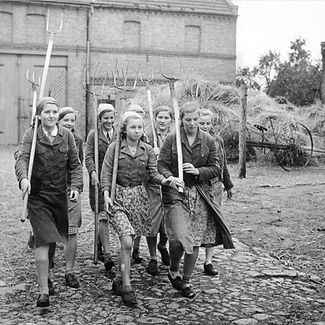
Members of the BDM performing agricultural work
Rising Fascism: Japan
Across the world, Japan - which had played a relatively small role in World War I as part of the Allies - continued its militarism and imperial ambitions. As in the Russo-Japanese War, their eyes were set on Manchuria as a start, but their goal, like that of the emerging Nazis across the ocean, was nothing short of Asian and Pacific domination. Some even mark Japan’s fateful invasion of Manchuria in 1931, and later invasion of China in 1937 as starting points of World War II, even though the general consensus marks the start as Germany’s invasion of Poland in 1939. While Mussolini and Hitler were pressing the boundaries of the ineffective League of Nations and dreaming of their future empires, Emperor Hirohito was already pursuing expansion through force.
Part of this Japanese drive for domination was fueled by a distorted view of the world and gender relations. Japanese conservatives were critical of the West and modernization, and worried about society becoming more feminine. Imperial Army soldiers were encouraged through government propaganda and education to be against the "new woman," the women's movement, women entering male jobs, and modern technology that made life easier for both men and women. Soldiers were expected to prioritize loyalty to the Emperor and the nation, not their families, which primary source evidence showed was not easy for them. Yet, this idea of military masculinity started to dominate mass culture too.
At the same time, the empire needed women in order to win wars of expansion. The ideals of a "good wife, wise mother" were transformed to include national service, as women became crucial in the war effort, providing comfort and support to soldiers. The Women's National Defense Association played a significant role in promoting defense knowledge and aiding families of soldiers. The association's activities included sending care packages and letters to soldiers, as well as visiting their homes, and membership became compulsory, or forced like the draft, so millions of women participated.
However, the way that women were idealized at home in Japan could not have been more different from how state agencies treated women in conquered Japanese territory. As part of their indoctrinated sense of ethnic superiority over surrounding peoples, their views of women’s subservience, and even as a military strategy of sexual terrorism, rape and sexual assault was rife wherever the Japanese Army went. One of the most horrific assaults on foreign Asian women came between 1937-1938 during an event known as the Rape of Nanjing.
As the Japanese moved through the Chinese countryside, civilians fled from their homes in hopes of finding safety. Many had fled to the city of Nanjing, but as the Chinese armies pulled back toward the center of the country to try to lure the Japanese after them, the city was left woefully underprotected. The massacre in Nanjing by the Japanese army resulted in the brutal killing of entire Chinese families, and the city was left strewn with bodies as the killing dragged on from mid-December into January 1938.
Alongside the mass killings, tens of thousands of women, including young girls and elderly women, endured horrifying acts of rape and torture. Survivor Xia Shu Qin recalls,
When the Japanese came in, they stabbed me three times, and I passed out. When I came to, I saw my mother without clothes lying dead at the side of the table. My baby sister lay dead in the courtyard. My teenage sister was naked. They didn’t even bother to cover her up. I went around and shook everyone. Not a living soul. [...] Seven out of nine people in my family died.
Eyewitness accounts and subsequent analyses indicate that between 20,000 and 80,000 women suffered brutal sexual assaults, with many of them being mutilated and killed after the attacks.
Minnie Vaughn was an American teacher among several international figures in Nanjing who worked to establish and hold a “safe zone” in the city for refugees that they urged the Japanese to not breach and potentially set off an international incident. Collectively, these teachers, missionaries, and doctors saved the lives of thousands, while also cataloging the horrors of the invasion to be shared around the world. Vaughn wrote in her diary from within that safe zone,
A mother brought in three young girls this afternoon and begged us to receive them. One is her daughter who went to the country in early December, the other two were country girls. They say it has been terrible in the country. Girls had to be hidden in covered holes in the earth. Soldiers would try to discover these hiding places by stamping on the earth to see if there were hollow places below. They said they had spent most of their days since December 12th in these holes. [...] At nine this morning two young girls came running to the campus from the street between the University and Ginling saying that soldiers were in their home and they had escaped. [...] This morning four girls came in from the country disguised as old women.They have been hiding in a fuel stack for weeks. [...] This afternoon a little boy came to see me whose father, mother and maternal grandmother and baby sister were all killed by Japanese soldiers. He saw them all killed.
The exact death toll of the Nanjing Massacre remains uncertain, with estimates ranging from 200,000 to 300,000 people. Following the war, both General Iwane Matsui and Lieutenant Tani Hisao were tried and convicted for war crimes by the International Military Tribunal for the Far East for their leadership role in this massacre, leading to their subsequent executions.
It should always be remembered when looking at periods of war that not all soldiers participated in such actions, and some even pushed back against them and protected civilians from such horrific crimes. However, in these extremes, those soldiers could tragically be the minority. Yet, especially as the war expanded, the rape and assault of local women by Japanese soldiers became a serious issue for the military and the colonial regime, showing how routine it had become. Military leadership was not overly concerned with the fate of the women who were victims of this pattern, but concerned that the increasing number of soldiers with venereal diseases tarnished their reputation and the careers of commanders. Sadly, this would inspire the creation of forced prostitution “comfort stations” in Japanese-held territory throughout the Pacific.

Members of the Women's Volunteer Corps (June, 1944)

A survivor of the massacre standing among the dead
Fascism and Feminism
As each of these nations that will inevitably form the Axis Powers explored fascism in their own way, a tenet of their shared fascist ideology - often underemphasized in history classes - is the promotion of the traditional roles of women. Specifically, valuing their roles as mothers who are believed to use their bodies to produce a particular kind of nation (in these cases, a nation of people from a specific ethnic group), and little else, reduced women living under these regimes as broodmares. Therefore, feminists who had come to support contraception, abortion, or women’s bodily autonomy and freedom were a particular target of these regimes.
Fascist nations under Hitler, Hirohito, and Mussolini played a significant role in controlling women's bodily autonomy by implementing measures such as restricting access to reproductive healthcare and providing incentives for increased reproduction, including financial rewards for having lots of children. For example, in 1930, the Rocco Code was implemented in Italy, which banned abortion and limited women's access to birth control. This law also targeted midwives as a source of information on contraception and abortion services. Women's fertility was treated as a public good owned by the state, not by the woman herself. In Nazi Germany, the Nuremberg Laws imposed racist distinctions on when abortion was illegal. There were harsher punishments for abortions performed on women classified as Aryan, while abortions on Jewish and other minority groups were encouraged for eugenic reasons. When the Nazis later took over France, they imposed a puppet government known as the Vichy regime in Southern France, where abortion was declared a crime against the state in 1942. This law led to the imprisonment of Eugène Humbert and the execution by guillotine of Marie-Louise Giraud in 1943 for being abortion providers.
Women in these regimes found various ways to collectively push back against the political assault on their bodies. Some women concealed their pregnancies from employers to avoid restrictive work laws, while others shared recipes containing folk medicine and reproductive health information, expanding access to such knowledge. Rice weeders expressed their resistance through work songs, discussing their struggles and aspirations for personal rights in opposition to the state's agenda, while midwives even engaged in clandestine actions, stealing forbidden tools to perform deliveries of children who did not match the ethnic ideal as well as private abortions.
In all, using women’s bodies and reproductive potential for the good of the state supported the fascist ideas of hierarchies. They viewed their race as superior to other races and aimed to prove that through military might. Women, although part of that race, were subjected internally to the gender hierarchy which was male defined and dominated.
Broodmare (n.), a female horse used for breeding.
Eugenics (n.), the study of how to arrange reproduction within a human population to increase the occurrence of heritable characteristics regarded as desirable.
Clandestine (adj.), kept secret or done secretively, especially because illicit.

A lebensborn house in Germany
The USSR
While not undergoing a fascist takeover, the Soviet Union had been undergoing immense transformation since communism had taken hold in the wake of World War I. As Stalin consolidated power in the years after Lenin’s death, an even harsher version of communism was in place. Under Lenin, the Bolsheviks had sought to transform the family by giving men and women equal rights. Lenin stated, “[The woman] continues to be a domestic slave, because petty housework crushes, strangles, stultifies and degrades her, chains her to the kitchen and the nursery, and she wastes her labor on barbarously unproductive, petty, nerve-racking, stultifying and crushing drudgery.” Stalin continued some of the commitment to women’s rights. For example, the army contained all-female units, and the 1936 Constitution of the Soviet Union stated that “Women in the USSR are accorded equal rights with men in all spheres of economic, state, cultural, social, and political life.” However, in practice, Stalin’s Russia did not live up to those goals. Women continued to bear the burden of childcare and during the war, the ideology of women as “heroines of the home” was inculcated.
Interestingly, while Western powers ignored the hostile and expanding fascist states, they also appeared to be blind to Soviet behaviors. In the 1930s, Stalin began killing or imprisoning resisters to the communist regime and sending them to the gulags (work camps in Siberia), and also committed a mass murder of primarily Ukrainians (known as the Holodomor), through forced collectivization policies which caused the deaths of millions. The dislocation, disappearance, and often murder of men in Stalin’s “purges” left many towns within the Soviet Union with a female majority and families run by female matriarchs trying to pick up the pieces. Women, deprived of male partners by the Soviets, suffered immeasurable pain and suffering as they struggled to feed their families and save their children in the midst of mass hunger. The West either remained ignorant or turned a blind eye to their experiences, quite possibly because they were so focused on the threat posed by rising fascism elsewhere.

A 1930 stamp glorifying ordinary, female workers over traditional feminine appearance
Inculcate (v.), instill (an attitude, idea, or habit) by persistent instruction.

Ukrainian woman caring for starving people in the Holodomor
Outbreak of War
While historians pinpoint several moments as the official start of World War II like the Italian invasion of Ethiopia, the Japanese invasion of Manchuria and later China, Western historians point to the Nazi invasion of Poland in September 1939 as the start. Germany quickly overwhelmed much of Europe. After signing a nonaggression pact with the Soviet Union, Germany invaded Poland from one side, while the Soviets invaded from the other. Then, the Germans turned their eyes on Scandinavia, then back on their old foes of France and Britain in 1940, before they stabbed the Soviets in the back driving deep into Soviet territory the next year. Japan similarly tore through China, Vietnam, and after surprising the then-neutral Americans in December 1941, nearly all of the Pacific Islands. Meanwhile, Italy expanded their war into other parts of North Africa and then to other areas of the Mediterranean and Balkans. Each of these nations drew strength from their alliance which formed the Axis Powers in September 1940, while also capitalizing on their enemies’ reluctance to mobilize in the pre-war years.
When the war erupted, women again found themselves thrust into the fight as they had been in World War I. The sheer scale of this war meant that each country involved was throwing their full voluntary forces’ weight at one another, and most also had to draft men to ensure they could protect themselves from or overcome their enemies. As a result, women of both Axis and Allied countries were needed to step into traditional male roles in industry, agriculture, and even military service. Yet again, millions of women took on the monumental task of nursing the millions of wounded and ill soldiers in thousands of field and local hospitals. Nations scrambled to reinstate closed branches of women’s service and get the home front firing on all cylinders as women charged headfirst into the factories to fuel an insatiable industrial war. Even the future Queen Elizabeth II - an English teenager at the time - became a mechanic during the war.
Women also kept agricultural production in motion, to feed both civilians and soldiers - near and far. For example, the Women's Land Army (WLA) played a crucial role in increasing Britain's food production. Prior to the war, Britain relied heavily on imported food. However, the outbreak of war necessitated the cultivation of more land and the production of food domestically, as the German Navy used their submarine force to cut off most imports to Britain. As many male agricultural workers joined the military, women were called upon to form a new workforce in rural areas. At its highest point in 1944, the WLA comprised over 80,000 women, commonly referred to as "land girls." Land girls took on a wide range of tasks on the land, enduring various weather conditions and working in different parts of the country as directed. They played an essential role in supporting agricultural activities and boosting food production during the war.
As with World War I, women in most countries were meant to be far from the “action,” though many found themselves there anyway. They were formed into women’s divisions of various military branches, which often kept them largely segregated from the men. For example, the British had the Women's Royal Naval Service (WRNS), the Women's Auxiliary Air Force (WAAF) and the Auxiliary Territorial Service (ATS), while the Americans had the Women’s Army Corps (WAC), the Navy’s Women Accepted for Volunteer Emergency Service (WAVES), the Marine Corps Women’s Reserve (BAM, for Be A Marine), the Coast Guard’s Semper Paratus, Always Ready (SPARS), and the Women Airforce Service Pilots (WASP). Other nations had variations on the same. In numbers that far surpassed World War I, women were allowed into divisions of the military to take on clerical roles, serve as drivers, mechanics, welders, pilots, plumbers, electricians, and more. While in most cases the military brass basically wrote this off as a necessary measure in order to free men up for the battlefield, it became another opportunity for women around the world to prove themselves in fields typically off-limits to them.
Home front workers in Europe and Japan also needed to try to keep up this flow of supply for both soldiers afar and their own civilian population, and had the added challenge of doing so in the midst of the world’s unleashing of true aerial warfare. While aircraft had played a substantial role in WWI, WWII saw extreme advancement in this field and the added strategic shift toward the bombing of not just the battlefield, but the enemies’ civilian centers.
Strategically this revolved around targeting war industries, but undeniably civilian employees, those living nearby such factories, and those in the path of errant bombs were victimized at a crushing rate. The emerging concept of terror through such bombing campaigns was viewed as a strategic bonus by both sides; the hope being that a nation that suffers greatly under bombing campaigns would call for that war’s end. Sadly, this was not the case in WWII, and hundreds of thousands lost their lives to aerial bombing campaigns on all fronts of the war. Further, strategic bombing of roads, bridges, and railways meant that the flow of food, medical supply, and other aid, compounded those casualties.

Two women in the ATS operating a search light

Women in the ATS, Queen Elizabeth II in the center

Indian Women's Auxiliary Corps at Dagshai

Women harvesting crops for the WLA
%20women%20working%20o.png)
British women working on a Churchill tank
Soviet Women in Combat
While some nations saw women at the front lines as an exception to the rule or a matter of extreme circumstance, others saw it as a necessity. It was Soviet women who had the biggest combat presence. In part, this may be due to the social equality aspects of the communist government, but another crucial factor in Soviet use of women in war was how devastating World War I, the Russian Revolution, Stalin’s purges, and World War II thus far had been to their population. Germany’s invasion had wreaked havoc on an already weakened nation, and Russia lost more people than any other nation combined in World War II. There simply weren’t enough people to fight a war of this magnitude without women.
An astonishing 800,000 Russian women would serve in the military during WWII. 200,000 would be decorated during the war, and 89 would win the Hero of the Soviet Union award, which is the equivalent of the American Medal of Honor or the French Legion of Honor. Not to mention that midway through the war every Russian nurse, half of their doctors and surgeons, and nearly half of their paramedics would be women. This doesn’t even include the women who served in resistance groups behind enemy lines!
Women served in infantry positions, as machine gunners, tank drivers, operated anti-aircraft batteries, and more. Some women showed a real proficiency for war that defied any gender lines, like Lyudmila Pavlichenko who was one of just over 2,000 female Soviet snipers. She earned the nickname “Lady Death” with 309 enemy kills in less than a year. The National WWII Museum writes, “The German Army knew of her well. They attempted to bribe her, sending messages over radio loudspeakers stating, ‘Lyudmila Pavlichenko, come over to us. We will give you plenty of chocolate and make you a German officer.’ Near the end of her time on the front line, the German bribes became threats. One message stated, ‘If we catch you, we will tear you into 309 pieces and scatter them to the winds!’ Hearing this threat, Pavlichenko said she was only happy to hear the enemy accurately knew her record.”
She became such a symbol of Soviet power that after an injury in the field in July 1942, she was forcefully retired because the Soviet leadership thought that she provided too much positive morale to lose her. The Russian soldiers - men and women - were proud of their “Lady Death.” Instead, she became a propaganda tool throughout Russia, and was shipped off to America, Canada, and Britain later that year to convince the powers that be to open up a second front in France. She became the first Soviet citizen officially received by the US President.
However, the American press was not too kind to the Russian combat veteran. In 1942 she stated to Time magazine, "I am amazed at the kind of questions put to me by the women press correspondents in Washington. Don't they know there is a war? They asked me silly questions such as do I use powder and rouge and nail polish, and do I curl my hair? One reporter even criticized the length of the skirt of my uniform, saying that in America women wear shorter skirts and besides my uniform made me look fat.” She didn’t take these questions lying down, however. When asked by an American reporter why and how she could do this job, she stated quite succinctly, “Every German who remains alive will kill women, children and old folks [...] Dead Germans are harmless. Therefore, if I kill a German, I am saving lives.” When continually pestered she struck back at the still-neutral Americans with, “Gentlemen, I am 25 years old and I have killed 309 fascist invaders by now. Don’t you think gentleman, that you have been hiding behind my back for too long?” She continued her tour through Canada and England, but in the end, her time of killing was over, but she returned to Russia to train the next generation of snipers and served as researcher for the Soviet Navy after the war.
Russia’s female pilots - though they were similarly given more direct combat roles than women in the service of most other nations - were not considered likely to have a major impact on the war, and thus were given inferior equipment and certainly given inferior respect. Nonetheless, Russia’s female fighter pilots had earned their stripes, claiming the only two female fighter aces. However, it was their night bombers of the 588th Regiment that claim the real fame. Known as the Night Witches, most were women in their late teens and twenties, including Nadezhda Vasiliyevna Popova who joined the war because her brother was killed in battle. She said, “I saw the German aircraft flying along our roads filled with people who were leaving their homes, firing at them with their machine guns [...] Seeing this gave me feelings inside that made me want to fight them.”
These women were more than willing to fight, but were given, quite literally, the bottom of the barrel for equipment. They got rickety crop dusters that were not considered likely to stand up to any anti-aircraft fire if challenged, had a top speed that was unbearably slow, and essentially no modern technology to speak of. These death machines just had a pilot and navigator, two small bombs, and just enough fuel to get to the target and back. Despite their limited equipment, this all-female regiment - from their commanders to their pilots, their navigators, and even their mechanics - flew nearly 25,000 combat sorties and damaged millions of dollars’ worth of supplies, transportation networks, communication systems, and fuel depots. They were exposed to the elements in the open plane, exposed to enemy fire that tore some planes to pieces, and saw 32 of their crew lost to the war, but they also claimed 23 of the total 89 Hero of the Soviet Union titles awarded to women.
While these women represent some of the most elite in the service of Russia, they are just the smallest fraction of Russia’s fighting women. Russian women were far and away the largest female fighting block, women from many warring nations saw combat, and exponentially more saw violence. Hundreds of thousands of women’s experiences in the war may have been lost to time, but proved crucial to war outcomes as part of their nation’s collective effort.

Lyudmila Pavlichenko, “Lady Death”
.jpg)
Pavlichenko with US First Lady Eleanor Roosevelt Justice Robert Jackson in Washington, DC, in September 1942

Members of the Night Witches
Sorties (n.), attacks made by troops coming out from a position of defense.
Clandestine Work
While it is not often viewed with as much fanfare and reverence as combat, the work of the military intelligence services often prove to be just as critical when it comes to giving those forces in combat the information and advantages they need to be successful (and therefore survive). While each nation had their own intelligence operations, one of the most critical was Bletchley Park, a British codebreaking center during World War II, which owes its success to thousands of remarkable women. This remote manor served as the hub for breaking Axis military codes, such as the supposedly unbreakable Enigma ciphers used by German submarines among others.
Women from diverse backgrounds came to Bletchley Park to contribute to the codebreaking efforts, and by 1944, they outnumbered men three-to-one, holding a variety of roles. Mavis Lever and her team, "Dilly's Fillies," cracked the Italian Navy’s Enigma cipher, contributing to a major naval victory. Betty Gilbert, a Y-Station listener, played a vital role by recording Morse code ciphers for decryption. Joan Clarke, a mathematics genius and friend of Alan Turing, led a team breaking German naval ciphers. Ruth Bourne operated the noisy bombe machines that expedited codebreaking. Osla Benning, a translator, decoded messages from German to English, including crucial wartime information.
Bletchley Park provided an open-minded and moderately equal environment, especially for neurodivergent women. Though leadership opportunities were limited, women excelled in their roles, even if, despite their significant contributions, female achievements remain overshadowed by male codebreakers like Turing.
Codebreaking was not the only intelligence work at play, as someone was also needed to gather direct information on the ground, help transmit that information, and even sow misinformation when the opportunity presented itself. For British forces, those tasks fell to the new Special Operations Executive (SOE). The official mission of the SOE during World War II was to deploy Allied special agents on the ground to coordinate, inspire, control, and assist oppressed nations' nationals. The SOE adopted irregular warfare tactics employed by the Irish Republican Army, training their agents, known as the "Baker Street Irregulars," in sabotage, small arms, communication, and combat skills. Fluency in the local language was essential for seamless integration into the society, as arousing suspicion could jeopardize their missions. The agents underwent extensive training to resist interrogation and evade capture, aware of the imminent danger posed by the Gestapo. Irregular missions demanded specialized equipment, and the SOE's Operations and Research section developed innovative devices for sabotage and close-range combat, such as exploding pens and concealed weapons. Similar organizations from other nations included that of the American Office of Strategic Services (OSS) or the Soviet Union’s Main Intelligence Directorate (GRU).
Vera Atkins was a British intelligence officer who played a significant role in the SOE during World War II. Born on June 16, 1908, in Romania, she later moved to England and became a naturalized British citizen. Known for her exceptional organizational skills and dedication, Atkins became the intelligence officer in charge of the SOE's French Section. Atkins was responsible for recruiting, training, and deploying agents, mostly women, into occupied France.
She personally interviewed and selected candidates, assessing their suitability for covert operations and resistance work. She maintained contact with agents in the field, providing support, guidance, and intelligence. She also played a crucial role in coordinating and overseeing sabotage activities, subversion, and intelligence gathering in France.
Communication devices were crucial to maintain contact with the French resistance and the outside world, with radio operators carrying their equipment on their backs while staying mobile. Women played a vital role in the SOE as couriers, spies, saboteurs, and radio operators. Despite initial reluctance, they proved indispensable due to their advantages in travel freedom and the protection of gender stereotypes; Nazi agents were far more likely to assume men were performing such dangerous work than women.
The stories of these women transcend gender, representing tales of bravery, courage, and sacrifice. The SOE agents, despite not officially being part of the Armed Forces, dedicated their lives to protect freedom and help Europe defeat Nazism. Notable female agents included Nancy Grace August Wake, known as "the white mouse" for her remarkable ability to evade capture, and Odette Hallowes, who survived two years in prison at Ravensbrück. Unfortunately, other agents faced tragic fates, such as Noor Inayat Khan, betrayed and executed in Dachau, and Violette Szabo, who met a similar end in Ravensbrück. Szabo and Khan were both posthumously awarded the George Cross, Britain's highest civilian bravery award.
Violette Szabo’s (née Bushell) story is particularly striking. She grew up in London, but lived with her maternal aunt in France during the Great Depression. She had a tomboyish character, and was fluent in both English and French. Initially during WWII, she joined the Women's Land Army and later the Auxiliary Territorial Service (ATS). However, soon after the start of the war, Szabo’s husband, Etienne, died in North Africa. She then left her infant daughter with relatives to go after the Nazis whom she blamed for killing her husband.
Her first mission involved a role as a courier and wireless operator in occupied France. She successfully gathered intelligence, and after a brief return to England, she was sent on her second mission. On the second mission, she was captured by German forces while coordinating resistance activities. She was raped and tortured by Nazis while in prison and eventually sent to Ravensbrück concentration camp. Despite harsh conditions and forced labor, she maintained her spirit, known for aiding fellow detainees and even planning escape attempts.
Despite the reality that war was all but lost for the Germans, around February 5, 1945, she was executed at Ravensbrück, marking the tragic end to her valiant efforts as an SOE agent. After the war, on January 28, 1947, Tania, her four-year-old daughter, was presented with Violette's George Cross by King George VI, personally. Violette and Étienne Szabo are considered the most highly decorated married couple during WWII.
Florence Finch was a Filipino-American who worked as a stenographer in Manila when the Japanese seized the island nation. Using her heritage to her advantage, she claimed to be solely Filipino and got a job working for the Japanese, where she diverted fuel supplies to resistance forces. She was ultimately caught when smuggling food to captured American forces and tortured with electric shocks for information, but didn’t break, and was sentenced to hard labor. She survived the war and was later awarded the Medal of Freedom.
Her fellow American, Virginia Hall, served in France under the British SOE, using her prosthetic leg against her enemies by making herself appear unthreatening. She posed first as an American journalist covering the war, and later as a critical radio operator. In 1942, she was discovered and she eluded the Nazis by hiking over the Pyrenees mountains for three days in the snow, going on to become the war’s most decorated female civilian.
Florence Finch was a Filipino-American who worked as a stenographer in Manila when the Japanese seized the island nation. Using her heritage to her advantage, she claimed to be solely Filipino and got a job working for the Japanese, where she diverted fuel supplies to resistance forces. She was ultimately caught when smuggling food to captured American forces and tortured with electric shocks for information, but didn’t break, and was sentenced to hard labor. She survived the war and was later awarded the Medal of Freedom.
Her fellow American, Virginia Hall, served in France under the British SOE, using her prosthetic leg against her enemies by making herself appear unthreatening. She posed first as an American journalist covering the war, and later as a critical radio operator. In 1942, she was discovered and she eluded the Nazis by hiking over the Pyrenees mountains for three days in the snow, going on to become the war’s most decorated female civilian.
Also operating in France was Jane Vialle, a Congolese woman raised in France who was also working as a journalist while gathering intelligence on the Nazis. She was discovered and sent to a concentration camp, which she later escaped. Yet another was the famous Josephine Baker, American-born French entertainer who was a major celebrity, which granted her access to many officials throughout Paris. Baker used these social connections to strike up conversations with Nazi officials and pass any gleaned information along to members of the French resistance and even across country lines. She was also known to help protect refugees and even help them escape the country.
Military Intelligence (n.), the collection and analysis of information about an enemy or potential enemy to help commanders make decisions.
Neurodivergent (adj.), differing in mental or neurological function from what is considered typical or normal (frequently used with reference to autistic spectrum disorders); not neurotypical.

Women working in codebreaking at Bletchley Park

Women working a Mark 2 Colossus computer at Bletchley Park

Vera Atkins
Covert (adj.), not openly acknowledged or displayed.
Subversion (n.), the undermining of the power and authority of an established system or institution.
Née (adj.), originally called; born (used especially in adding a woman's maiden name after her married name).

Nancy Wake and Noor Inayat Khan
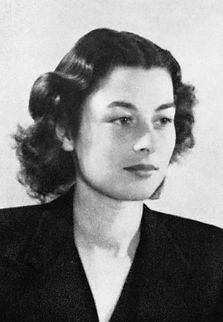
Violette Szabo

Florence Finch and Virginia Hall

Josephine Baker
Women in the Resistance
While millions of women worked to support the war from afar in “home front” industrial and agricultural work, the vast majority would not join the military or intelligence service of their various nations, and relatively few who did would see the battlefield. However, some women in occupied zones chose to take the extreme risk of direct action in resistance efforts. Resistance groups worked to collect intelligence on their occupiers, protect the vulnerable, destroy equipment, spread the truth, and even kill the enemy. The risk inherent in their actions was that if caught, execution or imprisonment in concentration camps was common.
When Poland and most of Western Europe fell to the Nazis, men enlisted and set out to war. The majority of those left behind were women, children, and elderly people. Thus, women had a central role to play in resistance efforts due to their proximity to the enemy. In Poland, many women acted as couriers, delivering information to the ghettos. Faye Schulman was spared during the mass killing of Jews in the Lenin ghetto because she was a photographer and the Nazis forced her to photograph the slaughter. When developing the images, she kept a copy for herself which was used as later proof of Nazi crimes. Many women also sought refuge in the forests of Eastern Poland and the Soviet Union, where they joined armed partisan units. Others, who were unable to escape the ghettos or concentration camps, fought from within. Haika Grosman, for instance, played a pivotal role as one of the organizers of the Bialystok ghetto underground and participated in the Bialystok ghetto revolt. Several Jewish women supplied the gunpowder used by Jewish resistors to detonate a gas chamber in Auschwitz-Birkenau during a 1944 uprising, resulting in the deaths of several SS men.
Partisan units operated on many of the war’s fronts, including Greece, where Sara Fortis brought the fight right to her country’s Nazi occupiers.
Leaving her mother, Sara decided to become an andarte (resistance fighter). Wanting to play a significant role in the group, she traveled from village to village to recruit other females who wanted to fight. Sara formed a band of female partisans that became indispensable to the male fighters, transforming young village girls into women. On their first mission, they were ordered to throw Molotov cocktails to distract the enemy and allow the partisans to attack. Impressed by their skills, the male partisans invited the all-female group to join in many missions. They burned down houses, executed Nazi collaborators, and aided the men in a way no group of females had before. The male andartes were given credit for many missions the women completed, as it was unfathomable that women could accomplish such acts. [...] Sara became a prominent and well-respected figure in the andartes movement in Greece. By age 18, she was known as 'Kapetenissa [Captain] Sarika.' The Nazis sent an informer to try and capture her, but mistakenly arrested, brutally raped, and murdered her cousin, Medi. Vowing revenge, she tracked down and executed the informer.
Women also made significant contributions to the French Resistance efforts amid Nazi occupation. One notable example is Sophie Scholl, a student at the University of Munich and member of the White Rose resistance group, who was arrested and executed for distributing anti-Nazi leaflets.
French and Belgian women worked in tandem on the “Comet Line”, organized and led by Countess Andrée Eugénie Adrienne de Jongh of Belgium, which became the largest escape line of World War II. Joining the Red Cross in the wake of Nazi invasion of Belgium, she worked with a group of friends to create a series of safehouses and false paperwork to help stranded British soldiers left behind from the evacuation of Dunkirk to escape. After this, the group turned to providing these same means of escape to downed airmen. An article about her passing in 2007 quoted her as saying, “My name is Andrée [...] but I would like you to call me by my code name, which is Dédée, which means little mother. From here on I will be your little mother, and you will be my little children. It will be my job to get my children to Spain and freedom.”
After helping hundreds to escape to neutral Spain, she was captured in January of 1943, interrogated multiple times, and ultimately sent to Ravensbrück concentration camp. She admitted to her leadership role in the Comet Line amid interrogation, but the Nazis did not believe that a 25-year-old woman was capable of such work. Their underestimation likely saved her life, and her creation and the connection of safehouses she had worked to establish, continued to operate until France was liberated in 1944. She survived the war, and was later awarded the Légion d'honneur from France, Medal of Freedom from the United States, the George Medal from the UK, and the Order of Leopold and Croix de Guerre from Belgium for the lives she saved.
Many women worked within this system that De Jongh spearheaded, including Virginia d'Albert Lake, an American who married a Frenchman. Together with her husband Philippe, she assisted 67 airmen in evading capture by the Germans. The d'Albert Lakes used their country house and connections to provide safe houses for escaping airmen, offering them shelter and assistance. Virginia's primary responsibility was meeting these airmen in Paris train stations and housing them until they could continue their journey towards Spain. As Allied bombings increasingly disrupted transportation, the couple shifted their focus to sheltering airmen in the Fréteval forest. However, on June 12, 1944, Virginia was spotted by the Gestapo. She was carrying a list of contacts in Châteaudun, which she tore up and swallowed to protect her network. She was imprisoned initially near Paris and later sent to Ravensbrück concentration camp. She, too, survived the war and reunited with her husband.
Additionally, many women actively engaged in aiding and rescuing Jews in German-occupied Europe. Noteworthy individuals include Jewish parachutist Hannah Szenes, who conducted a daring mission by parachuting into Hungary, and Zionist activist Gisi Fleischmann, who led the Working Group within the Jewish council in Bratislava, attempting to halt the deportations of Jews from Slovakia. The Danish people helped nearly their entire Jewish population to escape the country under the nose of Nazi occupation. When Mrs. Aage Bertelsen was asked by the Nazi occupiers if she had helped in the operation she unapologetically said, “Of course [...] All decent people did. Because of sympathy with poor, persecuted people, who came to us confidently placing their lives and fates in our hands.”
A small number of Catholic nuns heroically saved hundreds of Jewish children during the war in Southern France. The Vichy government enacted anti-Jewish laws, permitted the internment of Jews from Baden and Alsace Lorraine within its territory, and confiscated Jewish possessions, just like the Nazis. On August 23, 1942, Archbishop Jules-Geraud Saliège of Toulouse urged his clergy to support Jews and remember that Jews were part of the human race and that a Christian should not forget this fact. Saliège was one of the few voices of protest against the Vichy authorities' policies.
Sister Denise Bergon, the young mother superior of the Convent of Notre Dame de Massip, located northeast of Toulouse, was deeply moved by Saliège's message. She saw it as a call to action that transcended religious, racial, and political boundaries. At her convent, she took in Jewish children who were hiding from the intensifying round-ups of Jews carried out by German troops and, later, by the Milice fascist militia. By winter 1942, the number of Jewish children seeking refuge within the convent grew to 83. Sister Denise, with the support of the Resistance, ensured their safety through various means, including hiding them in secret locations within the convent. Sister Denise and her fellow nuns’ dedication and bravery allowed the Jewish children to survive the war, even though many of their family members were not as fortunate. Similarly, in Poland, across over 200 religious institutions, nearly 1,200 Jewish children were sheltered from the Nazi regime by Catholic nuns.

Jewish woman Masha Bruskina with fellow resistance members before hanging carrying a sign that reads "We are partisans who shot at German troops
Proximity (n.), nearness in space, time, or relationship.
Courier (n.), a person that transports documents and packages.
Partisan (n.), a member of an armed group formed to fight secretly against an occupying force, in particular one operating in enemy-occupied Yugoslavia, Italy, and parts of eastern Europe in World War II.

Gestapo photos of Sophie Scholl

Countess Andrée Eugénie Adrienne de Jongh

Escape routes used by resistance movements, including the Comet Line in red
Gestapo (n.), “Secret State Police,” the official secret police of Nazi Germany and in German-occupied Europe
Militia (n.), a military force that engages in rebel or terrorist activities in opposition to a regular army.
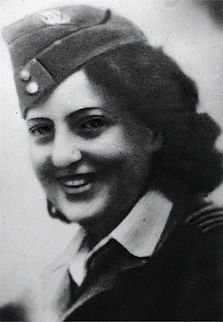
Hannah Szenes
Holocaust
While heroic efforts were made to help Jews and other Nazi targets escape, the various resistance groups were not able to stop the mass extermination of Nazi “enemies.” During the Nazi regime, Jewish, homosexual, disabled, and many other women and men - numbering in the tens of millions - were targets for Nazi persecution and death. What started as oppressive systems that stripped people of their teaching, law, medical, and other licenses and forced them to surrender their businesses and homes to the state turned into the “Final Solution,” whereby the Nazis built gas chambers to execute “undesirable” populations en masse. Of the six million Jews killed in the Holocaust, about two million were women.
Perhaps the most well known woman from the Holocaust was a girl: Anne Frank. Frank was a Jewish girl who gained international recognition posthumously when her father published her diary, which she wrote while in hiding during the Nazi occupation of the Netherlands. Tragically, in August 1944, the hiding place was discovered by the Nazis, and the occupants - including Anne and her family - were arrested. Anne and her sister Margot were eventually transported to the Bergen-Belsen concentration camp, where they both died of typhus in early 1945, just a few weeks before the camp's liberation.
While all faced brutal treatment in ghettos and concentration camps, some forms of persecution were specifically aimed at women. German authorities subjected women to not just forced labor and beating, but sterilization experiments, rape, and other forms of abuse. Rape and other forms of sexual abuse were not only for sexual pleasure, but also a form of sexual terrorism, ethnic degredation, and establishing dominance over the prisoners.
Women formed mutual assistance groups to survive, one noting that within her circle, “[women were] picking each other like monkeys [for lice] [...] holding each other and keeping each other warm [...] Men were friends there too. They talked to each other but they didn’t, wouldn’t sell their bread for an apple for the other guy. They wouldn’t sacrifice anything. See, that was the difference.” In addition to caring for one another, some participated in resistance activities against the Nazis from within the camps.
While women were imprisoned at every Nazi camp, certain camps were designated for female prisoners, such as Ravensbrück. While some of these women were political prisoners as members of resistance organizations, most of the prisoners there - around 5,000 women - were considered “asocial criminals;” poor or homeless women who had taken up prostitution to survive the war. Anyone suspected of having a venereal or sexually transmitted disease, could end up at Ravensbrück for being a sexworker. There women were subjected to medical experiments by Nazi doctors that were supposed to help the war effort by uncovering treatments for conditions faced by German soldiers like venereal disease, hypothermia, infections, and more. These experiments were performed without the patients consent and were a form of torture for the women who endured them as the medical staff often induced ailments like wounds and infections in order to conduct the experiments.
Many prisoners arrived at the camp already pregnant. In the early years, they were sent to give birth in a nearby town, while their babies were forcibly removed from them and placed in children's homes to be raised by Aryan families. However, starting from 1942, babies were born in Ravensbrück but were mostly killed shortly after birth. In many cases, women who were identified as Jewish and found to be pregnant were sent directly to Auschwitz to die long before their child was born. Around 560 children were born in Ravensbrück in the final year of the war. 293 were recorded as dead with no cause listed, most likely starved to death, but the figures are probably higher. Forced abortions were also performed on inmates, with written orders from Berlin. Auschwitz doctors and staff , including Rolf Rosenthal, Gerda Quernheim, and Percy Treite, experimented with different abortion procedures and stages of pregnancy.
While just one of dozens, Auschwitz is probably the most well known concentration camp: a place of death. Yet even in a place so mired in horror, thanks to Stanislawa Leszczyńska, it was also a place where life emerged and was preserved at great personal risk. Leszczyńska and her family joined the Polish resistance after the Nazi invasion in 1939, smuggling supplies and false documents to Jews in the ghetto. In 1943, their activities were uncovered, leading to their capture by the Gestapo. While her husband and eldest son managed to escape, Leszczyńska and her younger children were arrested. Sent to Auschwitz with her daughter, she was separated from her sons and assigned to the maternity ward, which was more of a place of death than care. Acting as a midwife, Leszczyńska refused to comply with orders to kill babies. Despite the dire conditions and constant threats, she delivered around 3,000 babies during her two-year internment. Her courage and compassion provided a glimmer of hope in the midst of a living hell and she was remembered by Auschwitz survivors long after the war.
Women who survived the Holocaust then played critical roles in the punishment of their captors. Many served as witnesses in trials and were forced to recount and relive the most horrific moments of their lives in the name of justice. Some women also helped to identify Nazi criminals who attempted to blend back into civil society. Margarete Buber-Neumann had been sent to Ravensbrück, and after being liberated by the Allies, and while making her journey home, she noticed a familiar face. Author Bruce Henderson writes,
As she followed the man, the distance between them grew shorter. She looked for American soldiers to hail but saw none. If it was him, should she grab him by the arm to hold him? No, he would only knock her over with blows of his fists as he had done to so many defenseless women. At one point he stopped to look in a shop window, and she had to walk past him. Then, after she paused at a window farther down the sidewalk, he overtook her again, then turned into a side street. She knew it would soon be too late. He would get away and might never be seen again by anyone who knew who he was. She was now certain the man in the high boots was Ludwig Ramdohr.
Ramdohr had been the Gestapo chief at Ravensbrück and was known for his cruelty in a specially designed interrogation room and used informants throughout the camp to help determine which prisoners he should torture for information.
Henderson further details his crimes against the imprisoned women, writing,
He would start off by making them stand with a strap pulled through ankle shackles and tied around their neck, forcing them to bend over at a painful angle. Or he would lash them with his leather whip or give them an injection of narcotics. [...] To extort the information he wanted, he would force a woman to lie stomach down on a table; then, with her head hanging over the edge, he would grab her hair and submerge her face in a bucket of water until she nearly drowned. Another of his torture techniques was to have a woman fold her hands, then he inserted pencils between her fingers and pressed down on her hands until her fingers broke. A favorite device he designed was a coffin with ventilation holes that he could close and metal claws that penetrated the flesh. He also used his infamous “shower method,” where a woman was brought into a special shower-bath and made to take off all her clothes. Ramdohr turned on cold water from all sides, including fire-hose strength sprays from the top and bottom. When she tried to move or use her hands to protect herself, she would have a bucket of water thrown into her face, or she would be set upon by an attack dog. After a session with Ramdohr, most women couldn’t walk and had to be dragged back to their cell unconscious. They were brought back another day for more of the same if Ramdohr was unhappy with the results of his interrogations, which often drew false confessions and groundless accusations to stop the agony.
When Buber-Neumann recognized Ramdohr she shouted for help from nearby American soldiers, including German Jew Manny Steinfeld who was fighting as a part of the US Army after escaping Germany as a child. Ramdohr was arrested and put on trial, with Buber-Neumann serving as a witness among other prisoners from Ravensbrück, and he was sentenced to death in May 1947. Without her bravery, who knows if justice would have ever been served.
Posthumously (adv.), after one’s death.
.jpg)
Anne Frank

Women doing forced labor at Ravensbrück

Jadwiga Dzido shows scars on her leg from medical experiments at trial
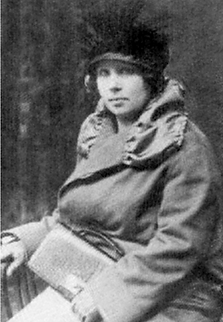
Stanislawa Leszczyńska
The Comfort Women
The women of the Pacific Theater were spared the concentration camps, but that does not mean that they escaped the heavy loss of life in the war. Civilians throughout Japanese-held territories and Japan itself were subject to heavy bombing, caught in the crossfire of ferocious island-to-island combat, and even victims of fear-based propaganda. The Japanese government had insisted that should the Allied Forces reach civilian populations, they could rape, murder, pillage, and more. Tragically, this resulted in the suicide of many civilians, including particularly tragic moments in Saipain where women were seen throwing their children off of cliff before jumping to their own deaths to prevent the Allies from getting to them.
In addition, Asian women were subject to systematic rape. The Japanese military administration believed that the only way to curb the spread of diseases and maintain soldiers' morale was to establish “comfort stations” of sexual slavery throughout the empire. The Japanese military recruited Japanese women, sometimes already working in prostitution, and others who were convinced through propaganda that this was a civic service. Many women from poor backgrounds or those who believed they were volunteering for regular work under different names, such as the Women's Volunteer Corps and the Patriotic Emperor-Approved Corps and heading into clerical or nursing fields. Some were promised benefits like paid education, while others were kidnapped and sacrificed for the “good of the nation” in brothels on military bases.
Increasingly, this became a system of sexual slavery as the Japanese forced women primarily from conquered regions like South Korea, China, the Philippines and other areas under their control into sexual slavery across the Pacific. Numbers vary due to falsified and destroyed records, but estimates range from the tens of thousands to over 200,000 women and likely includes minors. Because these records are so poor, we can only presume based on survivor testimony that many women experienced brutal treatment that resulted in death as well as physical and emotional scarring. However, there was no justice or compensation in the aftermath of the war, as the Japanese government denied the system’s existence.

An Allied soldier talks a woman with children and a dog into leaving a hillside cave
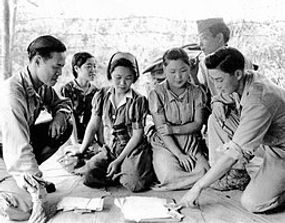
“Comfort Women” being questioned by the US Army in Myanmar

Chinese and Malayan girls forcibly taken by the Japanese to work as “comfort girls” for the troops
Women as Collaborators
It’s important to remember that not all women stood in opposition to the fascist regimes of WWII. For many, they may have personally opposed the ruling ideology, but in these regions, cooperation was synonymous with survival and many women were forced to comply in order to protect themselves and their families, even at the cost of others. For this group, we have to remember to view them objectively, recognizing that many felt powerless to impact the all-encompassing oppression around them and only felt a sense of control and stability within their own homes.
However, such realities were not always considered when the tides of war shifted, particularly in the case of vulnerable women accused of "horizontal collaboration" (sex) with the enemy. Vigilantes targeted them, subjecting them to public humiliation, shaving their heads, stripping them, smearing them with tar, and parading them through towns while taunting, stoning, and beating them. Historians estimate that at least 20,000 French women were forcibly shorn during this period. The victims were predominantly single, widowed, or married women whose husbands were prisoners of war. Some women did engage in consensual relationships with German soldiers, but this could have been a means to their own protection and survival amid Nazi occupation. Others were victims of rape, or even false accusations as there was little consideration of one’s “guilt.
This punishment extended beyond France to other occupied countries, and these acts were particularly gendered and sexual in nature. Recognizing the experiences of these women is vital in understanding the long history of gender inequality and the scapegoating of women for the sins of men. This is particularly true when we consider the use of rape and sexual coercion as a tragically common tool of war.
However, for some, the ideology matched their own and they were willing and enthusiastic collaborators. As noted previously, women developed and joined a number of pro-fascist organizations in Italy, Germany, and Japan. Many women of these governments’ supposed superior races, creeds, and classes, profited as a result of the cultural shifts under fascism. Thus, a number of women opted to work in favor of such systems to see continued success. Many women served in clerical roles for their fascist parties and militaries, as informants and spies, and even as guards in concentration camps.
Herta Oberheuser was a dermatologist who voluntarily joined the medical service in the war and served as the assistant to the chief surgeon of the SS, described as “a beast masquerading as a human.” Starting in 1942, she worked at Ravensbrück concentration camp, where she enthusiastically performed these cruel experiments on the female prisoners to find new treatments for infection through purposefully inducing infections and even amputating limbs. Oberheuser also conducted humiliating gynecological examinations and pregnancy checks as the women arrived at Ravensbruck to determine who would be the best subjects for her experiments. In the years after the war, many Nazi leaders tried to claim that they were just following orders, but in Oberheuser’s case, there is little evidence of this as orders were scarce, and in many cases direct orders were modified by Nazi staff at the camp.
America’s Mildred Gillars became known as “Axis Sally” for her collaboration with the Nazis. She moved to Germany in 1934 where she was married, and began work as an English-speaking broadcaster for German State Radio in 1940. Initially, her role was to provide general news updates, but they became increasingly pro-Nazi, antisemitic, and anti-American. One of her primary goals was to make Allied soldiers feel discouraged. She spoke often of their military failures and stalemates, highlighting limited progress being made from their bombing campaigns in Germany that were meant to soften the enemy before an invasion of Europe. She also talked about how the women in their lives were all likely moving on without them. Simultaneously, knowing that her broadcasts would be picked up by international media, she also taunted the populations at home with stories of mounting casualties, interviews with POWs tortured and coerced into speaking positively of the Nazi regime, and more. These broadcasts continued throughout the duration of the war, and she was tracked down and arrested on May 15th, 1946, over a year after the war’s end. She was eventually handed over the U.S. for trial in 1948 and charged with treason. Gillars was found guilty on just one of the eight counts she was charged with, but this was enough to strip her of citizenship and was jailed until 1961.
Gillar’s Pacific Theater counterpart was Iva Toguri D’Aquino, better known as “Tokyo Rose.” Also an American, D’Aquino was the child of Japanese immigrants and had been visiting family in Japan when America entered the war. Initially, D’Aquino’s war participation may have been a matter of survival, as anti-American sentiment left her ostracized from her Japanese family members, and her parents in America were quickly thrown into internment camps, leaving her no one or nowhere to return to had she been allowed to leave the country at all. Thus, she took up a job as a typist at Tokyo’s state radio station, but was similarly called upon to provide English-speaking broadcasts. Like Axis Sally, Tokyo Rose became a figure bent on demoralizing and disheartening Allied invaders through stories of high-casualty losses and prisoner interviews.
Interestingly, American listeners in the Pacific noted that she never appeared to be as convincing or enthusiastic in her attempts as Gillar’s, bringing into question her willingness, which is still debated today. This seems further validated by the fact that while she was detained after the war ended, she was not brought forth for trial until she tried to return to the U.S. in 1949. There, she, too, was found guilty of treason and jailed until 1956. However, later investigations revealed that witnesses had been intensely coached by law officials in order to secure her conviction, and she was later pardoned by President Gerald Ford.
Vigilante (n.), a member of a self-appointed group of citizens who undertake law enforcement in their community without legal authority, typically because the legal agencies are thought to be inadequate.

A French woman’s head being shaved for “horizontal collaboration”

Herta Oberheuser being sentenced at the Doctor’s Trial in August 1947

Mildred Gillars, better known as “Axis Sally”

Iva Toguri D’Aquino, better known as “Tokyo Rose”
Allied Victory in Europe
While rumors had long swirled about the persecution of Jews and other Nazi targets, their realities would not become widely known until the Allies reversed the tide of German expansion in Europe. The Soviets faced unimaginable losses - more than any other nation in the war - as they fought to slow, stop, and eventually reverse the Nazi invasion of their lands. Yet, it would be the combined efforts of the Soviets and the Western Allies that truly fractured the Nazi regime. This required the Allied invasion of France in June 1944, which forced the Nazis to try to hold off overwhelming forces on two separate fronts.
While there were a number of places that were advantageous for this second front, France was the likely target where an eager civilian population, armed by people in the SOE, waited to join in the fight. Still, the task was daunting. The Allies were going to be forced to invade France by sea, while the formidable German Atlantic Wall and its defenders blocked their path to the land where those French collaborators waited. Casualties were expected to skyrocket, and there was doubt if the initial invasion would be successful at all.
Among those to capture the Normandy Landings was journalist Martha Gellhorn. Gellhorn already had a reputation as a war correspondent for conflicts around the world, as well as that of a political activist in the U.S., earning her a personal friendship with First Lady Eleanor Roosevelt. When the war broke out, she reported on its events from around the world, using her notoriety to gain access to major decision-makers and events. When the invasion of France was looming, Gellhorn had tried to use that notoriety to be permitted to cover the D-Day invasion, but was denied, as no correspondents were going to be allowed to cover the initial waves of the landings, and no women were going to be permitted at all. Undeterred, Gellhorn pretended to be a nurse reporting for duty on a hospital ship, and hiding on the ship for two days, she went ashore at Omaha Beach – the only female correspondent to do so on D-Day – and helped to move wounded soldiers back to the hospital ship. She was sanctioned for this breach of conduct, but her fame allowed her to continue to cover the war through less-conventional means.
Women had played roles in the development of the invasion’s strategy - which stretched from the Normandy Landings to the Liberation of France, two months later - the production and transport of supplies and food needed to make it possible, and then, French women witnessed the invasion first hand. One of the best eye witnesses was Marie Louise Osmont, who kept a diary throughout the war and the morning of the invasion. Her gorgeous home, sat moments from the beaches, and had been occupied by the Nazis since the fall of France.
On June 6th, she wrote a much longer entry than normal, writing, “Landing! During the night [...] I am awakened by a considerable rumbling of airplanes and by cannon fire, prolonged but fairly far away. Then noises in the garden and in the house: talking, loading ammunition boxes, nailing [...] We’re deafened by the airplanes, which make never-ending round.” She goes on to explain how she still had to feed her farm animals during the earth-shattering invasion, that parts of her home were hit by shells, how her Nazi occupiers were “nuts,” and even how she had to keep cooking during the onslaught. At some point, one of the Nazis says, “the Tommies are here” and her occupiers finally flee. She doesn’t see English soldiers for several hours, but the next day she witnesses what she calls a “horrifying” airplane battle. Her windows were broken, and she said, “You have the feeling that a runaway train is passing over your body.”
That day, Osmont notes that a French flag was rehung over the school by the Allied soldiers, and soldiers passed out chocolate, cigarettes, and other goods the French had not seen in years. Following the D-Day landings in June 1944, Allied troops and the resistance liberated towns in France, sparking collective euphoria. The Nazis had been occupying the country for several years at this point, and everyone had felt the weight and the fear that came along with that. To see their own flag and their World War I allies flooding onto their shores was cause for mass celebration. Parades, music, and women flocking to kiss Allied soldiers in thanks became emblematic of France’s liberation.
This Allied invasion of Continental Europe was captured by photographers, videographers, and war correspondents, like American model-turned-photographer Lee Miller. Miller had been living in London when the war broke out, and joined the U.S. Army as a war correspondent in 1942. Her earliest work was reporting on the Allied nurses serving across the European Theater and the horrors that they faced. While female correspondents were expected to be kept far from the dangers of the battlefield, Miller snuck her way to the front lines to capture the visual realities of combat that the soldiers of the war faced, the testimony of soldiers, and the treatment of civilians. She is credited with photographing the first official use of napalm, the liberation of Paris, the inhumanity of the concentration camps, and the suffering of war-torn Europeans in the war’s aftermath. Her defiance of military regulations had her relegated to house arrest and admonished at times, but it didn’t seem to slow her down or get her to relent. Maybe her most rebellious moment – even beyond her elbowing her way to prohibited battlefields – was when Miller took a bath in Hitler’s bathtub at Dachau as an act of defiance and Allied victory over Nazism.
However, this path toward victory was not without its own cruelties. While the abuses of women are commonly described as part of the Nazi invasions in Europe, we cannot ignore that this was also too commonly found in the Allied counter-invasions. On the Eastern and Western fronts between Germany and the Allies, the situation for civilian women was particularly vulnerable. As the Allies progressed toward Berlin, the call for avenging the deaths of those lost led to a belief by soldiers that almost any cruelty against Germany was permissible, including against women. Rape of girls in grade school up to elderly women was widespread and reported.
While this was an undeniable part of each front, particular cruelty was noted as part of the Soviet advance, primarily as they reached German territories. Having faced losses in the tens of millions as part of the Nazi invasion, the Soviets were reported to have slaughtered not only German soldiers in their path, but civilians as well - as a part of indiscriminate revenge for their nation’s suffering that only amplified as they reached further and further into Germany. The soldiers' treatment of women was characterized by the desire for domination and humiliation. Rape was seen as a way to assert victory over the defeated German enemy, but they also targeted Polish and Eastern European women.
Some Soviet women soldiers and medical staff did not object to their soldiers' behavior towards German women in the march through eastern Europe. There were instances where Soviet women even watched and were said to have laughed during rape incidents. More horrifically, Soviet soldiers sometimes resorted to using objects like bottles instead of their own genitalia, leading to mutilation of victims. One woman was raped by Soviet soldiers in front of her young son. When the 13-year-old tried to protect her, he was shot and killed in front of her. Witnesses still remember the screaming of women during the nights after the Soviets took Berlin, where hospital records estimate that there were between 95,000 and 130,000 rape victims. This was the impossibly vulnerable position of civilians on the losing side of war. Soviet officers rationalized the assaults, viewing the victims as accepting their fate or even finding it enjoyable due to the soldiers' extreme sexual frustration. This distorted perspective from leadership allowed soldiers to commit heinous acts.
Survival became a major concern for women, leading some to offer themselves as girlfriends in order to get protection, but this didn’t always work. Night hours were particularly dangerous, so women disappeared from public spaces, especially young girls who were hidden away. Refugees were also fleeing from the advancing Allied armies, but aerial bombing had destroyed much of the transportation networks, roads, and bridges throughout Germany, making this monumentally challenging.
German historians estimate that close to 200,000 women were victims of rape at the end of the war, and five percent (around 2,000) of the post-war babies born to unmarried women were products of rape. Other historians suggest that the number was significantly higher, some believing it ranges into the millions when one looks at the whole of the Allied advances. Allied occupation following the war undoubtedly kept many women from being willing or having the ability to speak up, and not all those that did were granted the dignity of being believed or considered. Equally tragic is the knowledge that these numbers were even higher in the Pacific Theater.

Martha Gellhorn and Ernest Hemingway in China, 1941
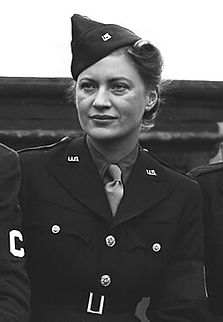
Lee Miller

Germans fleeing from the incoming Soviet Army
Allied Victory in the Pacific
When Germany surrendered in early May of 1945, it was a foregone conclusion. The Allies had surrounded and crashed through Berlin, Hitler was dead, their economy and infrastructure was shattered, and their people devastated. The world celebrated Victory in Europe Day (V-E Day) on May 8th as the word spread that the European Theater had come to a close, but the war was still churning at full steam in the Pacific. The Japanese held onto war well after Germany surrendered, and their actions at the end of the war were nothing short of desperate.
Much as had happened in Europe, the Japanese had exploded throughout the Pacific in captured territory, but those lands had been slowly wrenched back by the Allies - primarily driven by America in this theater. Japanese teachings about ethnic superiority and impending domination had spurred fierce fighting everywhere from the massive Japanese holdings in China, to the tiniest islands of the Pacific Ocean. Yet, the combined industrial might of the Allies was proving superior, and aerial bombing was particularly devastating. While this added pressure and fear surrounding an impending Allied invasion of Japan by the summer of 1945, it did not seem to diminish the Japanese government’s willingness to sustain that invasion; like the Nazi regime, they were determined to hold out to the last possible moment.
Despite the bravado of the sentiment, we can still see the desperation that was felt at the prospect of this likely invasion. The Volunteer Military Service Law, passed in June 1945, is a good example. The law declared that not only men but also women in Japanese colonies were imperial subjects and could be drafted to serve at the front, exempting ill or pregnant women and those essential for household survival. Women were promised burial at the Yasukuni Shrine in Tokyo if they died, like all soldiers. All women between the ages of 17 and 40 were conscripted into a National Volunteer Combat Corps, and the Greater Japan Women's Association was dissolved, and its members reorganized into the combat corps to assist the military in case of an Allied invasion.
Any legislation proposing a military draft for women is often seen as one of the final, desperate actions of a nation on the brink of defeat. In other words, if a nation is driven to drafting women, they have to have run out of available men, and are therefore on their “last leg.” Notably, this doesn’t consider women’s exclusion from such roles prior to this kind of legislation, or their possible contributions as were on display in the Soviet Union. Instead, it is viewed through the gendered lens that men fight, and women don’t - therefore, only a nation in dire straits would consider calling on its women to fight. Yet, such a policy had been considered since the establishment of Manchukuo (Manchuria) in 1932. In a 1935 article, Matsui Shinji, an infantry major and press representative of the Army Ministry, argued against the belief that defense and women were naturally contradictory. He attributed the dominance of this contradiction to two factors: Japan had not faced foreign attacks since the Meiji Restoration and therefore had not had to consider such expansions to their fighting forces.
Matsui promoted total mobilization and emphasized the role of women as protectors of the home front, stating that it was no longer desirable for women to be distant from the front lines and the war. He provided examples of women who had fought on the front lines in both Japanese and foreign history, challenging the perception that Japanese people lacked the mentality for combat. Matsui also argued that the broken spirit of German women contributed to Germany's defeat and emphasized that Japanese women should not be disinterested in defense issues. Instead, they should recognize their duty to contribute to national defense in their own unique ways, and if the Japanese women fought, they would not face the same fate as German women.
Yet, the war came to a close before that ultimate invasion took place. When the first atomic bomb was dropped on Hiroshima on August 6, 1945, the city’s population hovered around 350,000 people. When the uranium-based Little Boy hit the city at 8:15am, it took only seconds for tens of thousands of people to die in the initial blast, but hours and days for tens of thousands more to be lost to the subsequent fires and radiation poisoning. The percussion sent people flying, shattered and sprayed glass, and turned buildings to rubble – crushing their occupants beneath them. Small fires throughout the city were fed by the debris and heavy winds, creating a firestorm that tore through the city burning and suffocating many of the survivors of the initial blast. Survivors tell harrowing tales of their own injuries, witnessing the deaths of others, and even mothers describing having to leave their trapped children behind to die in burning buildings.
Estimates vary greatly as to the number of casualties resulting from the use of this bomb – and become more complicated by lasting effects – but the Radiation Effects Research Foundation claims that within a year of the bombing, between 90-166,000 people died from the blast, injuries (as well as subsequent infections), and radiation poisoning. Three days after Hiroshima, another such bomb would be used on Nagasaki to much the same effect.
The years after the blast also brought about hardship for survivors who had to find a way forward in life after facing such devastation. Women had to find additional sources of income after losing their husbands in the war or as a result of the blast, children were left orphaned, or young adults had to take on the role of parent for their younger siblings. Survivor Kamiko Arakawa, who was twenty years old when her city of Nagasaki was bombed, recalled,
I worked at the prefectural office. As of April of 1945, our branch temporarily relocated to a local school campus 2.9km away from the hypocenter because our main office was beside a wood building (author’s note: flammable in case of an air strike). On the morning of August 9, several friends and I went up to the rooftop to look out over the city after a brief air raid. As I peered up, I saw something long and thin fall from the sky. At that moment, the sky turned bright and my friends and I ducked into a nearby stairwell.
After a while, when the commotion subsided, we headed to the park for safety. Upon hearing that Sakamotoma-chi was inaccessible due to fires, I decided to stay with a friend in Oura. As I headed back home the next day, an acquaintance informed me that my parents were at an air raid shelter nearby. I headed over and found both of them suffering severe burns. They died, two days later. My older sister was killed by the initial blast, at home. My two younger sisters were injured heavily and died within a day of the bombing. My other sister was found dead at the foyer of our house. There are countless tombstones all over Nagasaki with a name inscription but no ikotsu (cremated bone remains). I take solace in the fact that all six members of my family have ikotsu and rest together peacefully. At age 20, I was suddenly required to support my surviving family members. I have no recollection of how I put my younger sisters through school, who we relied on, how we survived.
While the use of these bombs, capitalizing on months of earlier traditional and firebombing raids, is credited with bringing the war to its final close, it is not without its debates on an ethical level, largely because of its lasting effects. For example, the exposure to radiation affected victims’ immune responses, thereby increasing the rate of infection from injury and increasing the chance of death as a result of those infections. Emerging over the preceding years, these regions also saw a marked increase in cancer diagnoses among survivors. Some women who were pregnant at the time of the bomb suffered miscarriages, birth defects, and lasting physical or mental health disorders. However, the research remains debated and inconclusive when considering if these rates were directly affected by the exposure to radiation.

V-E Day celebrations in Toronto

Military training for Japanese women joining the National Volunteer Combat Corps
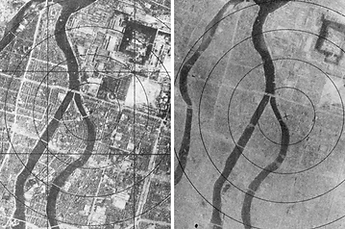
Hiroshima before and after the bombing and subsequent firestorm

Burn victims from the atomic bombing of Japan
Conclusion
The war ended in the summer of 1945, and while the world celebrated, it did so with heavy hearts. Women around the world, despite their views and experiences in the war, could almost all share one thing: grief. Women who were spared the physical scars of war still lost sons, husbands, fathers, and friends, while women who were in war’s path lost infinitely more.
Women who had stormed into the factories, farms, and ranks had quickly seen their jobs disappear as millions of men left the service and returned home. Naturally, returning soldiers needed and deserved work, but women in many nations were expected to return to their pre-war gender roles in the domestic sphere and women-specific occupations. However, the previous years of propaganda had backfired a bit as the governments had spent the last half decade or more inspiring and empowering women to do “men’s work.”
Women also continued to work toward the creation of lasting peace. Unlike other eras, women were involved more directly in the resolution of the war as well as the work of the newly created United Nations. Women were also involved in the prosecution teams at Nuremberg, including Elizabeth Holtzman, a legal assistant to Telford Taylor, the Chief Counsel for the United States. She played an important role in researching and preparing the case against the Nazi defendants. Female survivors of Nazi atrocities and concentration camps were called also as witnesses to testify about their experiences. Their testimonies provided critical firsthand accounts of the horrors committed by the Nazi regime, contributing to the prosecution and punishment of the defendants.
The world was expected to go back to “normal” after the war’s conclusion, but women had been forced to step out of their traditional roles in every corner of the globe and after two back-to-back world wars, “normal” felt impossible to return to. Around the world, as the Cold War began, so did women’s liberation movements. Female politicians and figures of authority rose to prominence and called on world leaders to remember the sacrifices women made during the war, and insisted that they be remembered through societal change and equality.
Women, though central figures throughout, remain among the most underrepresented of these monumental conflicts. How did women shape these wars, and how did their experiences then shape their lives outside of the war? How do the changes related to women in the contemporary and later generations reflect their war experiences? How can women’s achievements and roles in war be better represented or honored in our modern world?
.jpg)
Australian advertisement during World War II