26. 21st Century Women
The events of September 11, 2001, reshaped American society, sparking intense political, cultural, and gender-related shifts. The War on Terror intensified domestic divisions from rising Islamophobia and resulted in backlash against dissenting voices like the Dixie Chicks, highlighting tensions between patriotism and freedom of expression. Women played pivotal roles in both political and cultural arenas, from Hillary Clinton's leadership as Secretary of State to the growth of feminist activism in media exemplified by shows like Sex and the City. While women broke barriers in politics, business, and security, such as the takedown of Osama bin Laden led by female analysts, struggles for equality continued. The fight for equal pay remained an important issue for women, as exemplified by Lilly Ledbetter as the inspiration for legislation signed by President Obama, and the rise of movements like Black Lives Matter. Legal and cultural shifts, including Title IX reforms and the push for justice in campus sexual assault cases represented the evolving role of women in shaping the nation's discourse on gender, justice, and power.
War on Terror: officially known as the Global War on Terrorism, is a global military campaign started by the United States following the September 11 attacks in 2001.
How to cite this source?
Remedial Herstory Project Editors. "26. 21ST CENTURY WOMEN." The Remedial Herstory Project. November 1, 2025. www.remedialherstory.com.


Join the Club
Join our email list and help us make herstory!
September 11, 2001 and the War on Terror
The new millennium began with a day of terror for Americans and our allies abroad. Tension in the Middle East had mounted after Iraq’s invasion of Kuwait in August of 1990 and the subsequent Gulf War. The events of September 11, 2001 revealed that the United States was vulnerable to individual acts of terrorism. On that morning, chief flight attendant Betty Ann Ong boarded American Airlines flight 11 for a routine trip from Boston to Los Angeles. When she lost contact with the cockpit, she called her airline and delivered the first to alert that something was terribly wrong on board her flight. Her 23-minute recording in which she reported the details of the hijacking is a reminder of the terror of the moment. Most Americans were unaware of this terrorist act until Ong’s plane crashed into the North Tower of the World Trade Center at 8:46am. This was the first horrific event in one of the most catastrophic days in American history.
A second plane hit the South Tower at 9:03 am. As many fled the burning buildings, firefighters and emergency responders rushed towards the scene. At 9:59 the South tower collapsed. At 9:37 am, American Airlines flight 77 crashed into the Pentagon, killing 125 people on the ground and 64 people on the plane, including a small group of students and a three-year-old girl. Flights throughout the country were grounded.
United Airlines Flight 93 from Newark, New Jersey to San Francisco was flying over Pennsylvania when passengers retook the cockpit and crashed the plane into a field, preventing it from being used as a weapon. It’s unclear, but many suspected the plane was intended for the White House. Courageous passengers gathered in the back of the plane where they formulated a plan. CeeCee Lyles, who was a former cop and a flight attendant, was among those who helped to foil the hijackers’ plan. Elizabeth Wainio was on the phone with her mom. Her last words were, “Mom, they’re rushing the cockpit. I’ve got to go. Bye.”
At 10:28am, the North Tower fell. By the end of the day, 2,977 Americans were dead. In the aftermath of the attacks, many women police officers, fire fighters, and paramedics helped to recover and identify remains. Subjected to toxic fumes as they worked on “the pile,” women were among those who suffered long-term health challenges, including fatal cancers.
Osama bin Laden and his extremist group, Al Qaeda, claimed responsibility for the attacks. Bin Laden went into hiding in the mountains of Afghanistan. Secretary of State, Condoleezza Rice was one of the only women in the decision room in the aftermath of 9/11. She later recalled a meeting about the US response at Camp David:
“something that I remember most about the Camp David meeting was when we put the map out on the table, you look at the map, you look at Afghanistan and you look where it is -- I think the color kind of drained from everybody's faces, because [of] the stories of British defeats in Afghanistan, and Soviet defeats in Afghanistan, not to mention the potential for instability in Pakistan. It sits there on the Iranian border. We have no relations with Iran. States like Uzbekistan, and Tajikistan. I think everybody thought, ‘Of all of the places to have to fight a war, Afghanistan would not be our choice.’ But we didn't choose Afghanistan; Afghanistan chose us.”
President Bush was prepared to go after any nation that harbored extremists, and with no evidence, put Iraq on his list. In 2002, Women Against War was established by a collective of women from the Capital District who believed it was imperative to take a stand against the U.S. government's intention to engage in war with Iraq. Their impassioned plea for action garnered widespread support from hundreds of local women, all dedicated to raising their voices and opposing violence.
As America mourned, artists took to song. Some sang their patriotism, rallied Americans together, while others advocated for peace. The Dixie Chicks, a popular female country band from Texas, faced backlash from their fans after their lead singer, Natalie Maines, stated in 2003 that she was ashamed that President Bush was from Texas. They had been the most popular female band in country music with two consecutive diamond-certified albums. Fans boycotted the Dixie Chicks across the country, burning their CDs and demanding that radio stations not play their music. The Dixie Chicks responded in 2006 with the song "Not Ready to Make Nice" which reflected on their frustration with their fans. The song hit the fourth position on the Billboard Hot 100 chart. The Dixie Chicks dropped the word Dixie from their name after the death of George Floyd in 2020 as a way of distancing themselves from the implied racism in the word Dixie.
9/11 brought Americans together, but the tragedy also fueled rampant islamophobia. By 9/11, an estimated 1 million people had immigrated to the US from Muslim majority countries. For many Muslim-American women, their religious beliefs were on display everywhere they went because of the practice of wearing a hijab, or headscarf. After 9/11, the scarf made Muslim women targets of public commentary, ridicule, and violence. Women had their hijabs forcibly ripped from their heads by strangers on the street. Religious centers, called mosques, had to build fences and hire security guards to protect the faithful in the years after the attacks and while the US fought the “Wars on Terror.” An American immigrant, Omar, recalled how her neighbors stopped talking to her and “everything around you made you feel that you didn’t belong here.”
The war in Afghanistan opened opportunities for women in military service. Following September 11, 2001, more than 300,000 American women served in the War on Terror. According to the Service Women’s Action Network (SWAN), 166 women lost their lives in combat operations, and over 1,000 were wounded during their deployments. At the start of the conflicts, women were still officially barred from serving in ground combat roles. However, the nature of the conflict, with shifting frontlines and frequent insurgent attacks, brought women under enemy fire. To survive, they returned fire in what came to be an accepted combat role.
Women were essential to the strategy in the War on Terror. Prevailing gender norms in the Middle East meant that women were not perceived as a threat. As a result, female diplomats and intelligence agents were successful in extracting crucial information for the war effort. Lory Manning, a retired naval captain explained that, “with the cultural differences… if you were going to search a [local] woman, it had to be done by another woman. If you were going to get the sort of intelligence you could get by talking to the local people, our men couldn’t talk to the local women. Our women could talk to both the men and women.” But women in war faced significant challenges, including ill-fitting gear designed for male bodies which made them regularly choose between function and full protection.
Ann Dunwoody became the first female four star general in military history in 2008. Leigh Anne Hester became the first woman to earn a silver star in combat and the first woman in American history to be cited for valor in combat. During a supply convoy route scanning and clearing operation, Hester's squad encountered an attack from enemy insurgents. In response, Hester effectively guided her team and then engaged in direct combat on foot, resulting in the elimination of at least three insurgents. The intense confrontation led to the killing or wounding of 33 insurgents and the capture of one while all members of her unit survived.
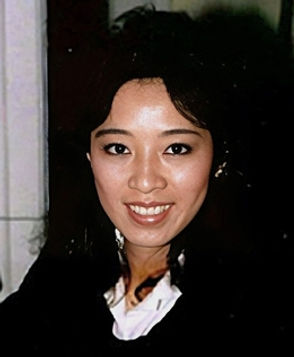
Betty Ong, Public Domain

Terror Attacks on September 11, 2001, Public Domain

Condoleeza Rice 2005, Public Domain

Ann Dunwoody in Desert Storm, Public Domain
The Bush Era
The Bush administration's domestic approach to the War on Terror was to discourage dissent. The press was pressured to hide images of dead enemy civilians, women, and children at the back pages of the newspaper, where they were less likely to be seen. The aim was to keep Americans united against the war effort. Yet, questions were mounting. The pressure on the press to provide independent journalism while being patriotic reached a fever pitch. Helen Thompson had made history in 1961 as the first woman in the White House Press Corps, a group of reporters that follow and report on the president. By 2003, she was a veteran reporter known for her blunt and persistent questioning. The Bush administration’s press secretary, Dana Perino, moved Thomas to the back row during press conferences where she was called upon infrequently. Thompson explained that the change in her treatment came from the fervor around the war, adding, “They didn't like me. . . . I ask too many mean questions.” Thomas was reprimanded by Perino at a conference in 2007 for implying that the US was killing too many innocents. She did not back down, asking if Perino even knew how many Iraqi civilians had been killed by the US. The exchange went like this:
“Thomas: Do you know how many we have (killed) since the start of this war?
Perino: How many -- we are going after the enemy, Helen. To the extent that any innocent Iraqis have been killed, we have expressed regret for it.
Thomas: Oh, regret? It doesn't bring back a life.
Perino: Helen, we are in a war zone, and our military works extremely hard to make sure that everyone has the opportunity for liberty and freedom and democracy, and that is exactly what they are doing.”
The domestic front also left a complicated legacy for George W. Bush. America was shaken by Hurricane Katrina, which struck New Orleans and the surrounding parishes with devastating force on August 23, 2005. The Institute for Women’s Policy Research conducted a five-year study across Louisiana, Mississippi, and Texas. The research revealed that poor women were at greater risk during and after Katrina. At the time, 25.9% of women in New Orleans lived below the poverty line, compared to 20% of men, limiting resources for evacuation or survival. Many women living in public housing lacked access to vehicles and relied on walking or public transportation, which was inaccessible after the flooding. Women also faced challenges related to caregiving responsibilities, unstable housing conditions, pregnancy, and mobility limitations. Furthermore, women, who constitute a greater proportion of the elderly, were particularly vulnerable when hospitals were unable to evacuate.
Gender-based violence significantly increased in the aftermath of Katrina, with incidents such as sexual assault and domestic violence becoming more prevalent, especially among displaced women in shelters and temporary housing. In Mississippi, for instance, the rate of gender-based violence rose from 4.6 per 100,000 per day at the time of the hurricane to 16.3 per 100,000 per day a year later. These findings highlighted the compounded risks women faced during and after disasters, emphasizing the need for intersectional approaches to disaster preparedness and response.
The final months of the Bush presidency were dominated by a severe stock market crash, a controversial bailout of financial institutions and automobile companies, and a deep recession that caused widespread job losses and had lasting effects on the U.S. economy. This crisis, like others, disproportionately affected women who saw higher unemployment rates, increased economic insecurity, and a greater burden of unpaid care work. As women lost jobs in industries such as hospitality and retail, they also disproportionately faced difficulties accessing credit and housing due to gender-based lending practices. Some began to refer to the recession as the "shecession."
Women in the Obama Era
In 2008, after eight years of controversial wars in Iraq and Afghanistan that seemed to have no end in sight, America headed into a presidential election. In Democratic primaries Barack Obama won against the favorite: Hillary Clinton, former First Lady and then Senator from New York. Pollsters and pundits had expected Clinton to win because of her name recognition, experience, and years in the public spotlight, but Obama won the Democratic nomination. He was a youthful, charismatic politician, and a natural leader. Obama selected Joe Biden to be his running mate.
Sarah Palin of Alaska was selected as vice presidential candidate with Vietnam War veteran and Senator from Arizona, John McCain in his bid for the presidency. Palin became the second woman to be nominated as vice president and the first Republican woman. As governor of Alaska, Palin had substantial executive experience, but she also made several missteps in their campaign that hurt the team on election day. Palin’s campaign of faith and guns was a precursor to the rhetorical style of the conservative Tea Party that brought radical conservatism to American politics starting in 2009 just after Obama’s election.
The 2008 financial crisis and the election of America’s first Black president contributed to the rise of the Tea Party movement on the political right. The Tea Party was initially dismissed as dominated by "angry white men," yet women were the majority of the movement and played critical roles in the national leadership. Jenny Beth Martin, Rebecca Wales, and Darla Dawald became prominent figures in the movement that was driven by concerns about healthcare, family finances, and government spending. Women’s activism within the movement has drawn parallels to earlier historical moments when women organized outside traditional political structures, providing them with direct influence.
Obama created a presidency led by a coalition of Democratic leaders and appointed his former rival, Hillary Clinton, as Secretary of State. Clinton was only the third woman to fill this role. Clinton’s tenure as Secretary of State was marked by significant achievements and challenges, solidifying her place in history. Among her most notable contributions were her advocacy for women's rights, her role in international diplomacy, and her efforts to address global crises. She supported the 2011 U.S. intervention in Libya, which helped oust Moammar Gadhafi but left lasting instability, and she played a key part in opening diplomatic relations with Myanmar after decades of isolation. Clinton also facilitated ceasefire negotiations in the 2012 Gaza conflict, imposed sanctions on Iran, and worked to isolate the Assad regime in Syria. Her leadership extended to resolving a crisis involving Chinese dissident Chen Guangcheng and advancing U.S. foreign policy during critical moments.
One of the most important moments of the Obama presidency and the War on Terror happened under Clinton’s tenure as Secretary of State: Navy SEAL Team 6 found and killed Osama bin Laden, the architect of 9/11, after a decade-long hunt. Over that decade, female analysts led the ranks of the CIA unit known as “Alec Station,” which focused on locating bin Laden. At one point, the entire unit was female. These women followed the clues that led to the capture of a major al Qaeda target: Abu Zubaydah. They also located and orchestrated the assassination of the leader of al Qaeda in Iraq, Abu Musab al Zarqawi. The women played central roles in interrogations and led efforts to establish “black sites” for detaining terror suspects. Figures like Jennifer Matthews, who tragically died in a 2009 al Qaeda attack in Afghanistan, showcased the intense dedication, encyclopedic knowledge, and unique perspective women brought to intelligence work. Despite their successes, some women faced criticism and institutional resistance, yet their impact on U.S. intelligence remains profound, with women continuing to hold key positions in counterterrorism and national security.
Although women had served in combat roles throughout the conflict, the US did not lift the official ban until 2013. The ban had stigmatized women’s contributions, making them feel they constantly had to earn their place despite multiple deployments and years in service. As veterans, women often didn’t claim their benefits because of prevailing stereotypes and perceptions of what a veteran looked like.
Sexual assault and harassment of female service members were epidemic. One report suggests that official government estimates likely understate the prevalence of sexual assault in the military by two to four times. During the war in Afghanistan, an average of 24 percent of active-duty women and 1.9 percent of active-duty men reported experiencing sexual assault. The report emphasizes that gender inequality is most severe for women of color, who face compounded racism and sexism. It also highlights that queer and transgender service members face a disproportionately high risk of sexual assault, as confirmed by independent data.
The military made efforts to improve the situation by mandating sexual assault prevention training, but this had mixed results. Conservative politicians pushed back against these progressive efforts and complained of the “emasculation” of the military as it opened doors to women, lesbians, and trans people. These issues only became worse as the war continued and American politics became even more polarized.
Women made strides in politics everywhere during the early 21st century, but in no state was this more obvious than New Hampshire. In 2012, it became the first state have all five executive posts filled by women: Maggie Hassan became the second woman to serve as governor of the state, Jean Shaheen was formerly the first female Governor of New Hampshire and then serving as Democratic senator; the former Attorney General, Kelly Ayotte was a Republican senator for New Hampshire; two Democrats, Annie Kuster and Carol Shea Porter, represented the state in the house of representatives. Each of these women had long careers in politics.
.jpg)
Secretary of State Hillary Rodham Clinton, Public Domain
Women in Politics
Barack Obama appointed Elana Kagan , the first justice in decades to serve on the Court without prior judicial experience. She had served as the United State Solicitor General. And Dean of the Harvard Law School. The President also appointed Sonia Sotomayor, the first Latina justice on the Court and a strong voice for women’s rights. Kagan is widely regarded as a liberal voice on the Court, consistently supporting landmark decisions on issues such as the Affordable Care Act, same-sex marriage, gun control, and voting rights. She has also stood out for her accessible and clear judicial writing, emphasizing language that the general public can understand. Her occasional use of humor, such as Spider-Man references in a patent case, has further set her apart, making her opinions notably distinctive.
Sonia Sotomayor's tenure on the Supreme Court has been marked by her vigorous participation in oral arguments, impassioned dissents, and a strong commitment to justice in areas such as civil liberties, privacy rights, and social equity. She dissented in Citizens United v. FEC, questioning the legal basis of corporate personhood, and later authored key opinions such as her dissent in Berghuis v. Thompkins, in which the majority weakened Miranda rights. Sotomayor has distinguished herself as a reliable member of the Court's liberal bloc, often aligning with Justices Ginsburg and Breyer, while they were on the Court, and Kagan, in more recent Court decisions, and she has been noted for her sharp critiques of rulings that, in her view, undermine constitutional protections for marginalized groups. Her opinions, such as those in United States v. Jones supporting modernized Fourth Amendment protections, reflect a forward-thinking approach to civil rights in the digital age. Despite occasional ideological alliances with conservative justices, Sotomayor remains a steadfast advocate of justice reform, privacy rights, and the protection of vulnerable populations, securing her legacy as one of the Court's most distinct and impactful voices.
Ruth Bader Ginsburg was in her golden age as a Justice, having been confirmed in 1993. In the early 2000s, she began writing famous dissents. In a dissent, a justice articulates her legal argument and perspective for future generations to use. She became an iconic figure for progressives, writing legal arguments to be used long after her death.

First Four Women on the Supreme Court, Public Domain
Feminism Goes Mainstream in 2000s Culture
2000s culture was defined by sitcoms, celebrities, female athletes, and diet culture. A-List celebrity stars included Britney Spears, a pop icon, and Paris Hilton, an heiress. Women featured in tabloid publications were subjected to impossible beauty standards, invasion of personal lives, and the worst of gendered expectations and double standards. Spears, for example, was in a high profile relationship with Justin Timberlake, a singer in the N*SYNC who later established a successful solo career. In a later memoir, Spears recalled, "I couldn’t help but notice that the questions he got asked by talk show hosts were different from the ones they asked me.” She added, "Everyone kept making strange comments about my breasts, wanting to know whether or not I’d had plastic surgery." Later in her book, describing their break up, Spears explained, “In the news media, I was described as a harlot who’d broken the heart of America’s golden boy.”
Girl and boy bands remained sensational in the early 2000s and none highlighted this more than Destiny’s Child, a trailblazing girl group whose music resonated in the late 1990s and early 2000s. Through empowering hits like "Say My Name" and "Bills, Bills, Bills," the group highlighted themes of female independence, self-worth, and respect. Destiny’s Child’s second album sold over 11 million copies worldwide, establishing them as a leading force in the music industry. Their lyrics and success also sparked broader conversations about feminism, exploring what it means to empower women. By showcasing strong, unapologetic women of color, Destiny’s Child not only created iconic music but also helped redefine feminist ideals for a more diverse and inclusive audience. The group’s success continued with their third album, Survivor, which debuted at number one on the Billboard 200 Chart and spawned hits such as "Independent Women Part I," "Survivor," and "Bootylicious." Beyoncé Knowles was a consistent member of the group who went on to have a highly successful solo career.
Sitcoms pushed back against gender norms with strong feminist characters like Monica, Rachel, and Phoebe on Friends, which ran from 1994-2004,. Together, these women and their male friends redefined male and female friendships for a new era. The show also featured a recurring gay character, Ross’s ex-wife, Carol. At the time, gay characters were rare in the media, and Friends became the first show to feature a lesbian wedding on TV.
Although subtle, Will & Grace, which ran from 1998 to 2020 and also challenged public perceptions of sex and sexuality by providing the public with a tempered, “normal,“gay male character. Will and best friend and roommate, Grace, challenged the traditional narrative that when a man “came out” to his girlfriend she was somehow cheated. Instead, the radical idea proposed by Will & Grace was that the couple could stay friends and she wouldn’t be offended because her best friend wasn’t attracted to her. When the show first aired in the late 1998 critics said it was too soft on challenging homophobia, but Will & Grace stood the test of time and showed that subtlety has power. In fact, the show became the most cited source that changed people’s view of gay and lesbian people.
If any show challenged and changed gender norms in the new millennium, it was Sex and the City, which ran from 1998-2004. The protagonists: Carrie, Miranda, Charlotte, and Samantha, challenged traditional storylines for women that culminated in early coupling and marriage. Set in New York City, the show pushed back against slut shaming, normalized sexual pleasure for women, discussed consent, promoted self pleasure for women, and showed four female friends who stood by one another as boyfriends or hard times came and went. For many women, the show also served as sex education, in an era when sex education left much to be desired when it came to women’s experiences. Sex and the City was deemed “Lipstick Feminism” in that it claimed both traditional roles of women and independence as fundamental goals of feminism. The show offered a narrative for independent women that had never been seen before.
Culture in the 2000s was also dramatically changed by the emergence of social media. In 2004, Mark Zuckerberg created Facebook, and social media entered a new era. MySpace and instant messaging predated Facebook, but Facebook attracted a stronger following. Originally, the platform was designed to connect college students on campuses, like a yearbook in real time, and required users to have a college email account. However, the platform quickly became wildly popular. Soon, people of all ages created accounts and carefully curated their profiles.
Facebook's success was followed by the rise of other platforms, including Twitter, Instagram, and others. These platforms have been criticized for allowing misinformation, racism, and misogyny to spread widely. Social media has also exacerbated the prevalence of eating disorders, already an epidemic among young women. The problems and opportunities social media created for women ushered in a new era.

Sex and the City Cast, Public Domain
Black Lives Matter
Black women remained a force through the early 21st century, organizing and educating. In 2013, three Black women organizers, Alicia Garza, Patrisse Cullors, and Ayọ Tometi (formerly known as Opal Tometi), founded #BlackLivesMatter (BLM) in response to the acquittal of Trayvon Martin’s murderer. Martin was a Black teen from Miami Gardens, Florida, who was fatally shot while walking back to his father’s fiancee’s townhouse in Sanford, Florida. His assailant, George Zimmerman, was a member of the community watch. Zimmerman pursued Martin and fatally shot him in the chest. This was one of a series of cases of white citizens or police officers killing Black people, mostly men. Typically, the killers suffered few consequences.
In 2014, the BLM movement gained momentum following the deaths of two unarmed Black men, Michael Brown and Eric Garner, at the hands of police. In Ferguson, Missouri, Brown, a teenager, was fatally shot by a white officer. Across the country in Staten Island, New York, Garner lost his life after being subjected to an illegal and prolonged chokehold by a white officer—a moment captured on video by a bystander. Public outrage grew when prosecutors declined to press charges against the officers involved, sparking widespread protests under the banner of Black Lives Matter. The movement subsequently became a central force in campaigns against police violence and systemic racism. BLM activists also highlighted other cases of Black individuals who died due to police actions or while in custody, including Tamir Rice, Freddie Gray, Sandra Bland, Alton Sterling, Philando Castile, Walter Scott, and Laquan McDonald.
BLM advocated for Black lives in the face of systemic racism. It expanded to support Black trans women, who face the largest threats. This movement defined much of the political landscape in the 2010s and into the 2020s. The movement was known for large protests, but behind the scenes it was a sophisticated machine of advocacy, policy changes, fundraisers, and consciousness-raising efforts.
Many crime victims were Black men, which highlights the long and continued history of gendered assaults on the Black community, where Black men were falsely painted as predators and Black women were victimized. Black mothers became a strong force in the face of horrific crimes against young Black people as they appealed to the conscience of mothers everywhere in society.
Women and Work in the 21st Century
The 21st century has witnessed a significant surge in women’s economic power, with groundbreaking achievements across various sectors. Women continued to join the workforce in large numbers, as a result of economic necessity and continuing agitation for opportunity by feminist organizers. One significant change was the increased pursuit of higher education by women. Between 1970 and 2019, the percentage of women aged 25 to 64 in the workforce holding a college degree increased fourfold, whereas the percentage of men with a college degree only slightly more than doubled. Female enrollment in law, business, and medical schools met or exceeded the number of men who are preparing for these careers, and women were also among the generation of start-up entrepreneurs who have introduced new ideas and new technologies into our world.
Another major change in the early 21st century was the number of women in top positions of economic power. Many women have been named to head major corporations. A few have become self-made billionaires, the first being Martha Stewart in 2000. In 2013, Mary Barra made history by becoming the first woman to lead one of the Big Three automakers as CEO of General Motors. This marked a major milestone in an industry traditionally dominated by men. Just two years later, Cathy Engelbert became the CEO of Deloitte, while KPMG followed suit in 2015 by appointing Lynne Doughtie to the same role. With these appointments, women now lead half of the Big Four accounting firms, a notable shift in the corporate landscape.
The rise of women in positions of power extends beyond the corporate world. In the realm of finance, President Obama’s nomination of Janet Yellen as chair of the Federal Reserve was confirmed by the Senate in 2014, making her the first woman to ever hold this top position in the U.S. central bank’s century-long history. Yellen's appointment also broke new ground as she became the first Democrat to chair the Fed since Paul Volcker's tenure under President Jimmy Carter.
In the world of entrepreneurship, Oprah Winfrey's achievements stand out as an exemplary case of women's increasing wealth and influence. She became the first African-American female billionaire, with a diverse media empire that includes the OWN cable network and a 10% stake in Weight Watchers. Oprah’s success has made her America’s highest-paid female celebrity, with a fortune estimated at $3 billion, underscoring the growing economic influence of women in various industries. Together, these milestones demonstrate the growing role of women in shaping the global economy.
In the new century, it was becoming more and more difficult for a family to maintain a middle-class lifestyle on only one salary, so women went to work to support their families, as they always have. Although President Kennedy had signed the Equal Pay act into law in June of 1963, companies found ways to circumvent the intent of the law, which was to provide pay equity for women who do the same or equivalent jobs as men. The social norm of not openly discussing salaries was harmful to women, who accepted lower salaries without knowing their male peers made more. This happened to Lilly Ledbetter. Ledbetter was a former employee of Goodyear Tire & Rubber Company, who discovered after years of service that she was earning significantly less than her male colleagues doing the same job. Her lawsuit against the company went to the Supreme Court, which ruled against her, citing the statute of limitations. In 2009, the Obama Administration and Congress passed the Lilly Ledbetter Equal Pay Act. The act extends the time frame for filing pay discrimination claims. It resets the statute of limitations with each paycheck affected by the discriminatory action, allowing employees to bring forward a complaint within 180 days of receiving a discriminatory paycheck. Ms. Ledbetter was not personally helped by this law, but she was proud to have been its inspiration and advocate.

Lilly Ledbetter, Public Domain
Windsor v. United States
As gender norms shifted, so did public perception of homosexuality. Vermont became the first state to allow civil unions for gay couples in 2000, following a ruling from the Supreme Court in Baker v. Vermont that the Constitution of Vermont entitles same-sex couples to equal protections. In 2004, Massachusetts became the first state to establish marriage equality in their state constitution and other states began to follow suit. By 2013, 10 states had legalized same sex marriage creating a complicated legal landscape. Gay couples could travel to other states to get married and return home to states that didn’t recognize their marriage equally to heterosexual ones.
Real change happened with the landmark Supreme Court case, Windsor v United States. After more than 40 years together, Thea Spyer died leaving her wife, Edith Windsor, to inherit her entire estate. As a result of DOMA, Windsor’s marriage was not recognized by the federal government and she was taxed. Their marriage was officially recognized in New York. Windsor was charged a $363,000 estate tax bill, something heterosexuals would not have faced. Attorney Robbie Kaplan successfully argued Windsor’s case before the Supreme Court, and the Court struck down DOMA.
Windsor’s case lay the groundwork to legalize same sex marriage nationwide. In 2013, the Court legalized gay marriage in California, and in 2015 the Court extended that to the whole nation. In Obergefell v. Hodges, many plaintiff couples came forward. The sweeping ruling declared all bans on marriage equality to be unconstitutional and that the right to marriage was fundamental. The decisions in Windsor and Obergefell were grounded in the same argument used to legalize abortion in Roe v. Wade, that the 14th Amendment guaranteed a right to privacy.
The right to marry was an example of huge progress, but it largely benefited middle-class gay and lesbians in long term relationships.

Edith Windsor, Public Domain
Shifting Gender Norms
In the late 1990s the Supreme Court decided that schools could be held liable for knowing someone was being sexually harassed and not taking action to end the behavior. This was a particularly low bar that allowed schools to turn blind eyes to victims and did little to force schools to create cultures that were anti-harassment and safe spaces for learners. Title IX expanded to have implications for sexual assault and harassment, as well as protections for trans youth. The challenge with sexual assault on college campuses is that assault is a crime, and should be managed by the courts. Schools are also tasked, under Title IX with protecting victims from their harassers. Typically this is resolved by separating students into different classes and dorms. This gets complicated when courts have failed to convict someone, often due to a high burden of proof in the court systems. Someone should be innocent until proven guilty, but what should schools do while the legal process runs its course? Sexual harassment and assault are challenging from a legal perspective due to limited evidence and a lot of he said she said allegations.
Emma Sulkowicz at Columbia University raised the issue to national attention with her mattress protest, in which she carried around the mattress she was allegedly raped on in 2012. She received institutional credit for the protest as part of her senior performance art project, yet Columbia failed to find her accused rapist at fault and took no institutional steps such as suspension or expulsion to penalize him. Despite conservatives suggesting that women frequently subject men to false claims of rape and assault, studies suggest that only 8 percent of rape accusations are false. All of this does little to resolve the issues. If the courts and the campus didn’t have enough evidence to convict him, was her protest harassment of an innocent man? Or, is the system designed to protect perpetrators of sexual violence over victims?
As the Obama years came to a close, tensions over the role of women and LGBTQ+ people in the military, Title IX’s application in schools, sexual harassment prevention in the work place, and shifting cultural norms related to gender and sexuality all became prominent issues. Hilary Clinton stepped down as Secretary of State to mount a campaign to follow Obama as the next president. Her opponent, a known womanizer, used her unpopularity, history in politics, and overt sexism on the campaign trail. The girls versus boys vibes of the 2016 election polarized Americans and highlighted key challenges of uniting Americans moving forward.

Emma Sulkowitz, Public Domain
Conclusion
By the end of this era, so much remained in question. How would the world handle a female presidential candidate? Could a woman actually win? Could a womanizer actually win? What effect would the gender discussions have on the everyday lives of citizens in the country?