


16. 1300-1500- Mujeres del Renacimiento y del Imperio Otomano: Artistas y Pensadoras
El término "Hombre del Renacimiento" evoca artistas, músicos y científicos masculinos. Sin embargo, ningún nombre de pintora o escultora es tan conocido por el público, a pesar de su talento e influencia en el panorama cultural europeo. Esta sección busca mostrar las contribuciones artísticas de las mujeres al Renacimiento en todo el mundo.
¿Cómo citar esta fuente?
Editores del Proyecto Remedial Herstory. "16. 1300-1500 - Mujeres del Renacimiento y del Imperio Otomano: Artistas y Pensadoras". Proyecto Remedial Herstory. 1 de noviembre de 2025. www.remedialherstory.com.


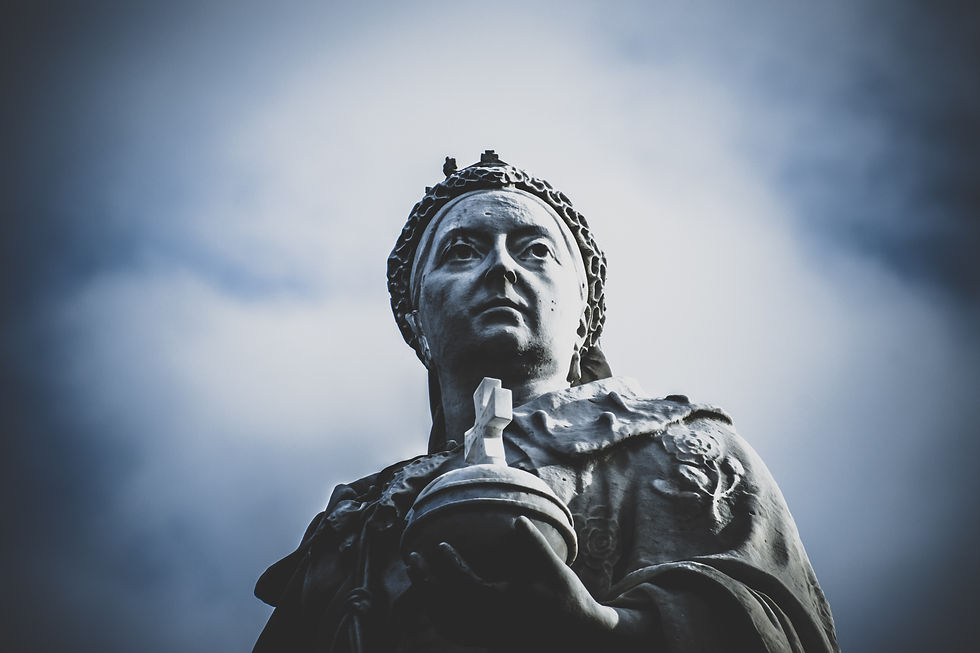

Entre 1380 y 1580 en Europa, tras los estragos que las plagas y los mongoles causaron en Eurasia, las sociedades de todo el continente experimentaron un período de renacimiento. En Europa, este período se ha denominado Renacimiento. En Oriente Medio, también se produjo una Edad de Oro islámica bajo el Imperio Otomano. A partir de intercambios previos con la Ruta de la Seda, el mundo islámico, las culturas africanas y los europeos volvieron su atención hacia su pasado clásico y buscaron reconstruirlo. Las mujeres estaban deseosas de participar en esta labor, luchando contra las arraigadas normas culturales que intentaban frenarlas.
Únete al club
¡Únete a nuestra lista de correo electrónico y ayúdanos a hacer historia!
Mujeres europeas
El término "Hombre del Renacimiento" suele referirse a un hombre que se ha forjado a sí mismo o a un hombre que ha dominado habilidades en todo, desde el trabajo académico hasta la esgrima. En realidad, la "Mujer del Renacimiento" era más probable que fuera una mecenas de las artes en este período. Su exclusión de esta terminología se debió a la falta de oportunidades para que las mujeres obtuvieran educación o formación, más que a la falta de habilidad o interés. Erasmo de Róterdam, el más famoso defensor de los nuevos conocimientos en esta época, dejó clara la visión predominante sobre la educación femenina cuando escribió: "No sé la razón, pero así como una silla de montar no es adecuada para un buey, el conocimiento no es adecuado para una mujer".
La sociedad renacentista prefería a las mujeres castas y en sus roles tradicionales, y se establecieron leyes para mantenerlas ligadas a la vida doméstica. Incluso la elección de vestimenta de las mujeres estaba gravada para limitar su expresión sexual. La “Ley Suntuaria: Restricciones a la Vestimenta” de Florencia en 1373 decía: “Todas las mujeres y niñas, casadas o no, comprometidas o no, de cualquier edad, rango y condición [...] que lleven o lleven en el futuro oro, plata, perlas, piedras preciosas, campanillas, cintas de oro o plata, o tela de brocado de seda en el cuerpo o la cabeza para la ornamentación corporal [...] estarán obligadas a pagar anualmente [...] la suma de 50 [monedas]”.
A medida que la sociedad se abrió a la innovación, las nuevas academias y talleres quedaron reservados para los hombres. Las mujeres adineradas o las hijas de eruditos y artistas gozaban de mayor libertad para aprender y expresarse, pero esto ocurría principalmente a nivel individual. Las mujeres más conocidas de la época eran mujeres adineradas que utilizaban su posición para influir y apoyar a los artistas de su elección. Sin embargo, ese camino —y sus vidas— no siempre fue fácil.

Cuadro titulado “El triunfo del invierno”, de Antoine Caron, pintor oficial de los Medici.
Cuadro titulado “El triunfo del invierno”, de Antoine Caron, pintor oficial de los Medici.
Age of Discovery (n.), a period in the 15th–17th centuries when European explorers explored and colonized the world.
Mecenas de las Artes
The Americas have been settled by humans for tens of thousands of years. After likely prehistoric crossings on a land bridge, city-states and empires thrived as early as 2000 BCE under the Maya, Olmecs, Chavin, and the Norte Chico – preceding the Aztecs and the Incas by a millennia. While much is known about the later Aztec and Incan gender dynamics, less is known about some of the major empires and city-states that preceded them such as the Maya, Teotihuacan, Chavin, Olmec, and Moche.
The Mayan people constructed city-states as early as 2000 BCE that were home to as many as 50,000 people in present-day Guatemala and the Yucatán region of Mexico. They thrived until 900 CE making important discoveries in math and navigation and recording historic events in writing.
Teotihuacan was the largest city-state in Mesoamerica, located in modern-day Mexico. This great city got its name from the Aztec empire, calling it "the city of the gods." It was home to as many as 120,000 people around 50 BCE and boasted massive temples, including the Pyramid of the Sun, believed to be the site of creation itself. Very little is known about how the city was governed, however, because the culture did not have the dynastic art and writing of the Maya.
In the Andes Mountains, several distinct cultures emerged: the Chavin, Tiwanaku, Wari, and Moche. The Chavin flourished from about 900-200 BCE, and didn’t develop an empire but left evidence of a ritualistic religion and artistic style that prominently featured jaguars and animal-human hybrids. The Tiwanaku and Wari lived near each other in the interior but didn’t appear to interact. They left impressive agricultural and irrigation systems as well as highways that the Inca would later expand.
As in much of the ancient Old World, Indigenous Peoples practiced polytheistic religions featuring male and female gods and goddesses. These societies had writing, a robust calendar, social structures, systems of exchange, and imposing pyramids and city centers. Wherever these standards of “civilization” exist, so did expectations for women. Still, when surviving source evidence for ancient civilizations are scant, we don’t always know what those expectations and norms were.
A little more is known about gender dynamics in Moche civilization, which flourished between 100 and 800 CE. The Moche had complex irrigation systems that supported crops such as maize, beans, squash, and cotton. They also used hallucinogens in their religious practice, and had elaborate rituals where shaman-rulers would mediate between the world of humankind and that of the gods. They practiced human sacrifice, with victims usually drawn from prisoners of war. Like the ancient civilizations of the Old World - the Mespotamian city-states, Egyptians, Greeks, and Romans - the Moche ceramic pottery had portraits of lords and rulers, as well as images of the lives of common people. These included erotic or sexual encounters between men and women, as well as between gods and humans.
There's an absence of written text, so a lot of what we know about the Moche people comes from grave sites for the elite, which boasted jewels and goods to rival the Ancient Egyptian burial sites. “Lady Cao” as she was known, was a remarkable woman whose gravesite was uncovered in 2005. She was clearly of the elite, as in her tomb, she was ornamented in tattoos, nose rings, and other jewels and had grave goods including jewels, weaving tools, and a vessel depicting a nursing mother. She died in her twenties in childbirth and was carefully wrapped in hundreds of yards of cotton strips. Scholars believe she was a ruler because she had the same “masculine” images of war, staffs that were symbols of authority, along with many weapons to accompany her in the afterlife. The case for her being a ruler in her own right was supported by the discovery of other sites also featuring elite Moche women. Experts believe that society was relatively decentralized and that this supported the existence of female leaders.
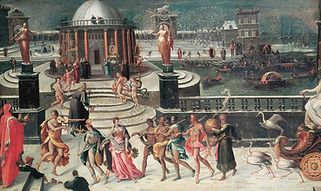
Cuadro titulado “El triunfo del invierno”, de Antoine Caron, pintor oficial de los Medici.
Mesoamerica (n.), a historical region that begins in the southern part of North America and extends to the Pacific coast of Central America.
Creation (n.), the bringing into of existence of the universe, especially when regarded as an act of God.

Un retrato de Santa Catalina de Alejandría, que se cree fue pintado a semejanza de Lucrecia Borgia.
The Inca
Emerging about 500 years after the decline of the Moche, the Inca grew to form the largest empire in the Americas prior to European arrival. Its size and scope was comparable to any empire of the Old World, with lands stretching across modern-day Peru and parts of Ecuador, Bolivia, Argentina, Colombia, and Chile, and boasting a population of around twelve million at its peak in the early 16th century.
Women held power in Inca society as queen consorts and some wielded power in their own right. The Incan Empire even traces its roots to a woman, Mama Huaco, the first qoya or queen of the Indigenous Quechua people. Described as “exceedingly strong and skillful,” she ruled the empire outright, believed to either be the mother, sister, or wife of Manco Capac (recognized as the founder of the Incan Empire). Historian Max Dashu notes that, “Mama Huaco represents the female warrior chieftains of ancient Peru. Cabello de Valboa described her as a brave captain who led armies. [...] Mama Huaco is one woman among the four named captains of the ayllu-s (clans) in Quecha oral histories.” He also notes that she is said to have planted the first corn plants, taught women the art of weaving, and even to have hurled massive golden staffs to determine the lands upon which her people were to settle and form the powerful empire. Other qoyas who followed held varying degrees of power as the primary wife of the king with the title “queen of all women.” Qoyas presided over the kingdom in their husbands’ absence and acted as tiebreaker when the leadership was stalemated. Outside the heart of the empire, women became “Kurakas,” or tribal leaders.
Noblewomen having power does not mean equality of the sexes or even equality among all women. Quite the contrary, the Incan Empire had a strict hierarchy for women. The queen was at the top, followed by the king's secondary wives. Next were noblewomen. Following them was a group of religious women called the Quechua Aclla Cuna, or “Virgins of the Sun.” They were a strictly female religious order that worshiped the moon goddess and had a hierarchy of their own. These temple convents drew thousands of beautiful and talented young girls from eight-to-ten years old. They prepared food for rituals, maintained the sacred fire, and wove cloth. The convents were managed by matrons known as “Mama Cuna.” The Coya Pasca was a noblewoman who ruled over them all and was believed to be the earthly consort of the sun god. The girls served for almost a decade before they were sent off to one of three paths: becoming victims of sacrifice, concubines, or wives of noblemen.
Outside of this upper social echelon, most women were commoners and labored as farmers, weavers, and housewives. Cloth was key to the economy, and thus women’s work was essential. Woven cloths recorded the historic chronicles of the empire – and thus, women were the primary authors of Incan history. Common women could inherit land and manage their finances, and while concubinage and polygamy were common, even secondary wives could manage their own finances and households.
Artistas
The Aztec Empire was loosely connected and unstable. The empire formed in 1428 when the three city-states of Mexico-Tenochtitlan, Tetzcoco, and Tlacopan joined together under singular rule amid a series of local and civil wars in the region. While it was short-lived, crushed by the Spanish conquistadors just under a century after its formation, the empire was home to around six million inhabitants, grew enormously wealthy, militarily powerful, and architecturally brilliant with city temples almost 200 feet high.
Religion for the Aztec was bloody, involving human sacrifice; typically of conquered peoples. The Aztec believed that their patron deity required human blood to keep the world from catastrophe. While there was an emphasis on gender parallelism, men occupied the highest ranks of Aztec religious life. Interestingly, some rituals involved “rebirth” of priests who covered themselves in blood and emerged from a structure designed to look like a vagina, but even then, women played a secondary role in these public religious rituals.
Women were routinely sacrificed in Aztec rituals. For example, every December, a woman was dressed as the Earth goddess and decapitated, and her head was presented to a priest. In June, a woman dressed as the Goddess of Corn was sacrificed. In August, a woman chosen to represent the Mother of the Gods was decapitated and her skin was then ripped from her and worn by a priest.
Despite the patriarchal nature of the growing empire, almost half of the spiritual calendar was dedicated to goddesses, perhaps harkening back to their more egalitarian past. The Aztecs had many goddesses identified with fertility, nourishment, and agriculture, and female Aztec deities such as Coyolxauhqui, Coatlicue, and Cihuacōātl were tended to only by women. Priestesses conducted all rituals, from collecting offerings to developing complex practices.
This included the practice of birth, which itself appeared to be viewed as a sacred act given that the term Cihuateteo refers to the spirits of women who died while giving birth. It was believed that these spirits lived in a far off land, just for women, and every day they worked alongside the spirits of men who had died in battle to guide the sun across the sky. Both the men who died on the battlefields and the women who died attempting to bring new Aztecs in the world were revered, as the women were viewed as victims of what was known as “Women’s War.” Thus, midwives had a crucial role in Mesoamerican societies. As fertility and birthing were highly appreciated and revered, the process demanded complex religious rituals conducted only by priestesses.
As is always the case, women's roles were essential for the empire. In the domestic sphere, Aztec women cooked, cleaned, spun, wove cloth, and participated in ritualistic activities. Outside the home, they served in palaces, as priestesses in temples, traders, craftswomen in markets, and teachers in schools. Some noblewomen were emperors' mothers who significantly influenced political and religious spheres, while others were central to form and cement political alliances. These types of fixed marriages were the norm for noblewomen who had no say in their unions.

Miniatura de Isabel I, pintada por Levina Teerlinc
Miniatura (n.) , retrato pequeño y fino realizado en vitela, cartulina, cobre o marfil, que a menudo se guarda en un relicario o en una caja pequeña.

Un autorretrato pintado por Sofonisba Anguissola
Mujeres otomanas
Across the ocean, in Africa, city-states and empires had long been formed and reformed as had occurred elsewhere in the world. While Ancient Egypt and Carthage tend to see the most fanfare due to their size and long history of interaction with other Mediterranean empires, western and southern Africans were undergoing seismic transformations of their own. Around 2000 BCE, Africans who spoke a variety of languages designated as part of the “Bantu” language family, moved from western central Africa southward in what has been termed the Bantu Migrations or Expansion.
Among these societies, gender relations varied greatly, but generally there was some equity and shared burdens within relationships. Africa was underpopulated, so birthing and rearing healthy children was essential to society's success. The effect of the value placed on birth was that women who birthed and cared for children were given a great deal of respect. Families tended to center around grandmothers, who provided the counsel and support to help the family succeed.
Sociopolitically, tribes and clans that fell under the label of Bantu were matrilineal, passing wealth through the mother’s line. In fact, Africa’s earliest empires, such as Ghana, Mali, and Songha commonly functioned matrilineally. Society was typically organized as a heterarchy with leaders having shorter reach and councils doing the bulk of the governing. In other words, a heterarchy distributes privilege and decision-making across a variety of roles, while a hierarchy assigns more power and privilege to people with "higher" status in the structure. Some societies were ruled by queens, and in Nigeria, the queen had her own council of female advisors. In some cases, these queens were so powerful they had the authority to condemn the king to death, even when the king was the one who managed the government.
In the Congo and Cameroon, women managed the marketplaces, while women across early modern Africa were active participants in trade. They engaged in both local and long-distance trade, and some women even held monopolies in certain markets. Women were also involved in the production of goods, such as textiles and pottery, which they sold in local markets. In the Swahili city-states of East Africa, women were involved in the highly lucrative Indian Ocean trade, owning their own ships and participating in the exchange of goods between European, Indian, and Chinese markets.
Women in early modern Africa also played a significant role in the spread of religion. Women in many societies were the primary religious practitioners who played an important role in the transmission of religious knowledge. For example, in the Kingdom of Kongo, women served as priests and had the authority to perform religious rituals. In the Islamic kingdoms of West Africa, women were involved in the dissemination of Islamic knowledge and played an important role in the spread of Islam.
Centuries after the Bantu Migration, as we entered into the Age of Discovery, there was greater interaction between Africans and foreign explorers. This corresponded with empire creation and diffusion of Islam and Christianity into Africa, which led to more hierarchies and less heterarchy, placing influence on male supremacy. Elite women kept their status, while poorer women lost respect and influence within their clans.
Elite women continued to hold significant roles in the political sphere. In the Kingdom of Dahomey, for example, women were trained as soldiers and served in the royal army. They also held positions of power, serving as advisors to the king. In the Kingdom of Buganda, in East Africa, women were involved in the selection of the king and played a key role in the political process.

Maps representing major African population and migrations, with the Bantu Expansion being noted with the green arrows, Public Domain
Ganadería (n.) , práctica de criar y cuidar animales para obtener sus productos o para mantenerlos en cautiverio.
Acuerdos prenupciales (n.) , acuerdos legales firmados por ambas partes antes del matrimonio que abordan principalmente la protección y división de la propiedad y la riqueza en caso de divorcio.
Conclusión
El Renacimiento fue un renacimiento del arte y la cultura, pero también, en muchos sentidos, un renacimiento del patriarcado. Si bien algunas mujeres alcanzaron gran prestigio y fama en este período, las mujeres en general no experimentaron un acceso generalizado a la educación ni un cambio significativo en su estatus.
¿Cuántas mujeres más conoceríamos hoy si hubieran tenido la oportunidad de intentarlo? ¿Cómo encontrarían las mujeres un mayor acceso a la educación y a otros medios de superación personal? ¿Y qué propiciaría ese cambio?


