8. Physics
“It was due to the camouflage intentionally placed over their presence in science” — Margaret Rossiter.






Join the Club
Join our email list and help us make herstory!
Chien-Shiug Wu
Chien-Shiung Wu was born on May 31st, 1912. She was raised in a small fishing village near Shanghai, China. While it was uncommon for girls to attend school during this time, she went to a school that was founded by her father, who believed that girls deserved an education.
She went to university at the National Central University in Nanking, China and received a degree in physics. After graduation she gained work experience in a physics lab, where she met her mentor, Dr. Jing-Wei Gu, who was another woman in the male-dominated field. After consideration, she decided to take her education to the United States where she enrolled in the University of California Berkeley in 1936. She went on to graduate with her PhD in physics in 1940. Soon after she took a job at Columbia University where she joined the Manhattan Project.
Wu went on to become a professor at Columbia, where she continued to work on scientific findings. One of the most notable was her confirmation of Enrico Fermi’s theory of beta decay. She was a notable leader of physics and was up to receive the Nobel Prize, but did not receive the award. However, she was granted with a multitude of recognition.
Key Takeaways: Chien-Shiung Wu was a notable physicist, who greatly contributed to the advancement of physics. She helped pioneer scientific theories, while also affirming those of the past. While being a woman in a male dominated field she still was recognized at the same level of her male colleagues.

Laura Bassi
Laura Bassi was born to distinguished lawyer Giuseppe Bassi and her mother, Maria Rosa Cesari, in 1711. In her early life, Bassi was privately educated by her cousin, who taught her Latin, French, and mathematics. From the age of thirteen to twenty, she was taught philosophy, metaphysics, logic, and natural philosophy. Her privatized education increased her exposure and understanding of so-called “masculine” areas of study, such as physiology, metaphysics, and mathematics.
At the age of twenty, Bassi was acknowledged by Prospero Lorenzini Lambertini. He arranged for a debate between Bassi and four professors at the University of Bologna. It was here that Bassi was brought into the academic world. She then went on to defend her forty-nine theses on her study of philosophy. Bassi was awarded her doctorate by the University of Bologna on May 12, and she became the first woman to receive a doctorate in Science and the second in philosophy.
In 1738, Bassi married Giovanni Giuseppe Veratti, who was a physician and professor. The pair soon became fierce scientific partners and were unique compared to other men and women from the Enlightenment. While women tended to be involved in their husbands' work, Bassi and Veratti operated as equals. She continued to work tirelessly in science and in academia by leading lectures and engaging in scientific dialogue and debate.
Key Takeaways: Chien-Shiung Wu was a notable physicist, who greatly contributed to the advancement of physics. She helped pioneer scientific theories, while also affirming those of the past. While being a woman in a male dominated field she still was recognized at the same level of her male colleagues.

Melissa Frank
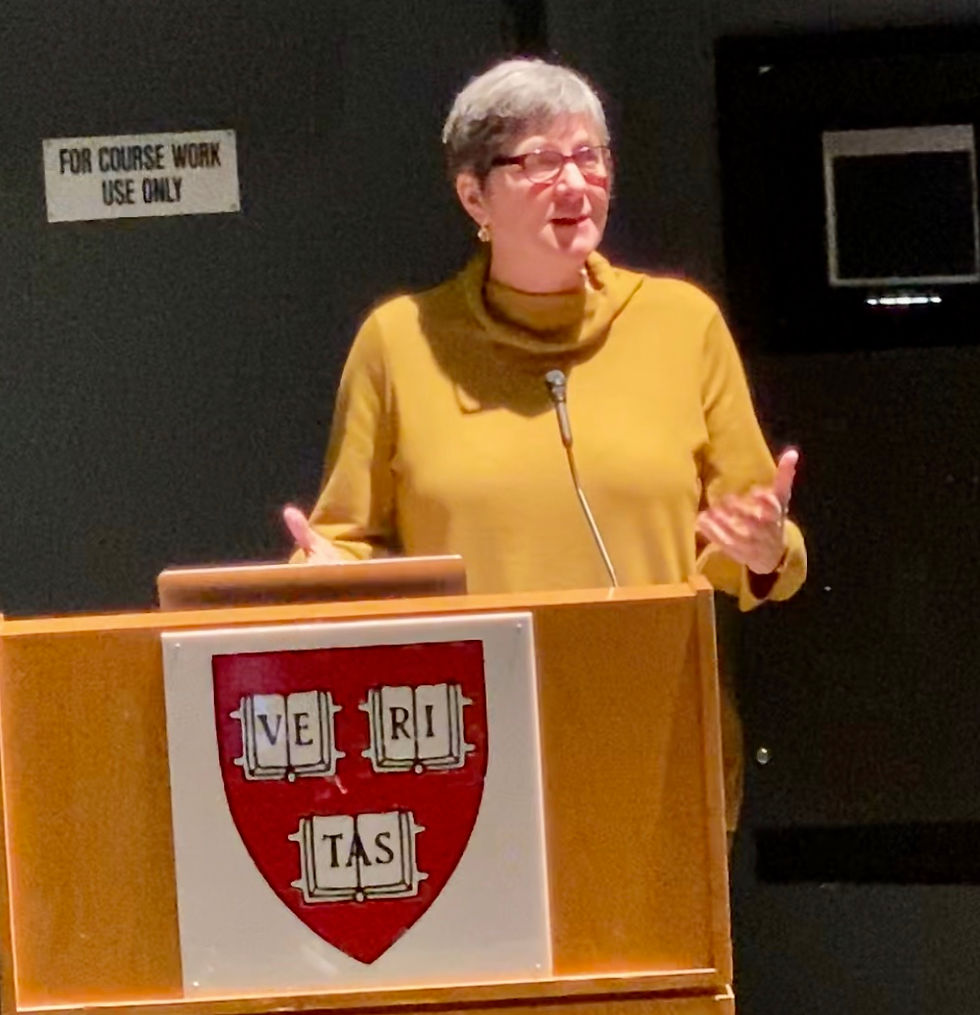
Melissa Franklin, born on September 30, 1959, is a Canadian experimental particle physicist. She is currently a Professor of Physics at Harvard University. Franklin was born in Alberta and grew up in Vancouver and Toronto. In high school, she dropped out of school and formed an alternative school with her friends called, SEED (Shared Experience Exploration Discovery) Alternative School. Later on in life she attended the University of Toronto and studied physics. Franklin eventually went on to obtain her Ph.D. from Stanford University.
In 1987 she joined Harvard University and became the physics department's first tenured woman professor. Franklin studies proton-proton collisions produced by Large Hadron Collider—the world’s largest and most powerful particle. In 1995 her and her team even proved the existence of the top quark, which is a massive group of all elementary principles. To present, Franklin has continued to research and work at Harvard University.
Key Takeaways: Melissa Franklin is a key woman in the modern field of physics. Being the first tenured woman at Harvard University, Franklin paved a way for the women who will come after her.