14. 900 - 1200 Woman Crusaders and Stabilizers
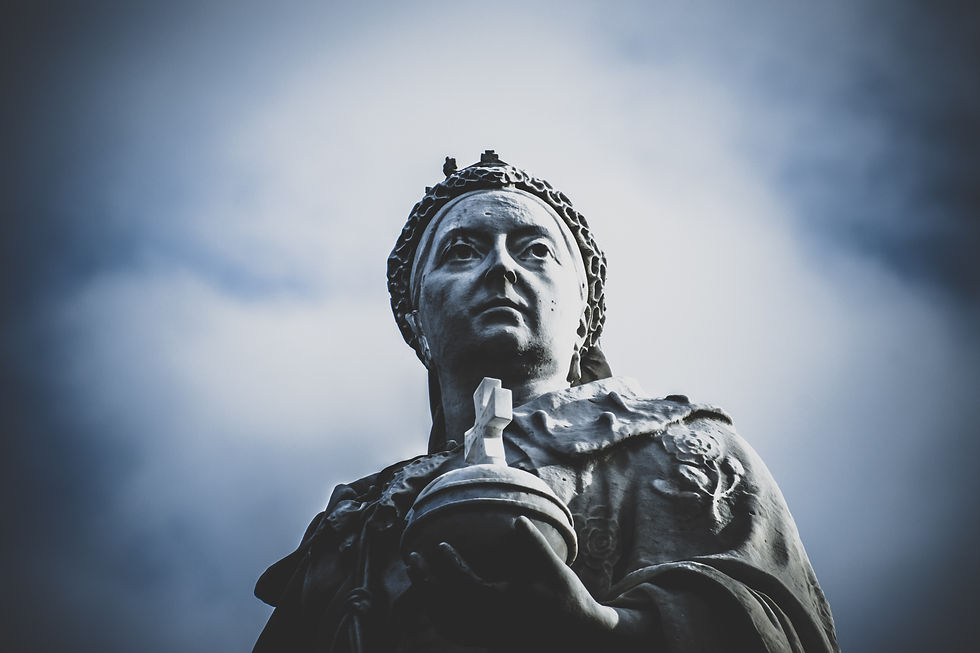
During the Crusades, women took action on the battlefield alongside their male counterparts. In addition, they assumed power in various roles. Their impact on the Crusades was undeniable.
How to cite this source?
Remedial Herstory Project Editors. "14. 900-1200 - WOMEN CRUSADERS AND STABILIZERS" The Remedial Herstory Project. November 1, 2025. www.remedialherstory.com.
Threatened by the growing and vibrant Islamic Empire between 1095 and 1291, the Latin Christian Church based in Rome joined the Eastern Orthodox Church in Constantinople to lead a series of religious wars known as the Crusades to rein in the growth of Islam and claim the holy lands of the Christian faith. Christian and Muslim armies faced off in the Levant, home to many sites revered in the Jewish, Christian, and Islamic religions. There were nine crusades to the Holy Land during this period, although most historians tend to highlight the first three or four because they were the most significant. As is typical in the study of wars, most scholars focus their attention on the actions of men in their roles as religious or political leaders and as soldiers. However, women took part in the Crusades in a variety of ways, including as leaders and even as soldiers.
The Crusades (n.), a series of Christian military expeditions to the Holy Land between 1095 and 1291 that had the objective of reconquering Jerusalem and its surrounding area from Muslim rule.
Join the Club
Join our email list and help us make herstory!
Women and the Crusaders
In theory, when Pope Urban II issued a call to arms for the First Crusade in 1095, no one expected women to accompany the armies on their march toward the Holy Land, though church leaders appealed to women with wealth to fund expeditions and new military orders. By the Second Crusade, some male authorities actively discouraged women from participating, saying that women would hinder the armies on the campaign. However, as going on a crusade offered distinct spiritual benefits, the experience had to be available to any devout Christian. In this respect, the Crusades were a super-pilgrimage, and women had been taking part in pilgrimage for centuries in Europe. Noblewomen looked to their ancestors for inspiration and hoped to leave a legacy to their descendants. Furthermore, medieval society was thought to be represented by three orders: those who pray (meaning the clergy), those who fight (meaning the nobility), and those who work (meaning everyone else). If being noble meant being willing to fight, then noblewomen had to have a place in that order. Thus, dozens of women went on crusades.
Matilda of Tuscany never got to go on an official crusade, but she paved the way for women who did by being a warrior for her faith. Matilda had a reputation for military leadership before the Crusades began. She had long been a loyal defender of Pope Gregory VII who had a conflict with the Holy Roman Emperor. Initially, church and civil law prohibited anyone but a secular male warrior from taking up arms. However, like many daughters of feudal lords, Matilda had been trained in strategy, even if she never personally wielded a weapon. Sources say she was a brilliant strategist and that she was passionate about defending holy causes. Matilda politically battled Henry IV, at points, losing all of her lands and wealth, as well as battled him physically,
waging a guerrilla war against him in defense of the Pope, defending against his incursions of her lands, and even leading an expedition to Rome in 1087. When the First Crusade was announced in 1095, Matilda was still waging a holy war of her own.
Other women were witnesses to the Crusades, which helped us to catalogue its history. Although she was only a child during the First Crusade, Anna Comnena’s historical account is the only source from a Byzantine perspective. Most of the crusaders traveling from Western Europe to the Holy Lands had to pass through the Byzantine capital, Constantinople, where Anna was the daughter of Emperor Alexios I Comnenos. She wrote a history of his reign after she retired to a monastery in the 1140s, and based her history on eyewitness accounts from members of court and veterans, but she also had access to the imperial archives. Her work, known as The Alexiad, describes the tension at court over the influx of heavily armed crusaders passing through Byzantine lands. She described both the Latins and the Turks as “barbarians,” stating that her father did not trust the Turks very much even though he hoped the Franks and Latins would help keep his empire intact.
Guerrilla War (n.), small independent group taking part in irregular fighting, typically against larger regular forces.
Latins (n.), the people associated with the states created by the Crusades.
Turks (n.), a native or inhabitant of Turkey, or a person of Turkish descent.
Eleanor of Aquitaine
One of the most famous women to go on a crusade is Eleanor of Aquitaine. She was the sole heiress to the territory of Aquitaine in southwestern France and was married to the French prince, Louis VII, when she was only 13 or 14. In 1147, Eleanor and her husband, who was by then the king of France, together joined the Second Crusade. Louis knelt in the cathedral to “take the cross,” and inspire the faithful of France to join the fight. Eleanor then knelt beside him to take the cross in the name of Aquitaine and call on those loyal to her family. She also inspired numerous noblewomen to accompany their husbands and brothers. The entire entourage was said to be glorious.
However, as the army slowly made its way down the coast towards Antioch, disaster struck. Torrential rains swept away equipment, men, and horses. The terrain was brutal, and supplies ran low. Worse yet, the vanguard under the leadership of Eleanor and two of her noble vassals set up camp farther ahead than Louis and the rest of the army expected them to. His army was unable to catch up before night fell, and Turkish forces took advantage of the gap between Eleanor and Louis’ forces, attacking the exhausted army when Eleanor’s guard was too far away to send supplies. After that defeat, the royal couple and what was left of their army returned to the coast to find ships to carry on with the crusade. They eventually arrived at Antioch, which at the time was ruled by Eleanor’s uncle. Relieved to be among familiar faces and customs, Eleanor seemed happy to settle in for a while, but Louis became jealous and impatient. He forced her to come to Jerusalem with her troops. She did, but refused to participate any longer in the war, and the Second Crusade ended in humiliation for Louis.
Eleanor’s reputation after the Crusade was a poor one, as many blamed her leadership for the loss, and Louis had their marriage annulled not long after they returned to France. Yet, Eleanor regained her lands and married the grandson of Henry I of England, Henry II, in 1152. They had eight children all of whom would be entered into political marriages to secure peace and power. Eleanor earned the title “grandmother of Europe” as so many of her descendants ruled. Although they had many children, her new husband was not faithful to her. She instigated a failed revolt by her sons against her husband in 1173, and she was held in captivity until her husband died.
Eleanor’s son, Richard the Lionheart, became king in 1189, and Eleanor played a greater political role than ever before. When he led a crusade to the Holy Land, she kept his kingdom running smoothly and defeated his brothers when they tried to take his crown in his absence. After a failed crusade and being forced into a truce by Saladin, he attempted to return to England in late 1192, only to be captured by a duke of the Holy Roman Emperor in Austria. Eleanor came to save him, collecting his ransom and personally returning him to England in 1194. The nuns of Fontevrault who wrote her obituary described her as a woman who was “beautiful and just, imposing and modest, humble and elegant [...] who surpassed almost all the queens of the world.”
Take the cross (v.), to accept a sign or badge depicting the Christian cross as part of an oath or vow, especially to take part in a crusade.
Annul (v.), declare invalid (an official agreement, decision, or result).

Eleanor and Louis observing a mass during the Second Crusade

Tombs of Eleanor of Aquitaine and Henry II
Women Crusaders
When it came to the Crusades, did women actually participate in combat? It seems that some did. Christian male writers debated whether or not women should fight in the Crusades and very few of them broached the topic as it related to combat. However, Niketas Choniates, a Greek historian from the First Crusade, wrote of women among the warriors, noting that they rode on horseback “in the manner of men, not on coverlets side-saddle but unashamedly astride, and bearing lances and weapons as men do.” Islamic sources also confirmed that women were among the combatants. The 12th century historians Imad ad-Din and Baha ad-Din reported that a noblewoman arrived by sea in 1189 with an escort of 500 knights, and that she led her army on raids against the Turkish camps. Both historians also wrote of women in armor, wielding weapons, who were not discovered to be women until their armor was removed after death. Baha ad-Din further commented on the women who would stand on the walls of the city, firing arrows down on their enemies. Perhaps the Christian writers had mixed feelings about women in combat and preferred to focus on their other activities while on Crusade, but external sources seem to confirm their combative role.
Outside of the battlefield, women, children, and men too old to fight accompanied the armies and sought to make themselves useful and worthy of the spiritual benefits that came with participation. They brought water and food to the warriors, offering encouragement and prayers. They dug ditches and cleared rubble. Albert of Aachen reported in 1099 that women helped weave the material needed to build a siege engine. There were also some prostitutes in the mix.
But most women, whether Christian or Muslim, were associated with the vital preparation of food, laundry, and care for the sick and wounded. Women in healthcare fields were not unheard of in this time. Many women served as midwives and healers in their small communities. Trota of Salerno practiced medicine in the south of Italy in the 12th century; she is often regarded as the first gynecologist. During the Second Crusade, Louis of France relied on a woman named Hersenda who was identified in other sources as a medical practitioner in Paris. Interestingly, during the Crusades, much medical knowledge passed from Islamic practitioners to Christians, and European medicine expanded its range of knowledge.

Florine of Burgundy
Siege Engine (n.), a large mechanical device used to break through enemy fortifications during warfare.
Gynecologist (n.), a physician that deals with the functions and diseases specific to women and girls, especially those affecting the reproductive system.
Crusader States
From the end of the First Crusade, victorious Christian leaders claimed rulership of the Kingdom of Jerusalem and surrounding territories. We call these the Crusader States or the Latin States. These states were regularly involved in continued fighting as the Latins tried to claim more territory and the Islamic leaders sought to reclaim what they had lost. Many male leaders on both sides died in this ongoing conflict, and women became essential for stability in the region. Even leaders from kingdoms that had never recognized a woman’s claim to rule, such as France, supported the right of daughters to inherit their father’s titles. The frequent loss of male guardians also meant that women needed to serve regents and feudal lords. Finally, marital alliances created ties between people from the West and Christian leaders among the Greeks, Syrians, and other areas within the Levant. The existence of stable Latin States made pilgrimage to the Holy Land easier and encouraged even more women to make the journey.
However, this does not mean that female leaders were always welcomed with open arms. Often, women who ruled were as dangerous a proposition as were women who fought. This led to mixed and contradictory accounts of the women who helped stabilize the Latin States in the wake of the Crusades. Alice of Antioch, for example, gained a historical reputation as an evil and greedy usurper for trying to take over the principality of Antioch. Her husband of four years was killed in 1130 when their daughter Constance, his heir, was only an infant, so Alice intended to rule as her regent as so many other royal mothers have done throughout history. Alice had support among her vassals, but her father, Baldwin II of Jerusalem, wanted a male regent to run Antioch until Constance grew up. He sent forces to remove Alice from power, and she retreated to Latakia and Jabala, cities she had received as dowry upon her marriage. From there, Alice consolidated support and went on to make two attempts to take over Antioch, which is painted as a woman trying to wrestle power away from others, when it was truly her trying to resume the position of power she had rightfully held. During all this time, Alice created the tools of government, appointing a constable and other offices, setting up a scriptorium to handle her decrees and alliances, and establishing a clear court culture. It was all for nothing. Alice finally admitted defeat when Raymond of Poitiers arrived and was chosen as Constance’s consort in 1136. Once the heir had a male partner to cement her claim to the principality, all of Alice’s supporters shifted to what seemed like a more stable option.
Melisende of Jerusalem, Alice’s sister, had a different fate and much more support for her claim to Jerusalem. Baldwin II had married Melisende to Fulk, the Count of Anjou. Upon Baldwin’s death, Fulk and Melisende ascended to the throne. Together, they resisted one of Alice’s attempts on Antioch and it was Fulk who chose Raymond to marry Constance. However, at Melisende’s request, Fulk agreed to stay out of Alice’s affairs in the future.
In 1143, Fulk died and Melisende remained on the throne. It was under her leadership that the Crusader State of Edessa fell. She sent word to the pope and inspired the call that launched the Second Crusade. Still, Melisende found herself in Alice’s shoes. In 1150, Melisende had to fight her own son, Baldwin III, to hold onto Jerusalem. She used many of the same tactics Alice had tried, and ultimately settled for serving as a regent while Baldwin was still young or away on campaign. Unlike Alice, however, Melisende is remembered fondly in the chronicles because of her involvement in the Second Crusade.
The family drama continued into the next generation of the royal family. Melisende’s son, Count Almaric of Jaffa, married Agnes of Courtenay, a Frankish countess born in Edessa. Almaric was not initially meant to take the throne in Jerusalem, but after Baldwin III died childless in 1163, he became king. Yet, in 1161, the High Court of Jerusalem rejected Agnes as queen. Since Edessa had fallen to Turkish forces, Agnes was no longer politically useful, so the High Court forced Almaric to annul their marriage, although they agreed to recognize the couple’s children as legitimate heirs. The children, Baldwin IV and Sibyalla, were raised in separate courts.
When Baldwin took the throne in 1174, his mother joined him in Jerusalem and accompanied him on military campaigns. She did so, in part, because he had leprosy and was losing his eyesight. Baldwin trusted his mother and even appointed her to choose the Latin patriarch in Jerusalem. Since he had no heirs of his own, Baldwin oversaw the second marriage of his sister Sibyalla. A rival had paired her with someone else in order to undermine Baldwin, but Sibyalla’s first husband died when she was pregnant with her first child, so she joined her brother and mother in Jerusalem.
Over time, Sibyalla’s brother, Baldwin, grew to distrust her and her new husband. Ever sickly, he named Sibyalla’s son as his heir and preemptively appointed a regent to rule while the child was young. Baldwin died in 1185 and the child, Baldwin V, died the year after. Sibyalla swiftly claimed the throne for herself, and ruled Jerusalem alongside her husband. In theory, they ruled from 1186 to 1190, however, the Third Crusade began under their reign and they lost the city of Jerusalem in 1187 to Saladin, the Kurdish sultan of Egypt and Syria. The chaos among the Latin rulers was not lost on Islamic leaders and Saladin took advantage. Sibyalla retreated to Acre and died of illness in 1190 while it was under siege. Although the early queens of the Latin States had fought to bring stability, the last generation was just as enmeshed in politics as the noblemen.
Latin States (n.), four Christian political states in the Levant that were developed after the First Crusade, which included Jerusalem, Tripoli, Antioch, and Edessa.
Usurp (v.), take (a position of power or importance) illegally or by force.

Baldwin III arguing with Melisende

Sybilla and her husband outside Tyre
Muslim Women
The women of the Islamic world in the age of the Crusades left a similarly impressive legacy. The Seljuk Turks and the later Ottomans were descended from a central Asian federation of Turkish tribes. Their pre-Islamic epic stories included many heroic women. Even after they accepted Islam, they maintained a tradition of unveiled women attending ceremonies with men,, and thus they were culturally very different from many Arabic and Persian Muslims who tended to keep women and men separate and expected women to remain veiled outside their homes. Nevertheless, when it came to defending their homes from invaders, Muslim women from across the cultural spectrum rose to the task. The Frankish writer Guibert noted in Antioch in 1097 that women rode onto the battlefield with the men, often carrying stores of arrows and quivers. Another chronicle reported that two Muslim women attempted to interfere with the Crusaders’ siege machine but were crushed in the attempt.
Sadly, most accounts of the fate of Muslim and Jewish women in the Holy Lands are descriptions of the wholesale slaughter of women and men or of the enslavement of young women. War is cruel, and local women suffered tremendously. When the Latins stayed to occupy the territory after the First Crusade, non-noble men were said to have taken Syrian, Armenian, and even Muslim women as wives and the Latin church approved as long as those women agreed to convert to Christianity. Such marital alliances helped to stabilize the region as the royal and noble marriages had done in previous centuries, but often came at the cost of forced conversions and a stripping of a woman’s known customs, traditions, and values.
There are fewer surviving tales of women who ruled during this era of Islamic history, but there were certainly prominent women in the Levant. Zumurrud of Damascus was a noblewoman and a contemporary of Melisende of Jerusalem. She was the mother of the lord of Damascus, Isma’il. When her son proved to be a cruel and greedy ruler, she had him assassinated in front of her in 1135 and put his corpse on display. Zumurrud already had a reputation for running the territory behind the scenes, and now she was the kingmaker, placing another of her sons on the throne after ruling as regent for a couple of years.
Zumurrud was one of the only Muslim women to have received an oath of loyalty from her people, and she ruled with the blessing of the caliph. She went on to marry the Turkic atabeg Zengi, who himself was the bane of the Latin kings and queens of Jerusalem. Like Melisende, Zumurrud was also a patron of the arts and religion. While Melisende had paid to expand the Church of the Holy Sepulchre, Zumurrud built the Madrasa Khatuniyya in Damascus.

Painting titled, “Taking of Jerusalem by the Crusaders, 15th July 1099”
Atabeg (n.), a hereditary title of nobility of Turkic origin, indicating a governor of a nation or province who was subordinate to a monarch and charged with raising the crown prince.
Conclusion
Other noblewomen among the Turks and Kurds were known to have played prominent roles, but sadly many of their names have been lost. Likewise, the names and stories of many European women who traveled among the crusaders are lost in the grander history of victories and losses throughout the Crusades. Perhaps most forgotten of all, are the women who simply attempted to live their lives in the path of these massive religious wars; whether they be the women left behind awaiting news from afar, or those in the wake of the roving armies themselves.
Did the women who went on the Crusades help to shape the Middle East after the wars were over? Did they break the rules, or did they fulfill their proper calling? Did their presence among the crusaders help achieve success or cause more problems? And how did women in positions of authority compare to male rulers—were they forces of stability or just as likely as men were to start trouble?