9. Psychology
Las finanzas personales se refieren a ganar, heredar e invertir el dinero. Numerosos estudios han establecido la prevalencia de diferencias de género en la crianza de niñas y niños. Algunas de estas diferencias incluso comienzan en el útero. En materia económica, las niñas y los niños son criados para administrar el dinero de forma diferente, lo que tiene un profundo impacto en su futuro financiero. En resumen, las niñas son criadas para proteger el dinero y ahorrarlo, mientras que los niños son criados para perseguirlo e invertir lo que tienen para lograrlo. Este punto se ve reforzado por el hecho de que solo el 26% de las personas que trabajan en el sector financiero son mujeres.






Únete al club
¡Únete a nuestra lista de correo electrónico y ayúdanos a hacer historia!
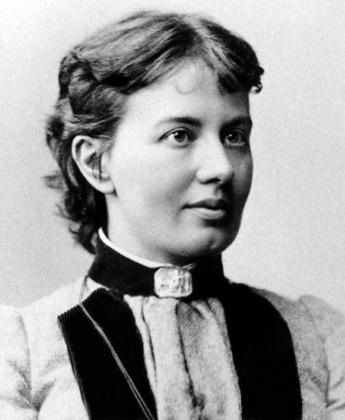
Christine Ladd-Franklin
Christine Ladd-Franklin (1847-1930) was a pioneering American psychologist and mathematician primarily known for her work on the psychology of vision.
Born in Connecticut in 1847, she was raised in an academic family. She studied mathematics and science at Vassar College before she enrolled for a PhD in logic and mathematics at John Hopkins University. Despite her academic talents, John Hopkins refused to award her the doctorate for more than 40 years, due to the fact she was a woman.
With her PhD dissertation, she pioneered the study of symbolic logic, focusing on formalizing logical algebra. However, Ladd-Franklin is best known for her research on colour vision. Drawing on evolutionary theory and psycho-physics, she developed the evolutionary theory of colour vision, which proposed that color perception evolved in stages. According to her model, black and white (also known as achromatic) vision developed first, followed by blue-yellow perception and finally red-green. This theory directly challenged existing models by the likes of Helmholtz and Hering.
Despite this, Ladd-Franklin was often excluded from academic positions and recognition, pushing her to campaign against discrimination in academia. Christine Ladd-Franklin (1847-1930) was a pioneering American psychologist and mathematician primarily known for her work on the psychology of vision.
Her work bridged psychology and biology and she is now recognized as a pioneering figure in the research of vision and psychology.
Key Takeaways: Christine Ladd-Franklin made important and lasting contributions to psychology through her development of symbolic logic and an evolutionary theory of color vision. Her work showed how visual systems developed in stages, bridging psychology, physiology and biology. Ladd-Franklin’s career also highlights the societal and structural barriers faced by women in science, and academia more broadly.

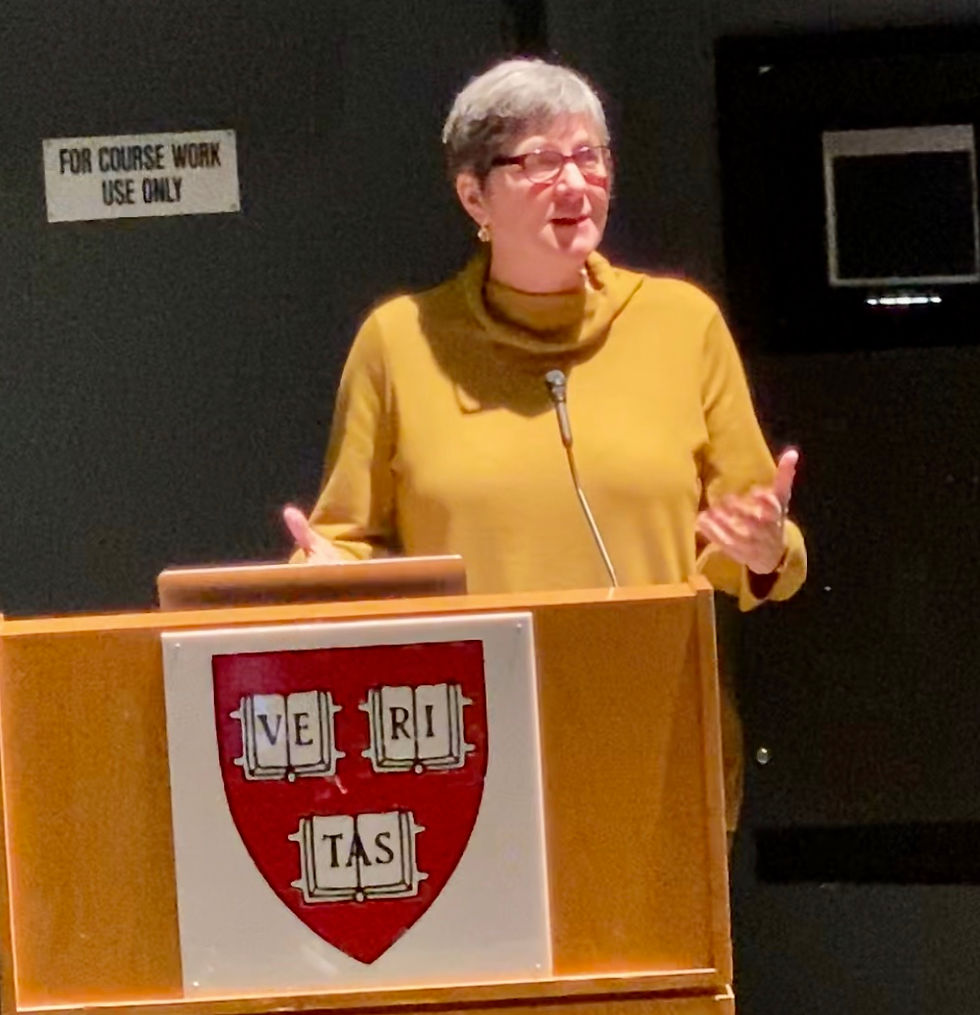
Francine Patterson
Francine “Penny” Patterson is an American psychologist and primatologist best known for her work on gorilla communication, particularly her work with a gorilla named Koko.
It was during her PhD in developmental psychology at Stanford University that Patterson began to study with Koko. Patterson was interested in whether apes could learn symbolic communication and whether this might reveal more about their cognitive and emotional capacities. In the early 1970’s, Patterson began teaching Koko what she called Gorilla Sign Language (GSL).
Over several decades, Patterson documented Koko’s use of signs to communicate about objects, actions, desires and emotions. Over the years, Koko learned over 1,000 signs. Furthermore, according to Patterson, Koko could not only use individual signs but also combine them in flexible ways and respond appropriately to spoken English. Patterson also reported that Koko showed emotional awareness, including grief, humour and affection.
In 1978, Patterson founded The Gorilla Foundation with Ronald Cohn. The foundation is a non-profit organization still in existence today, dedicated to the health and existence of gorillas and other great apes.
Overall, Patterson’s life and work shows a great commitment to animal rights, conservation and research. Her work succeeded in capturing public attention and academic debate and played an important role in changing public and scientific views of animal intelligence and communication.
Key Takeaways: Francine Patterson’s research suggests that gorillas are capable of symbolic communication and complex emotional expression. Her work challenged the assumptions that emotional depth and meaningful communication were a uniquely human experience, while also raising questions about how language and communication should be defined. Although her work is still debated today, Patterson’s research broadened understanding of animal cognition and encouraged consideration of the ethical treatment of animals.

Jerre Levy
Jerre Levy is an American neuroscientist and cognitive psychologist best known for her research on hemispheric specialization of the brain. Her research examined how the two halves of the brain work together and handled tasks differently.
Levy was born in Birmingham, Alabama in 1938. In 1962 Levy earned her degree in psychology from the University of Miami before continuing her studies to Caltech where she earned her PhD.
Levy is most known for her research in identifying the differences in how the left and right halves of the brain, called cerebral hemispheres, process information. Through behavioral and perceptual tasks, she demonstrated how the different sides were specialized for different processing styles. The left hemisphere tends to process information analytically, logically and in a language-oriented manner, while the right is more specialized for holistic processing like recognizing faces and understanding space.
Importantly, Levy was critical of interpretations that viewed one hemisphere as superior. Instead, she argued normal and healthy cognition relied on cooperation between the left and right sides of the brain.
Key Takeaways: Jerre Levy’s work established that the different halves, called cerebral hemispheres, of the brain differed not in their cognitive abilities but in how they process information. She demonstrated that the left hemisphere favors analytical strategies like understanding math and language, while the right excels at holistic and visuospatial processing. Crucially, Levy rejected claims about hemispheric dominance. Her research showed that healthy cognition depends on mutual interaction between the hemispheres, disproving many simplistic misunderstandings of brain function at the time.

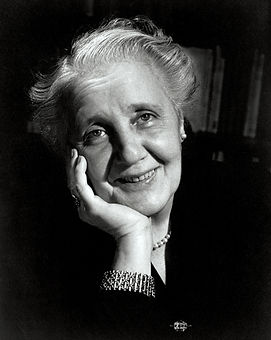
Melanie Klein
Melanie Klein was a highly influential, but controversial, psychologist whose work pioneered psychoanalytic theory and child development.
Klein was born in 1882 in Vienna, Austria, into an orthodox Jewish middle-class family. Klein was the youngest of four children and grew up in a rather emotionally complex household, experiencing trauma early in life, including the death of her brother and sister. These early experiences of grief greatly impacted Klein and her later work which focused on anxiety, grief and inner conflict.
Klein’s research emerged from her clinical work with children, rather than formal academic training. Her case notes from this work formed the basis of her later research on ‘The Psychoanalysis of Children’ (1932).
Klein developed the play technique, noticing how child's play could be analyzed much in the same way as dreams could be analyzed in adults. She identified recurring themes of aggression, fear and guilt in child’s play and from this, concluded that early mental life was dominated by intense emotional states.
Klein became a central and controversial figure in the British Psychoanalytical Society. Her ideas notably challenged those of Sigmund Freud, particularly regarding the development of the superego and Oedipus complex in childhood.
Klein’s work had a lasting impact on psychology and continues to influence psychotherapy, psychoanalysis and infant mental health research today.
Key Takeaways: Melanie Klein’s work demonstrated how the unconscious mind is active from infancy and that early emotional life is shaped by intense relationships with primary caregivers. Through close clinical observation of children's play, drawings and relationships and use of toys, she showed how children express unconscious fantasies of love, aggression, fear and guilt.
Overall, Klein’s work established the importance of close, early relationships in shaping personality and mental health.
.jpg)
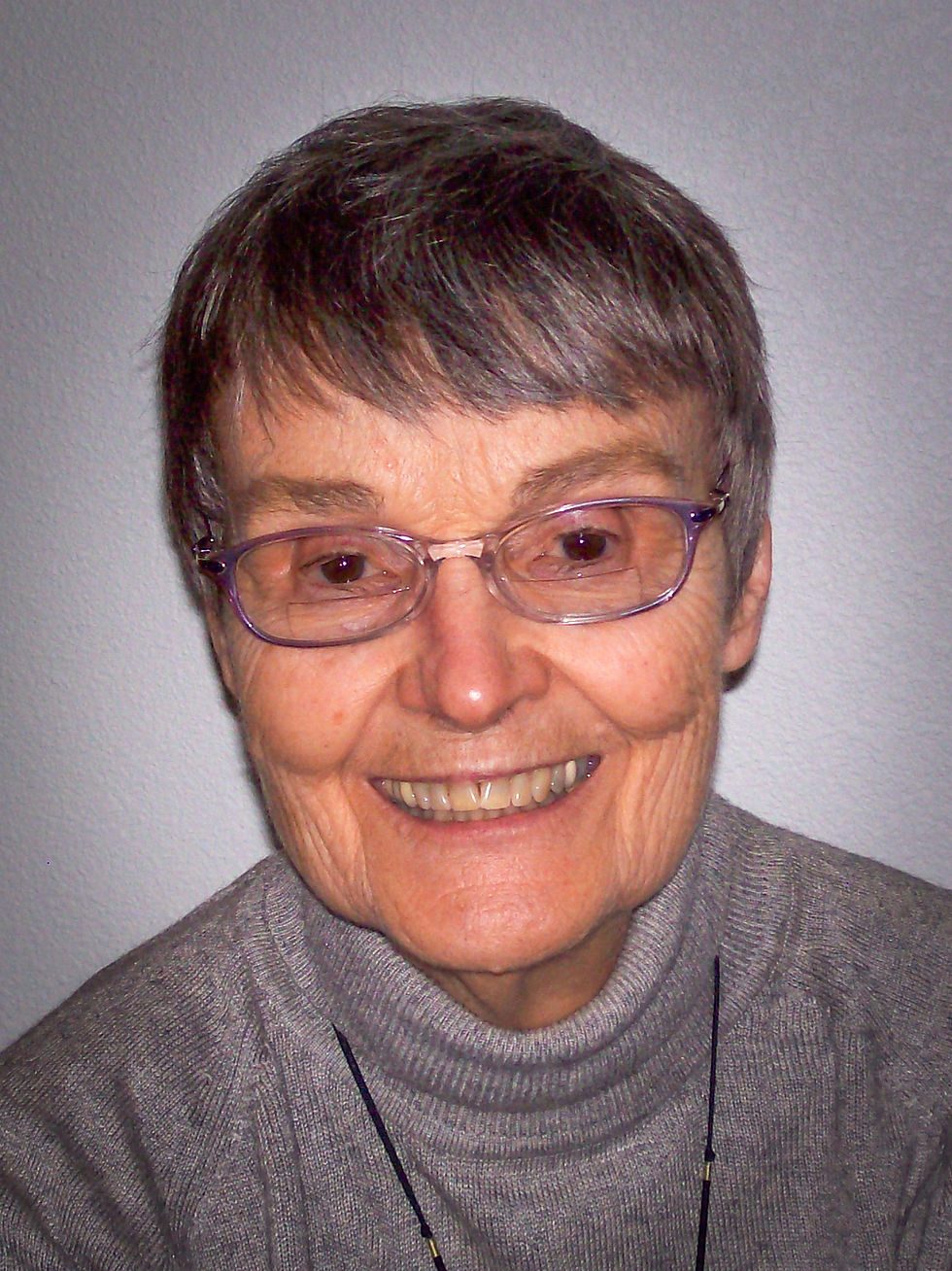
Uta Aurnhammer Frith
Frith was born in a small town in Germany in 1941 in the midst of a world at war. Her father, an expressionist painter, served in World War II and was deeply traumatized by what he saw and experienced. As a young girl, Frith attended a school that traditionally educated young men and rarely young women for university. Curious and unconventional in her thinking and interests, Frith went on to attend university and sampled widely from all the disciplines. Reflecting on her life, Frith noted that many of the most influential experiences that made “me, me had nothing to do with science.” Frith explained that she loved art and beautiful things, for Frith, “everything is intermingled, perhaps reflecting an omnivorous mind.” Perhaps by reaching her arms so wide that Frith was able to challenge conventional wisdom.
Her interest in dyslexia began with a paradox: how are there people who are excellent readers but terrible spellers? Could it be that the way the brain remembers written words is different for reading and writing? Moreover, Frith suspected and eventually proved through imaging and testing that dyslexia was a result of an abnormality in the brain itself.
Her research into autism suggested similar differences in the brain itself. Rather than a product of poor parenting or poor socialization, children with autism had brains that functioned differently. She called this “Theory of Mind.” Tests showed that autistic children lacked the ability to predict behavior but were better at reconstructing physical cause-and-effect sequences. As Frith has explained, many behaviors associated with autism reflect a child’s inability to take into account others’ actions – autistic people have a hard time understanding other people’s mental states. Thus, autism is not about intelligence, but about the brain’s inability to conceive of others lying, deceiving, or attempting to hide information. She also argued that autism was characterized by “weak central coherence.” This is the idea that autistic people are good at noticing small details, but less good at seeing the bigger picture. The unique way autistic people view the world is a consequence of the way the brain processes information. Her work asked questions that distinguished between cognition and behavior.
Key Takeaways: Working in the 1960s, Uta Aurnhammer Frith challenged how scientists understood autism disorder. Before Frith, psychologists had argued that autism was a product of poor parenting. Cold, or what were called "refrigerator parents,” gave rise to children who displayed poor socialization, had restrictive interests, and often repeated anti-social patterns or activities. Frith, drawing on her work with children identified as autistic, argued that rather than a product of nurture, autism was a disorder of cognitive processing, a result of biology rather than environment.
Throughout her career, Frith has advocated for “Slow Science” – “less but better.” And she is an advocate for women in science.