4. Chemistry
Persönliche Finanzen umfassen das Verdienen, Erben und Anlegen von Geld. Zahlreiche Studien belegen geschlechtsspezifische Unterschiede in der Erziehung von Mädchen und Jungen. Einige dieser Unterschiede beginnen sogar schon im Mutterleib. Im Umgang mit Geld werden Mädchen und Jungen unterschiedlich erzogen, was tiefgreifende Auswirkungen auf ihre finanzielle Zukunft hat. Kurz gesagt: Mädchen lernen, Geld zu schützen und zu sparen, während Jungen dazu erzogen werden, Geld zu verdienen und ihre Mittel entsprechend zu investieren. Dies wird durch die Tatsache unterstrichen, dass nur 26 % der Beschäftigten im Finanzsektor weiblich sind.






Tritt dem Club bei
Melden Sie sich für unseren E-Mail-Verteiler an und helfen Sie uns, Frauengeschichte zu schreiben!
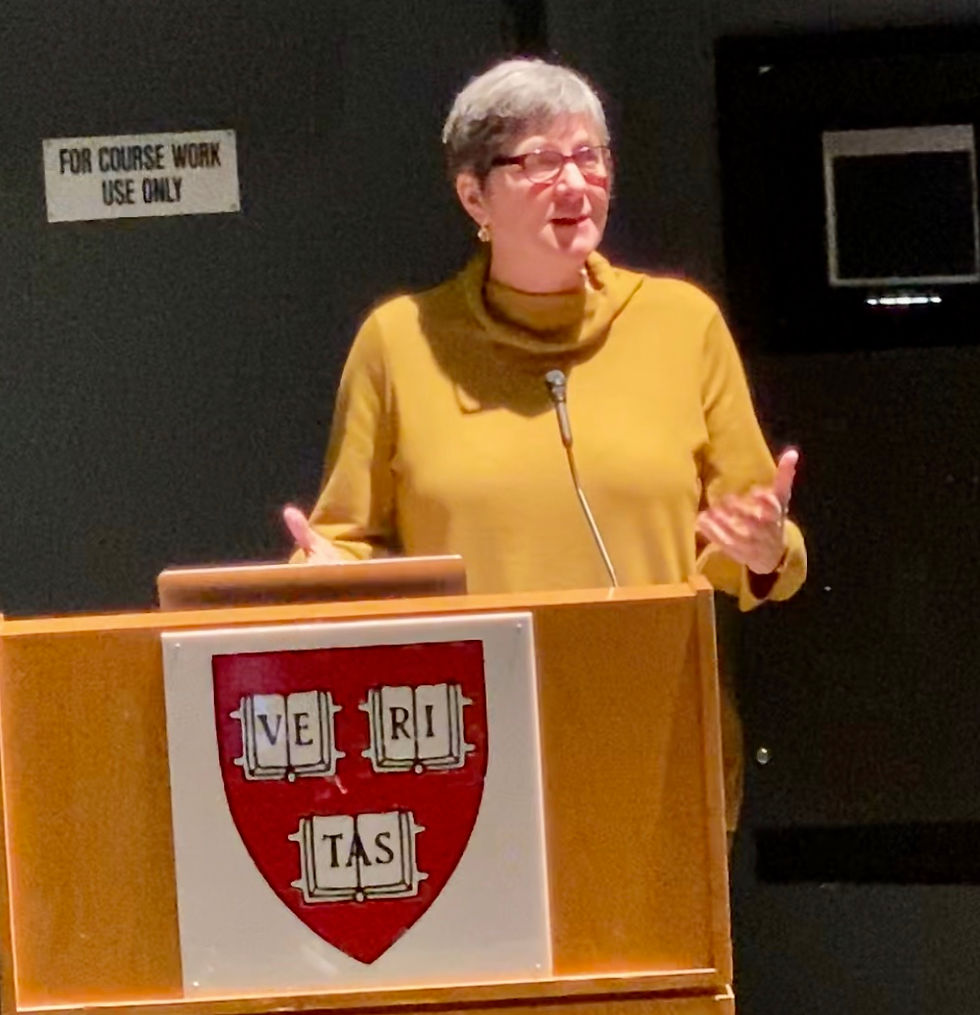
Angela Belcher
Belcher has explained that from a young age, she wanted to invent, to make something new, and change the world. While neither of her parents was a scientist, she grew up in Houston, TX, near the medical center and fell in love with molecules. At 14, Belcher remembers thinking, ”Wow, that’s so interesting. You know, how you go from DNA to a person?”
In college, Belcher designed her own major, bringing together chemistry, biology, physics, and geology – diverse fields that all could speak to her interest in the origin of life. For Belcher, new ideas and important insights come at what she calls “the interface" between disciplines, between organic and inorganic, between proteins and rocks.
Belcher thinks of herself as an engineer; she wants to solve problems. With nature as her guide, Belcher works to adapt evolution to make non-toxic, self-repairing nanostructures that adapt and evolve to become better over time. Her work has found all kinds of applications from solar cells and batteries to medical diagnostics and disease prevention. Recently, her work has focused on ovarian and brain cancer detection.
Key Takeaways: Belcher’s work inspires us to think broadly when we try to answer some of the modern world’s most vexing problems. Learning and thinking about new "interfaces" encourages scientists to build new knowledge out of sincere questions and novel insights.

Irène Joliot-Curie
Irène Joliot-Curie is the daughter of Marie and Pierre Curie and married Frédéric Joliot. Irène was born in Paris, France on September 12, 1897. During World War I, Irène worked with her mother, Marie Curie, at the mobile field hospitals, operating the x-ray machines that her mother developed. Afterwards, Irène went back to Paris to study chemistry at her parents’ Radium Institute, where she wrote her doctoral thesis about radiation emitted by polonium. She became a Doctor of Science in 1925. Around the same time, her future husband, Frederic Joliot, joined the Radium Institute. Irène and Frederic married in 1926 and chose to conduct research jointly. They had two children: Hélène, born in 1927, and Pierre, born in 1932.
In 1933, the Joliot-Curies made the discovery that radioactive elements can be artificially produced from stable elements. This research led to the Joliot-Curies being awarded the Nobel Prize in Chemistry in 1935. This discovery helped improve our knowledge of new radioactive elements and led to advances in multiple fields, including medicine. Irène produced further research in 1938 on the action of neutrons on the heavy elements, which was an important step in the discovery of uranium fission.
Irène was appointed lecturer in 1932, in 1937 she became Professor in the Faculty of Science in Paris, and afterwards Director of the Radium Institute in 1946. She was a Commissioner for Atomic Energy for six years. She was interested in the social and intellectual advancement of women; she was a member of the Comité National de l’Union des Femmes Françaises and of the World Peace Council. In 1936, Irène was appointed Undersecretary of State for Scientific Research. She died in Paris in 1956 of leukemia caused by years of radiation exposure.
Key Takeaways: Irène Joliot-Curie was a French scientist and the 1935 Nobel Prize in Chemistry winner. While she was not a part of the Manhattan Project, her earlier research was instrumental in the creation of the atomic bomb.

Katsuko Saruhashi, PhD
Katsuko Saruhashi was born on March 22, 1920. Katsuko had very supportive parents who encouraged her to pursue an education. When she was 21, she left her secure job in insurance to attend the Imperial Women’s College of Science (now Toho University), where she earned a degree in chemistry in 1943.
After earning her degree in Chemistry, she went on to work at the Meteorological Research Institute where she studied carbon dioxide in ocean water. In 1957, she became the first woman in Japan to earn her PhD in chemistry from the University of Tokyo. She began studying carbon dioxide at a time when talking about CO2 was uncommon. Katsuko became a pioneer in measuring carbon dioxide levels in sea water. Her work included the development of a method to identify carbonic acid in water based on three water parameters (Saruhashi’s Table, yes named after Katsuko): the temperature, the pH level, and the chlorinity. She was also interested in measuring the radioactivity in water and developed a method to investigate the levels of nuclear pollution in bodies of water.
Katsuko’s work studying radioactivity in water led to the banning of above-ground nuclear bomb tests. Not only was she intellectually gifted, but she also became a beacon for women in science. In 1958, she co-founded the Society of Japanese Women Scientists, and in 1981 established a prize in her name awarded annually to female scientists under the age of 50 for their contributions to natural sciences. She died in September 2007, leaving behind a legacy as a scientist and feminist.
Key Takeaways: In 1957, she became the first woman in Japan to earn her PhD in chemistry from the University of Tokyo.
She helped ban above-ground nuclear bomb tests.
“I would like to see the day when women can contribute to science and technology on equal footing with men.” – Katsuko Saruhash, PhD

Maria the Jewess
What we know about her, we know because someone else wrote it down. And while we believe she published her own works, they have been lost to history.
Maria the Jewess was known by many names: Maria Hebraea, Maria Prophetissima, Maria Prophetissa, Maria the Hebrew, Miriam the Prophetess; Mariya the Sage; Mary the Prophetess. In the sources that remain, she is called a Sister of Moses. This may have meant to indicate she was Jewish. Or it may have indicated that she was wise. Those who recounted her inventions and her chemical insights noted that she lived in Egypt. She could have been Greek. She could have been Syrian. What we know for sure is that she was the first alchemist and a singular inventor of an apparatus that allowed her to develop insights into how chemicals and elements interact.
Before there was chemistry, there was alchemy. Alchemists believed that all matter was comprised of four elements (air, earth, fire, and water) and that as a result any substance could be "transmuted" into another substance. Lead, for example, could become gold.
Working in the 3rd century, Maria the Jewess studied sulfur compounds. She is credited with developing a process to make silver sulfide. Silver sulfide is used by artists to create the matte black compound used for metalwork inlays. And while chemists have moved way beyond alchemy in their understanding of the world, some of the devices developed by Maria the Jewess are still used by chemists today in labs all over the world. Maybe even in your school lab.
Have you ever seen a double boiler? Called a bain-marie (Mary's Bath), it is a double-decker pot of sorts that works to control heat by boiling water in a separate, but connected container. In chemistry (and in cooking!), it is used to ensure a gentle heat. We believe she also invented the tribikos, which looks like a still with three spouts, and a kerotakis, a device used to hold vapor (this device was later modified and is called a Soxhlet extractor).
If she were working today, she would be considered a chemical engineer – someone who refines processes and builds tools to better understand the chemical world.
Key Takeaways: Maria the Jewess was a renowned Alchemist, coined with creating silver sulfide. Without her contributions, many modern-day objects would not existed, or would have been greatly delayed.
.jpg)
Rosalind Franklin
Rosalind Elise Franklin was born on July 25th, 1920, in London, England, to an affluent, British Jewish family in Notting Hill. From an early age, Rosalind showed a knack for academics, excelling in all of her studies except music. Her mother once stated, “all her life knew exactly where she was going and took science for her subject.” She attended St. Paul’s Girls’ School before attending Newnham College, University of Cambridge, where she focused on physical chemistry. She graduated with her Bachelor's in 1941.
She scored exceptionally well on her exams, earning a graduate research scholarship from the Department of Scientific and Industrial Research, allowing her to stay at Cambridge despite the ongoing war. She received her PhD from Cambridge in 1945. By 1946, Franklin chose to move away from coal research. She received a job offer at Laboratoire Central des Services Chimiques de l’Etat in Paris under the tutelage of Jacques Mering. It was under Dr. Mering that she learned and mastered the techniques of X-ray crystallography. These techniques would forever change her life.
In 1951, she accepted a Fellowship at King’s College in London in the lab of John T. Randall. It was in this lab that Franklin’s name would forever become associated with DNA, more specifically, the discovery of the double helix structure. Franklin’s X-ray diffraction photography led to the discovery of the double helix structure of DNA. She and a student under her, Raymond Gosling, captured the image that later became known as Photo 51 in 1952. Using this photo, Watson and Crick, the two folks most often associated with the discovery of DNA’s double helix structure, developed a model for a helical structure of DNA.
Shortly after taking Photo 51, she began working in an X-ray crystallography lab at Birkbeck College in 1953 and stayed there until her untimely passing in 1958. She transitioned from studying DNA to analyzing the structure of Tobacco Mosaic Virus (TMV) and Poliovirus. By mid-1950, Rosalind received invitations to speak throughout Europe and the United States, as she was at the top of her field.
In September of 1956, she was diagnosed with ovarian cancer. She worked until she passed away at the age of 37. She sadly passed away on April 16, 1958, one day before her model of viruses was unveiled at the World’s Fair in Brussels.
She was a brilliant woman who spoke up for the truth and did not allow men to talk over her or exclude her from the lab.
Key Takeaways: Rosalind Franklin was a woman of science who persevered against all odds. When you think of the discovery of DNA, do not forget to look at the role Dr. Franklin played. In January 2004, Rosalind Franklin University of Medicine and Science became the first medical institution in the United States to recognize a female scientist through an honorary namesake.
“Franklin became very skilled with crystallographic technique, though she always maintained that she was a chemist, not a crystallographer. (After her death, J. D. Bernal, himself a pioneer in the field, would note that Franklin took some of the most beautiful x-ray diffraction photos ever done.)”